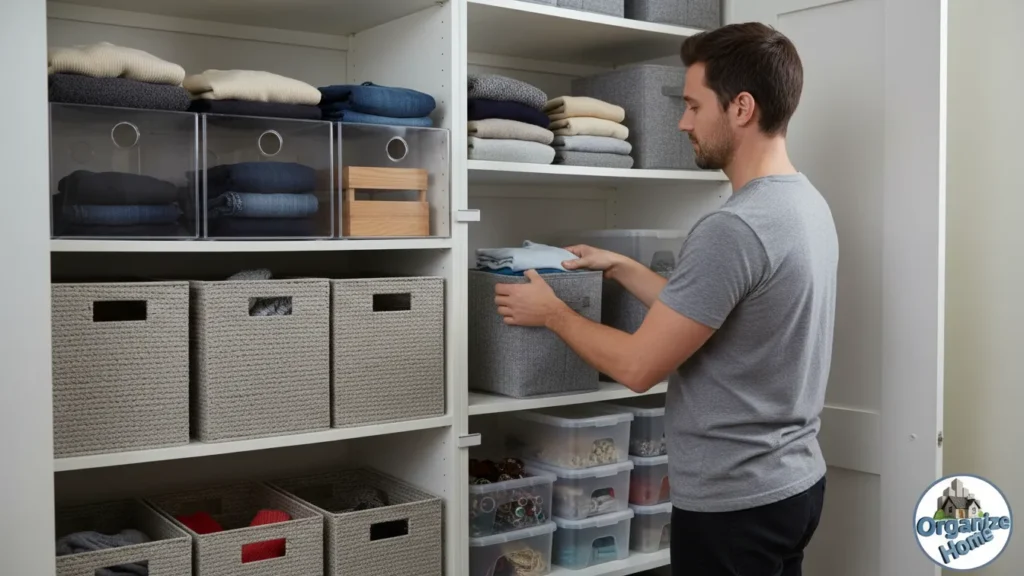

Why Your Home Gets Messy So Fast (A Realistic Explanation)
If you feel like your home gets messy again almost as soon as you finish organizing, you’re not alone—and it’s not a personal failure. This is one of the most common frustrations in everyday homes, especially busy ones. Understanding why your home gets messy so fast is the first step to fixing the problem in a way that actually lasts.
Most homes don’t become messy because people are lazy or careless. They become messy because daily life moves faster than the systems meant to support it. Shoes come off quickly, bags get dropped on the nearest chair, mail lands on the counter, and items get set down “just for now.” These small actions happen dozens of times a day, and without simple organization systems in place, clutter builds up automatically.
Another important factor is that many homes are organized for occasional use, not daily living. Cabinets look neat, closets are tidy, and shelves are styled—but they aren’t designed around how the household actually functions. When storage doesn’t match real habits, mess appears almost immediately after normal routines resume.

It’s also common to confuse organization with motivation or time. In reality, most people don’t lack time—they lack clear defaults. When there’s no obvious place to put something, the brain chooses the easiest option, which is usually the nearest flat surface. Over time, these surfaces become clutter magnets, making the home feel messy even if nothing dramatic has changed.
Family dynamics play a role too. Different people use spaces differently, and without shared systems, even a well-organized home can unravel quickly. One person’s “temporary spot” becomes another person’s frustration. This isn’t about discipline—it’s about alignment.
Perfectionism can quietly make the problem worse. When organization feels like an all-or-nothing project, people delay small resets because they don’t have the energy to do everything “properly.” As a result, mess builds up faster and feels more overwhelming, reinforcing the idea that staying organized is impossible.
The key takeaway is simple but powerful: a messy home is usually a systems problem, not a personal one. Homes that stay organized aren’t spotless—they’re designed to recover quickly. They allow mess to happen without letting it pile up.
Once you stop blaming yourself and start looking at how your home supports (or fights) daily life, everything changes. Instead of constantly reorganizing, you begin fixing the root causes. And that’s where real, lasting organization begins.
In the next sections, we’ll break down the most common reasons clutter keeps coming back—and show you practical ways to fix each one without overhauling your entire home.

Too Much Stuff and No Clear Home for It
One of the biggest reasons a home gets messy so fast is simple: there is more stuff than the space is prepared to handle, and much of it doesn’t have a clear, assigned home. When items don’t belong anywhere specific, they end up everywhere.
This usually isn’t about extreme clutter or hoarding. It’s about everyday items—jackets, backpacks, mail, reusable bags, toys, chargers, shoes—that slowly multiply over time. Each item may seem harmless on its own, but together they overwhelm shelves, drawers, and surfaces that were never designed to hold them all.
When storage areas are already full, the brain looks for shortcuts. Instead of opening a crowded drawer or rearranging a shelf, items get placed on the nearest available surface “just for now.” The problem is that “just for now” quickly becomes permanent. As this pattern repeats, clutter spreads faster than it can be put away.
Another common issue is shared items without shared systems. If multiple people use the same things—like keys, shoes, bags, or paperwork—but there’s no clearly defined home for them, those items float around the house. No one knows exactly where they belong, so no one fully takes responsibility for putting them away.
It’s also important to understand that storage alone doesn’t solve this problem. Adding more bins or baskets without reducing the volume of items often creates hidden clutter instead of real organization. Containers get stuffed, lids don’t close properly, and eventually items spill back out into daily spaces.
The real fix starts with clarity, not perfection. Every frequently used item needs a simple, logical home that matches how often and how quickly it’s used. If putting something away requires too many steps, the system won’t be used consistently.
When the amount of stuff matches the available space—and every item has a clear place—mess slows down naturally. You’re no longer fighting clutter all day. You’re simply returning things to where they already belong.
Lack of Daily Organization Systems (Not Lack of Time)
Many people believe their home gets messy because they don’t have enough time to stay organized. In reality, the issue is rarely time—it’s the absence of simple daily organization systems that work automatically in the background of everyday life.
Without systems, every small action becomes a decision. Where should the mail go? Where do shoes belong today? What about bags, jackets, or items brought in from the car? When the brain has to make these decisions repeatedly, it defaults to the fastest option, not the best one. This is how clutter starts forming even on relatively calm days.
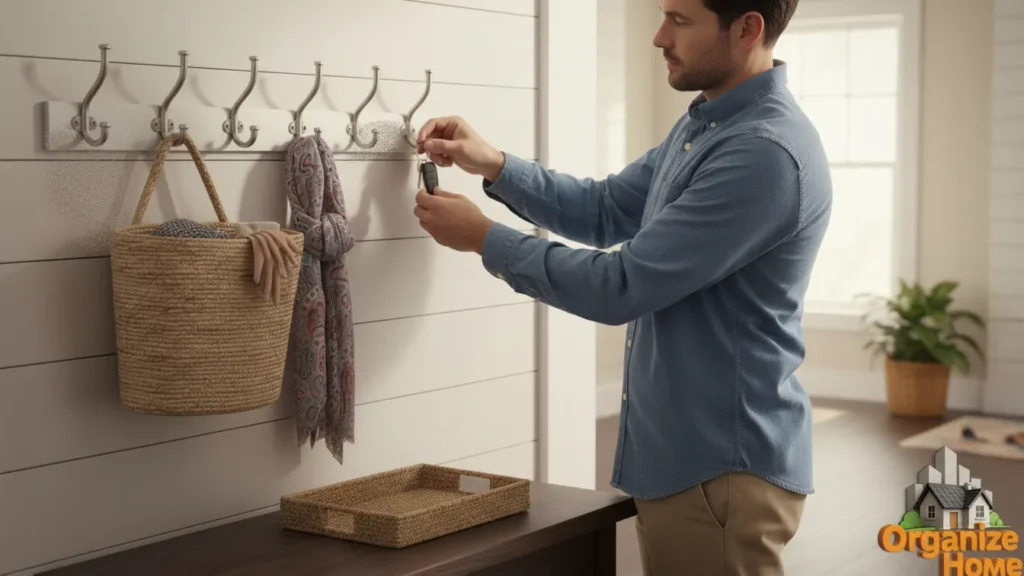
Daily organization systems are not schedules or long routines. They are predictable defaults. A hook by the door for bags. A tray for incoming mail. A basket for items that need to go upstairs later. These systems remove friction. They allow people to put things away quickly without thinking.
When homes lack these systems, organization becomes reactive instead of preventive. People wait until the mess is visible and overwhelming before taking action. At that point, organizing feels like a big project, which leads to procrastination—and the cycle repeats.
Another common mistake is relying on motivation. Motivation is unreliable, especially in busy households. Systems work even when motivation is low. They support tired evenings, rushed mornings, and imperfect days. That’s why organized homes don’t depend on willpower; they depend on structure.
It’s also important to note that daily systems should match real behavior, not ideal behavior. If something is used every single day, its storage should be easy to access and just as easy to return. When systems are too rigid or inconvenient, they won’t survive real life.
Once daily organization systems are in place, mess stops feeling constant. The home doesn’t stay perfectly tidy—but it becomes much easier to reset. And that’s what truly keeps clutter from taking over again.
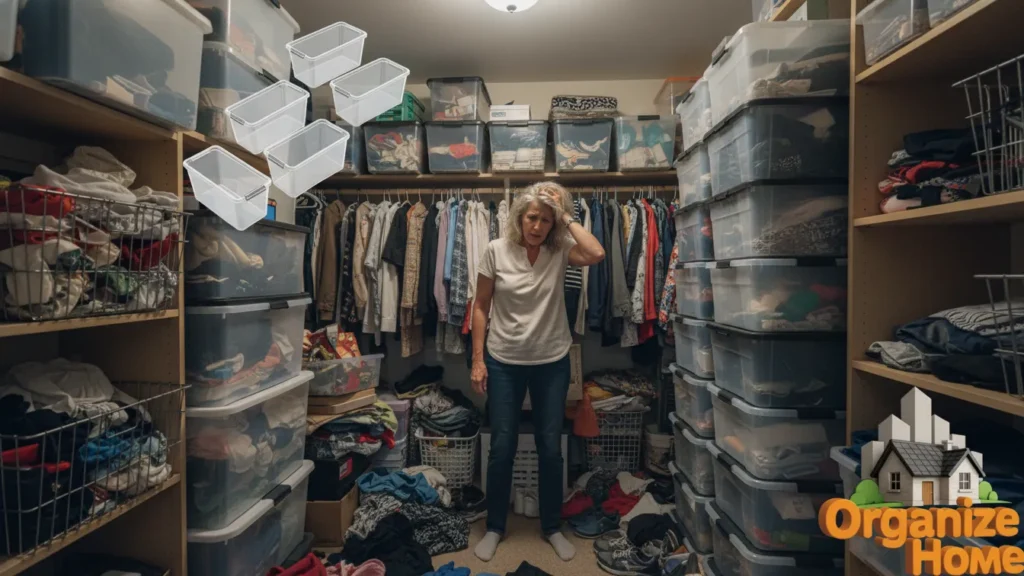
Flat Surfaces That Attract Clutter Automatically
Flat surfaces are one of the fastest ways clutter takes over a home—often without anyone noticing it happening. Counters, tables, dressers, nightstands, and even the tops of appliances naturally attract items because they’re easy, visible, and require no effort to use.
The problem isn’t that flat surfaces exist. The problem is that they often have no defined purpose. When a surface isn’t clearly assigned a role, it becomes a default drop zone for everything passing through the room. Keys, mail, water bottles, bags, papers, toys, and random items all land there temporarily—and then stay.
This happens because the brain loves convenience. Setting something down is faster than putting it away, especially when storage is out of sight or requires extra steps. Over time, these surfaces fill up, making the room feel messy even if the rest of the space is relatively organized.
Another issue is visibility. Items left on flat surfaces stay in constant view, which creates visual noise. Even a small amount of clutter can make a space feel chaotic when it’s spread across visible areas. This often leads people to believe their home is “always messy,” even when the clutter is concentrated in just a few spots.
Trying to keep all flat surfaces completely clear usually backfires. It feels unrealistic and hard to maintain, which leads to giving up altogether. A better approach is intentional use. Some surfaces should be protected and kept mostly clear, while others can be controlled landing zones with limits.
When flat surfaces have boundaries—like a tray, basket, or designated section—clutter stops spreading. Instead of fighting surfaces, you guide them. And once surfaces stop acting like magnets, the entire home feels calmer and easier to manage.
Trying to Organize Without Decluttering First
One of the most common reasons a home gets messy again so quickly is trying to organize items before reducing the amount of stuff. When there are simply too many things for the available space, even the best organization systems struggle to hold up.
This usually looks like rearranging drawers, buying containers, or moving items from one spot to another—without actually removing anything. At first, the space may look better. But because nothing has changed in terms of volume, the system fills up almost immediately once daily life resumes.
When storage is packed to the limit, putting things away becomes harder. Items don’t fit easily, stacks fall over, and drawers get stuck. As soon as returning something feels frustrating, people stop doing it consistently. That’s when clutter starts spreading back into visible areas.
Another issue is that overfilled systems leave no room for flexibility. Real life is messy. New items come in, routines shift, and seasons change. Without a little breathing room in storage spaces, any disruption causes disorder. The system becomes fragile instead of supportive.
Decluttering doesn’t mean getting rid of everything or making extreme decisions. It means being intentional about what earns space in your daily life. When you reduce just enough to match the size of your home and your routines, organization becomes easier to maintain.
Think of decluttering as creating space for systems to work—not as a separate, overwhelming project. Once the volume is manageable, organizing stops feeling like a constant uphill battle and starts supporting your everyday flow instead.
👉 Common Organization Mistakes
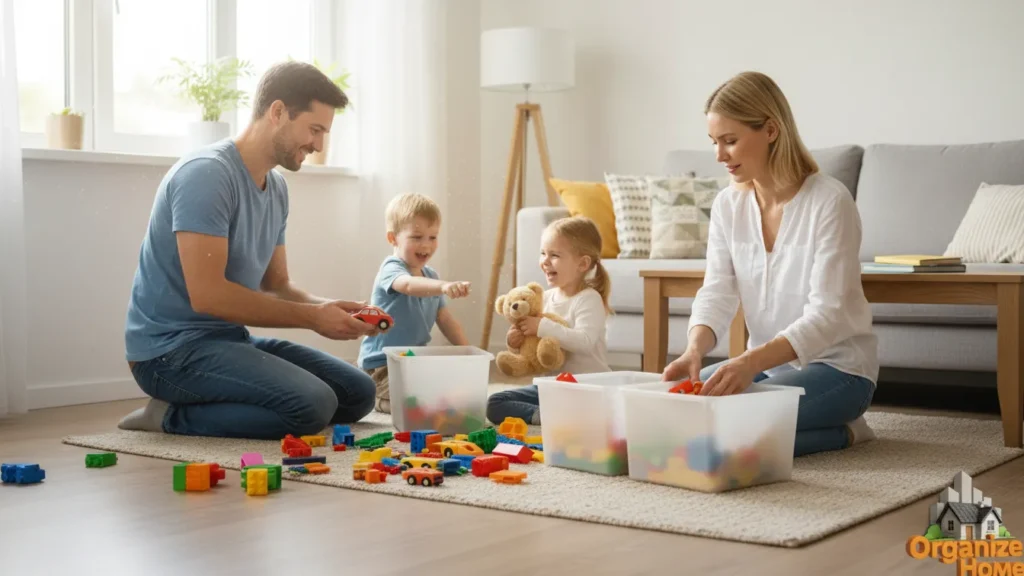
Organization Systems That Are Too Complicated
Another major reason homes get messy so fast is relying on organization systems that are too complex for daily life. These systems may look great at first, but they often require more time, steps, or attention than most people can realistically maintain.
Complicated systems usually involve too many categories, containers, or rules. Items need to be sorted “the right way,” placed in specific sections, or arranged perfectly to fit. When life is calm, this might work. But during busy days, tired evenings, or rushed mornings, these systems quickly fall apart.
When putting something away feels like a project instead of a quick action, people naturally avoid it. Items get set down with the intention of dealing with them later—and later rarely comes. Over time, the system is abandoned, and clutter returns to visible spaces.
Another problem with overly detailed systems is that they don’t adapt well. Real homes change constantly. New items come in, routines shift, and different people use spaces differently. A system that only works under ideal conditions won’t survive real life for long.
Simple systems, on the other hand, are flexible and forgiving. They focus on broad categories instead of micro-sorting. They allow items to be put away quickly, even if not perfectly. This ease is what makes them sustainable.
If organization requires constant effort to maintain, it’s not the right system. The best systems reduce effort instead of increasing it. When organization feels simple, mess slows down naturally—and staying organized stops feeling like a full-time job.
The “I’ll Deal With It Later” Habit
The “I’ll deal with it later” habit is one of the quietest ways clutter takes over a home. It doesn’t look like a problem at first. It feels reasonable, temporary, and harmless. But repeated dozens of times a day, it becomes a powerful driver of mess.
This habit usually shows up in small moments: setting mail on the counter instead of opening it, leaving shoes by the door instead of putting them away, placing items on a chair with the intention of handling them later. Each action takes only seconds, but together they create piles that feel overwhelming by the end of the day.
What makes this habit so persistent is mental fatigue. After making decisions all day, the brain looks for relief. Delaying a task—even a small one—feels easier than completing it right away. Unfortunately, delayed decisions don’t disappear; they stack up and demand more time and energy later.
Another issue is that “later” rarely has a scheduled time attached to it. Without a clear plan, these items stay where they are, blending into the background until clutter becomes visible and stressful. At that point, organization feels like a big chore instead of a series of small actions.
This habit is often reinforced by perfectionism. People wait until they can deal with everything properly instead of handling things quickly and imperfectly. As a result, nothing gets done in the moment, and mess builds up faster.
Breaking the “I’ll deal with it later” habit doesn’t require discipline—it requires making immediate action easier than postponement. When putting something away takes less than a minute and doesn’t require effort or decision-making, the habit naturally weakens.
The goal isn’t to eliminate delay completely. It’s to reduce how often small items get paused without a plan. When fewer things are postponed, clutter loses its chance to grow.
👉 10-Minute Daily Organization Reset
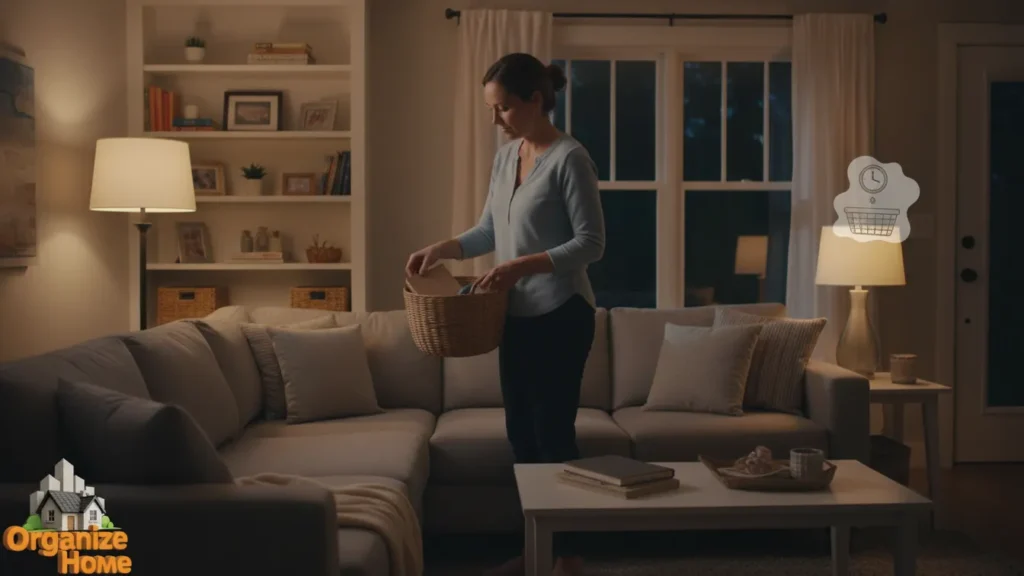
How Family Routines Impact Daily Mess
Family routines play a much bigger role in daily mess than most people realize. Even with good organization systems in place, clutter returns quickly when routines are unclear, inconsistent, or misaligned between the people who share the space.
Every household has multiple rhythms happening at once. Different wake-up times, work schedules, school routines, and energy levels all influence how spaces are used throughout the day. When these routines aren’t supported by shared organization habits, items start drifting away from where they belong.
One common issue is assuming everyone organizes the same way. One person may naturally put things away immediately, while another prefers to deal with them later. Without agreed-upon defaults—where shoes go, where bags land, where daily items belong—each person follows their own logic. The result is friction and scattered clutter.
Transitions are another weak point. Mornings, evenings, and arrivals home create the most mess because they involve movement and urgency. If routines don’t include quick, built-in reset points, items pile up during these transitions and stay there longer than intended.
It’s also important to consider children and shared spaces. Kids aren’t messy because they don’t care; they struggle when systems are too complex or inconsistent. When organization expectations change depending on the day or the adult involved, mess becomes inevitable.
The solution isn’t stricter rules—it’s simpler routines that everyone can follow. When family routines are supported by easy systems and clear expectations, the home becomes more predictable. And when routines align, mess stops feeling constant and starts becoming manageable.
Why Perfectionism Makes Organization Harder
Perfectionism often feels like a strength, but when it comes to keeping a home organized, it can quietly work against you. The desire to do things “the right way” can make everyday organization feel heavier, slower, and harder to maintain.
This usually shows up as waiting for the perfect moment to organize. Instead of doing a quick reset, people postpone putting things away until they have enough time to do everything properly. Drawers need to be rearranged, categories refined, and items placed just right. Because that ideal moment rarely comes, clutter continues to build.
Perfectionism also creates unrealistic standards. When a space doesn’t look exactly the way it’s supposed to, it can feel like failure. This all-or-nothing mindset discourages small actions that would actually prevent mess from spreading. A few items out of place suddenly feel overwhelming, even though they could be handled in minutes.
Another way perfectionism backfires is by making systems too rigid. If organization requires everything to look perfect to be considered “done,” the system becomes fragile. One busy day or unexpected interruption is enough to derail it, and once it breaks, it’s often abandoned entirely.
Organized homes aren’t perfect—they’re functional. They allow for mess and focus on recovery, not constant control. Quick resets, flexible categories, and “good enough” solutions are what keep a home running smoothly over time.
Letting go of perfection doesn’t mean lowering standards. It means choosing systems that support real life. When organization becomes forgiving instead of demanding, staying on top of daily mess becomes much easier.
Simple Daily Resets That Prevent Mess From Building Up
One of the most effective ways to stop your home from getting messy so fast is by using simple daily resets. These are not long cleaning sessions or full reorganizations. They are short, intentional moments that bring the home back to baseline before clutter has time to spread.
A daily reset works because it focuses on prevention, not perfection. Instead of waiting until mess becomes overwhelming, you handle small amounts consistently. Five to ten minutes is often enough to reset the most used areas of the home—especially when systems are already in place.
The key is choosing the right timing, not more effort. Daily resets work best when they’re tied to existing routines, such as after dinner, before bedtime, or right before leaving the house in the morning. When resets are attached to something you already do, they’re much easier to maintain.
Another important factor is scope. A reset is not about organizing everything. It’s about returning items to their homes, clearing key surfaces, and preparing the space for the next day. Limiting the reset to a few priority areas—like the kitchen counter, entryway, or living room—keeps it manageable.
Simple resets also reduce mental load. Knowing that there’s a consistent moment to “close the day” prevents the stress of unfinished mess. Instead of clutter feeling constant, it becomes temporary and predictable.
Most importantly, daily resets support real life. They allow mess to happen during the day without letting it pile up. Over time, this rhythm changes how the home feels. Instead of constantly catching up, you stay just ahead of the mess—with far less effort than you might expect.
How to Create Easy Drop Zones That Actually Work
Easy drop zones are one of the most practical tools for preventing daily mess—but only when they’re designed to match real behavior. When drop zones work, they stop clutter at the door. When they don’t, they quickly become clutter piles that add to the problem.
A drop zone is simply a designated place for items that enter or move through the home every day. Think keys, bags, shoes, mail, jackets, or work essentials. These items need a landing spot that’s obvious, easy to reach, and faster to use than setting things down randomly.
The most common mistake is creating drop zones that are too small, too hidden, or too strict. If a basket fills up after one day, or a hook is hard to reach, the system will be ignored. A good drop zone has enough space to handle real-life volume without overflowing immediately.
Location matters more than aesthetics. Drop zones should live exactly where items naturally land—not where they look best in photos. If mail always ends up on the kitchen counter, that’s where a mail tray belongs. If bags are dropped near the entryway, hooks or a basket should be right there, not in another room.
Another key factor is limits. A drop zone should be easy, but not endless. When it has clear boundaries—like one tray, one basket, or a small surface—it signals when it’s time to reset. This prevents clutter from spreading beyond the zone.
The goal of a drop zone isn’t long-term storage. It’s controlled transition. Items pause there briefly before being put away properly during a daily reset. When drop zones are simple, visible, and well-sized, they reduce friction—and that’s what keeps mess from taking over the rest of the house.

Fixing the Root Causes Instead of Reorganizing Over and Over
If your home keeps getting messy no matter how many times you reorganize, the problem usually isn’t effort—it’s focus. Reorganizing treats the symptoms. Fixing the root causes is what actually changes the outcome.
Many homes fall into a cycle: clutter builds up, a big organizing session happens, things look better for a short time, and then the mess slowly returns. This cycle is exhausting because nothing fundamental has changed. Items still don’t have clear homes, systems still don’t match daily habits, and routines still rely on motivation instead of structure.
The root causes of daily mess are almost always predictable. Too much stuff for the space. No clear default for where items go. Systems that require too much effort. Routines that don’t include recovery time. When these issues stay in place, reorganization becomes a temporary reset instead of a lasting solution.
Fixing the root causes means shifting your mindset. Instead of asking, “How do I organize this space better?” ask, “Why does clutter keep landing here?” The answer usually points to a missing system, an inconvenient storage spot, or an unrealistic expectation.
Another important shift is moving away from full reorganizations. You don’t need to start over each time things get messy. Small, targeted fixes—adjusting a drop zone, simplifying a category, removing excess items—create much bigger long-term results than constant rearranging.
When the systems support real life, organization stops feeling fragile. Mess still happens, but it doesn’t spiral out of control. The home becomes easier to reset, easier to maintain, and far less stressful to live in.
The goal isn’t a perfectly organized home. It’s a home that recovers quickly. Once you fix what’s causing the mess in the first place, you no longer have to organize the same spaces again and again—and that’s when organization finally starts to last.