Why Home Office Organization Matters for Productivity
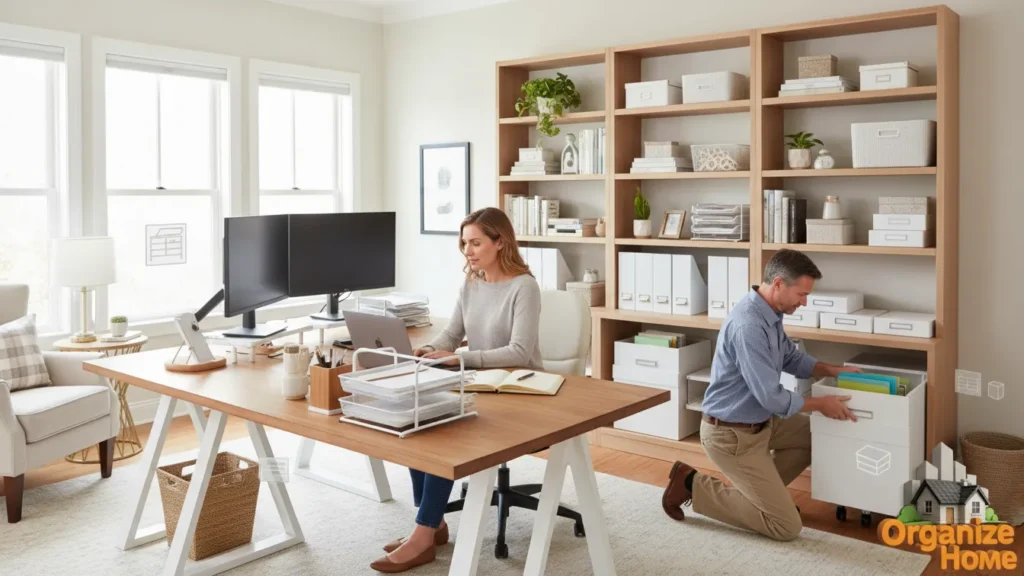
Home office organization plays a crucial role in how productive, focused, and efficient daily work feels—especially when working from home has become part of regular life. Unlike traditional offices, home offices often share space with other activities, which makes organization even more important. When home office organization is unclear or inconsistent, distractions increase and productivity suffers, even if the work itself is manageable.
One of the main reasons home office organization matters is focus. A cluttered or poorly organized workspace creates constant visual noise. Papers, supplies, cords, and unfinished tasks all compete for attention, making it harder to concentrate on a single task. Clear home office organization reduces these distractions by giving every item a defined place, allowing the mind to stay on work instead of surroundings.
Home office organization also affects how efficiently tasks are completed. When frequently used items are hard to find or stored far from where they’re needed, small interruptions add up throughout the day. Searching for supplies, clearing space to work, or reorganizing mid-task breaks momentum. A well-organized home office supports smoother workflows by keeping essential tools accessible and ready to use.
Another important factor is decision fatigue. A disorganized workspace forces constant micro-decisions—where to place items, what to move, what can be ignored for now. These small decisions drain mental energy over time. Home office organization simplifies choices by creating predictable systems, so actions like putting something away or starting a task require less thought.
Home office organization is especially critical when work time is limited. In busy homes, work often needs to fit into tight schedules or shared spaces. Clear organization allows the workspace to be set up quickly and reset just as fast. When systems are simple and reliable, transitioning into work mode becomes easier, even if time is short.
There’s also a strong connection between organization and stress. A cluttered home office can create a constant sense of unfinished work, even outside working hours. Seeing piles of papers or disorganized desks can make it difficult to mentally disconnect. Effective home office organization helps create boundaries, signaling when work begins and ends.
It’s important to note that home office organization isn’t about creating a perfect or minimal workspace. It’s about supporting how work actually happens. A functional home office should feel comfortable, realistic, and adaptable. Systems should work quietly in the background, helping tasks flow without demanding constant upkeep.
Ultimately, home office organization matters because it directly supports productivity, focus, and mental clarity. When the workspace is organized in a way that reflects real routines, it becomes easier to work efficiently and with less stress. Strong home office organization turns the workspace into a tool that supports daily work instead of an obstacle that needs constant attention.
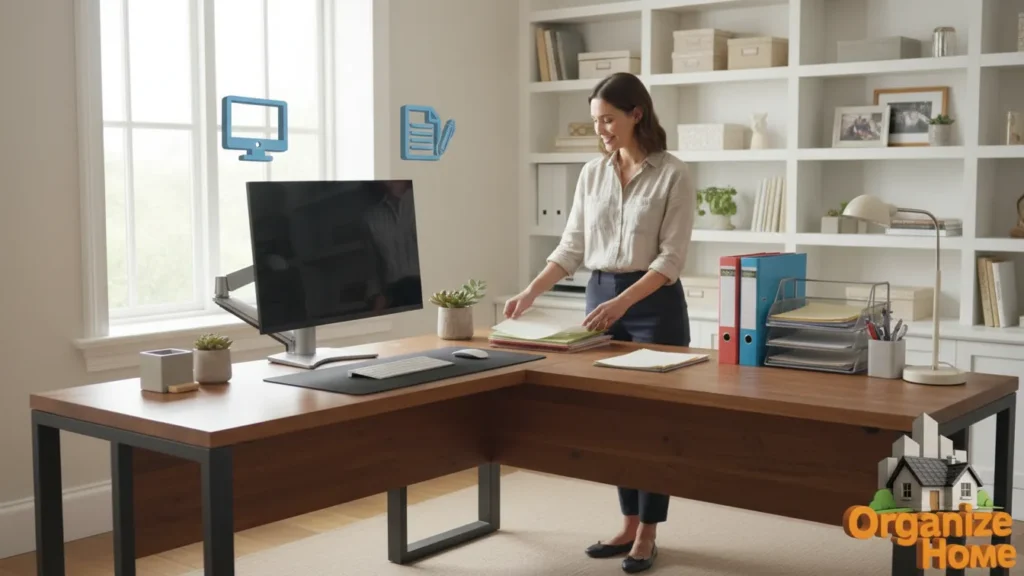
Common Home Office Organization Mistakes That Reduce Focus
Many home offices struggle with focus not because of workload, but because of common home office organization mistakes that quietly disrupt concentration. These mistakes often develop gradually as work routines evolve, making them harder to notice and correct. When organization doesn’t support how the space is actually used, distractions increase and productivity declines.
One of the most frequent mistakes is allowing the home office to become a multi-purpose drop zone. When work supplies mix with household items, paperwork, or personal belongings, the workspace loses clarity. This visual and functional overlap makes it harder to stay focused, as the brain constantly shifts attention between unrelated items. Home office organization works best when the space clearly supports work-related activities.
Another common issue is unclear storage for frequently used items. When essential tools like notebooks, chargers, or office supplies don’t have a defined place, they tend to move around the desk or disappear altogether. This leads to repeated interruptions during the workday. Strong home office organization reduces these disruptions by keeping everyday items consistently accessible.
Overcrowding the desk surface is another major mistake. Desks often collect stacks of papers, devices, and unfinished tasks, leaving little room to work comfortably. When the primary work surface is cluttered, focus suffers because the space doesn’t support a clear starting point for tasks. Home office organization improves when the desk is reserved for active work rather than storage.
Many home offices also suffer from poor cable and supply management. Loose cords, scattered accessories, and mismatched tools create visual noise that competes for attention. Even if these items are necessary, disorganization around them can reduce focus. Home office organization systems should contain and simplify these elements rather than letting them spread.
Another mistake is creating overly complicated systems. Too many containers, labels, or strict rules can make maintenance harder instead of easier. When systems feel rigid or time-consuming, they’re often abandoned. Home office organization should simplify work, not add extra steps to already busy routines.
Finally, ignoring how the space feels emotionally can affect focus. A home office that feels cramped, chaotic, or unfinished can create subtle stress throughout the day. Organization isn’t just about placement—it’s about creating an environment that supports calm and clarity. Home office organization works best when it reduces friction instead of creating pressure.
Recognizing these common home office organization mistakes is the first step toward improving focus. Once these issues are identified, it becomes much easier to build simple, realistic systems that support concentration and make the workspace more productive and comfortable.
How to Organize a Home Office by Work Zones
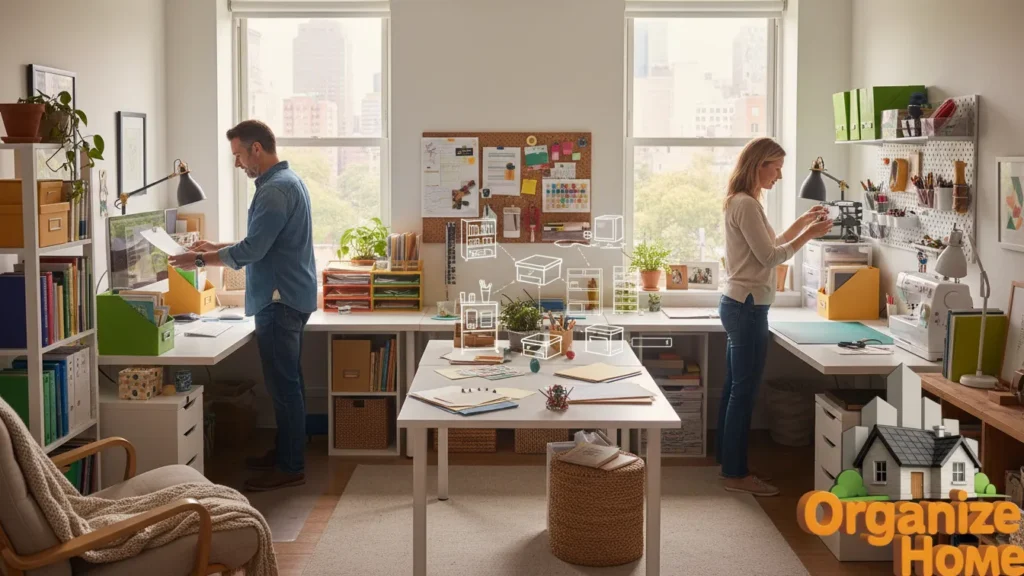
One of the most effective ways to improve home office organization is to stop organizing around furniture and start organizing around work zones. Furniture defines where things sit, but zones define how work actually happens. When home office organization is built around zones, tasks flow more smoothly and the workspace becomes easier to use and maintain.
A work zone is a dedicated area designed to support a specific type of task. In a home office, common zones include a primary work zone for focused tasks, a reference zone for documents or books, a supply zone for tools and materials, and a technology zone for devices and chargers. Grouping items by function instead of spreading them across the room strengthens home office organization by reducing unnecessary movement and interruptions.
Organizing by work zones helps limit distractions. When everything needed for a task is located within the same zone, there’s less need to get up, search, or shift attention. This is especially important in a home environment, where distractions are already more common. Clear zones help home office organization support focus instead of competing with it.
Zones also make clutter easier to identify and correct. When each area has a clear purpose, it’s immediately obvious when an item doesn’t belong. Papers left in the supply zone or personal items placed in the work zone stand out quickly. This makes home office organization more self-regulating and reduces the need for frequent, full resets.
It’s important to keep work zones realistic and limited in number. Most home offices don’t need many zones to function well. Too many zones can make the space feel rigid or complicated. Simple, broad zones are easier to understand and maintain, especially in shared or multi-use rooms.
Work zones should always reflect actual habits. If certain tasks consistently happen in the same spot, that’s a sign a zone already exists and should be supported. Home office organization works best when zones adapt to real behavior rather than forcing new routines that don’t fit daily work patterns.
By organizing a home office around work zones, the space becomes more intentional and flexible. This approach creates structure without strict rules, allowing the workspace to support different tasks throughout the day. When zones are clearly defined, home office organization enhances productivity, focus, and ease of use with far less effort.
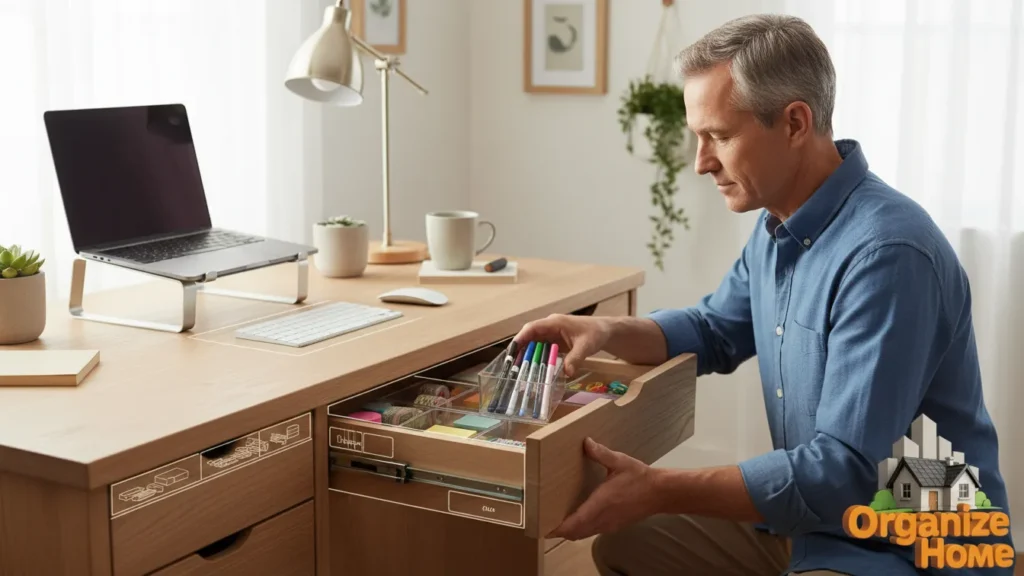
Home Office Organization Starts With Clear Categories
Home office organization becomes far more effective when it starts with clear categories instead of relying on furniture placement or storage products alone. Categories create the logic behind where items belong, which is essential in a workspace that supports multiple tasks. Without clear categories, even a well-designed home office can quickly become cluttered and difficult to maintain.
Categories are simply groups of items that serve a similar purpose. In a home office, common categories include work tools, paperwork, reference materials, technology accessories, office supplies, and personal items. When these categories are clearly defined, home office organization feels intuitive rather than confusing, making it easier to put things away correctly.
Starting with categories helps prevent clutter from spreading across the workspace. When items are grouped intentionally, it becomes easier to see where overflow is happening and which areas need adjustment. Home office organization improves when storage reflects real needs instead of forcing unrelated items to share the same space.
Clear categories also reduce decision fatigue during the workday. When it’s obvious where an item belongs, returning it becomes automatic instead of something to postpone. This consistency supports focus and helps maintain a productive environment. Home office organization works best when daily actions require minimal thought.
Another advantage of category-based home office organization is flexibility. Categories can grow, shrink, or shift as work routines change. For example, if paperwork becomes more prominent, that category can be expanded without disrupting the entire system. Categories adapt more easily than rigid layouts, which helps home office organization remain functional over time.
It’s important to keep categories broad and realistic. Overly specific groupings can make maintenance harder and discourage consistent use. Simple categories are easier to understand, especially in shared or multi-use home offices. Home office organization should support work, not complicate it.
By starting with clear categories, home office organization gains a strong foundation. Storage tools then support the categories instead of trying to create order on their own. This approach leads to systems that are easier to use, easier to maintain, and better aligned with real work habits.
How to Organize Home Office Storage Without Overcrowding
Home office storage often becomes overcrowded because it’s expected to hold too many different items at once. Office supplies, paperwork, technology, and personal items all compete for limited space, which can quickly make storage areas difficult to use. Effective home office organization focuses on creating functional space, not filling every shelf, drawer, or cabinet.
The first step to avoiding overcrowding is assigning a clear role to each storage area. Drawers, shelves, cabinets, and containers should each support specific categories rather than acting as general storage. For example, one drawer may be dedicated to daily office supplies, while another supports paperwork or reference materials. This clarity strengthens home office organization by reducing overlap and confusion.
Spacing is a critical element of functional storage. When storage areas are packed tightly, returning items becomes frustrating and time-consuming. Home office organization works best when shelves and drawers have some open space, allowing items to be put away quickly without rearranging everything else. Open space isn’t wasted—it’s what keeps systems usable.
Frequency of use should guide placement decisions. Items used daily should be stored in the most accessible areas, while rarely used supplies or archived documents can be placed farther away. Aligning storage with real work habits helps home office organization support productivity instead of slowing it down.
Another important principle is avoiding mixed categories within the same storage area. When unrelated items share drawers or shelves, clutter builds faster and maintenance becomes harder. Clear category boundaries help home office organization remain intuitive and easy to reset throughout the day.
Storage tools can be helpful, but they should be used intentionally. Too many bins, boxes, or organizers can actually contribute to overcrowding if each one adds complexity. Home office organization improves when tools support existing categories rather than creating new layers to manage.
Finally, it’s important to remember that effective storage doesn’t need to look full. A breathable storage setup feels calmer and is easier to maintain during busy workdays. When home office storage is organized with space, clarity, and realistic use in mind, home office organization becomes more sustainable and far less stressful.
👉 Bedroom Organization Small Busy Homes
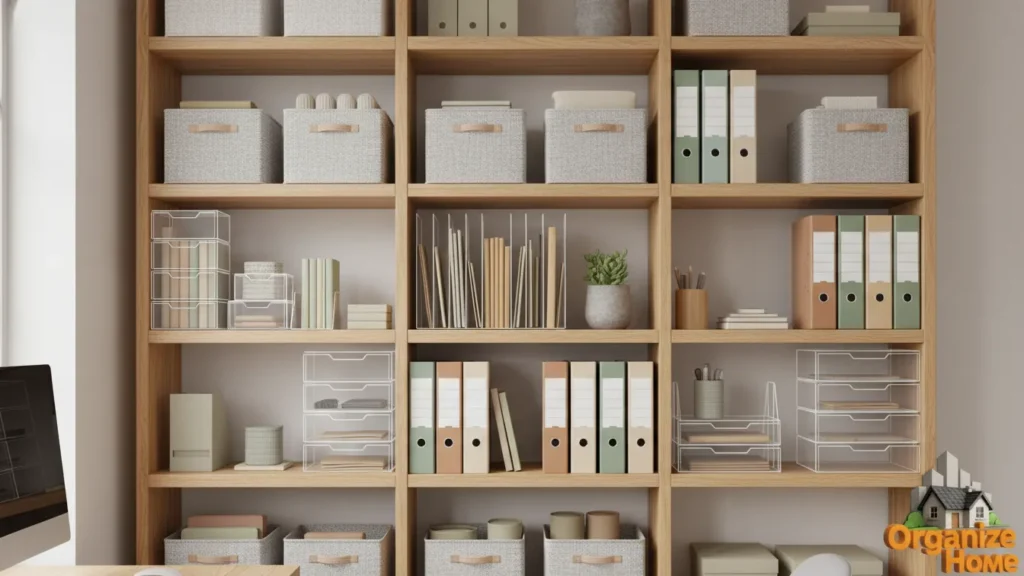
Desk Organization Systems for a Functional Home Office
The desk is the core of any home office, which makes desk organization one of the most important elements of effective home office organization. When the desk is cluttered or poorly structured, focus drops and work feels harder than it needs to be. Functional desk organization is not about keeping the surface empty, but about supporting how work actually happens.
The first principle of desk organization is defining what truly belongs on the desk. Only items that support daily work should remain within arm’s reach. This often includes a computer, notebook, keyboard, mouse, and a small number of essential tools. Everything else should have a designated storage home nearby. Home office organization improves when the desk is reserved for active tasks rather than long-term storage.
Clear zones on the desk surface help maintain order throughout the workday. For example, one zone can support computer work, another can be used for writing or reviewing documents. When items stay within their zones, the desk feels structured instead of chaotic. These micro-zones reinforce broader home office organization systems and make it easier to reset the workspace quickly.
Accessibility is another key factor. Frequently used items should be easy to reach without standing up or moving multiple objects. When supplies are inconvenient to access, they tend to pile up on the desk surface. Home office organization stays more consistent when storage supports speed and ease during work tasks.
Desk drawers can also play a valuable role when used intentionally. Each drawer should have a clear purpose, such as holding office supplies or reference materials. Mixing categories in drawers quickly leads to clutter and makes items harder to find. Simple internal organization supports long-term home office organization by keeping tools contained and visible.
Cable management is an often-overlooked part of desk organization. Loose cords create visual noise and interfere with usable space. Simple solutions that group or guide cables help reduce distractions and make the desk easier to clean up at the end of the day. Home office organization benefits when technology is contained rather than scattered.
Finally, desk organization systems should be easy to maintain. If resetting the desk takes more than a minute or two, the system is likely too complex. Functional desk organization supports work quietly, allowing the home office to stay productive without constant rearranging.
When the desk is organized with intention, clarity, and accessibility, it becomes a tool that supports focus instead of competing with it. Strong desk organization reinforces overall home office organization and helps create a workspace that feels calm, functional, and ready for daily work.
Paper and Supply Organization for Home Offices
Paper and office supplies are some of the easiest elements to lose control of in a home office, especially when work involves documents, notes, or multiple projects at once. Without clear systems, papers pile up, supplies scatter across surfaces, and the workspace becomes harder to use. Effective home office organization in this area focuses on containment, clarity, and easy access.
The first step is defining which types of paper truly belong in the home office. Common paper categories include active documents, reference materials, incoming items, and archived papers. When these categories are clear, home office organization improves because papers stop floating between the desk, shelves, and random surfaces.
Active papers should be kept limited and visible. These are documents currently being worked on and need to be accessed regularly. Storing them in a designated tray, folder, or drawer near the desk helps maintain focus without letting papers spread. Home office organization works best when active paper has a temporary but defined home.
Reference and archived papers should be stored separately from daily work materials. Keeping these items farther from the desk prevents them from interfering with current tasks. When reference materials are clearly grouped and stored intentionally, home office organization stays cleaner and easier to manage.
Office supplies benefit from clear grouping as well. Pens, notebooks, chargers, and small tools should be stored by category instead of scattered across drawers or containers. Mixing supplies makes it harder to find what’s needed and leads to duplicates. Closet-like organization logic applies here — clear categories support consistent use.
Accessibility matters, but so does restraint. Only frequently used supplies should be kept within arm’s reach. Rarely used items can be stored farther away without disrupting daily routines. Home office organization improves when supply placement matches actual frequency of use.
Simple containers can help maintain order, but they should support existing categories rather than create complexity. Overusing organizers often adds extra steps to maintenance. Home office organization systems work best when they are simple enough to reset quickly during a busy workday.
Finally, paper and supply organization should be reviewed occasionally as work changes. Projects end, routines shift, and storage needs evolve. Small adjustments keep systems aligned with current work instead of allowing clutter to build unnoticed.
When paper and supplies are organized with clarity and purpose, the home office feels calmer and more functional. Strong organization in this area reduces distractions, supports focus, and helps home office organization stay effective over time.
👉 Living Room Organization Zones
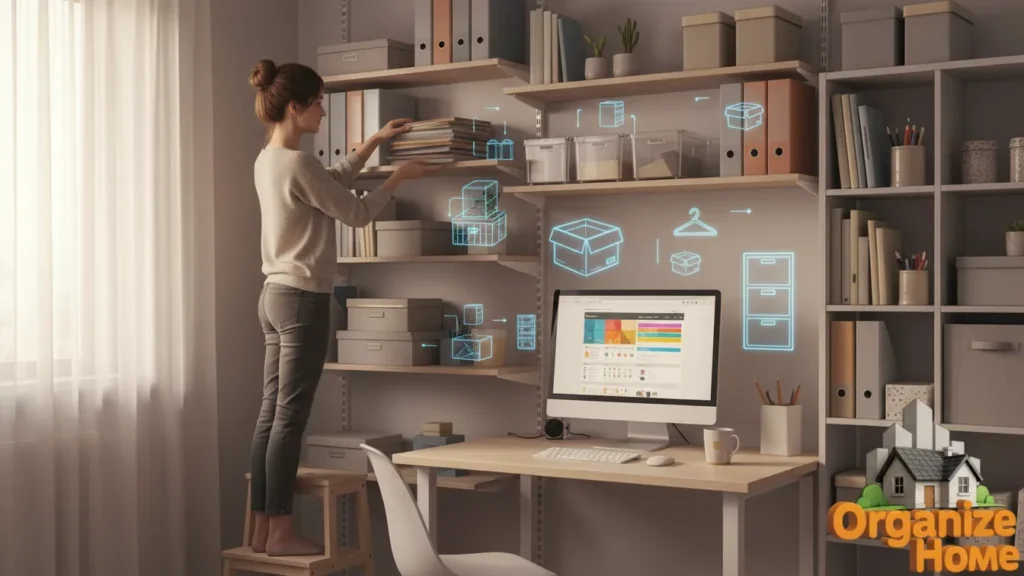
How to Organize a Small Home Office With Limited Space
A small home office can feel cluttered very quickly when space is limited, but limited square footage doesn’t mean home office organization isn’t possible. In fact, small home offices benefit the most from clear systems because every surface, shelf, and storage area needs to work intentionally. The goal is to support focused work without making the space feel cramped or overwhelming.
The first priority in small home office organization is deciding what truly belongs in the workspace. Because space is limited, items that don’t directly support work routines can quickly create visual noise. Keeping only essential tools, supplies, and materials in the office helps maintain clarity and makes the space easier to use. Home office organization improves when the room is dedicated to work-related needs.
Vertical space becomes especially valuable in small home offices. Using wall-mounted shelves, vertical file storage, or tall cabinets allows items to be stored upward instead of spreading across the desk or floor. However, it’s important not to overfill vertical storage. Home office organization works best when vertical solutions remain accessible and visually balanced.
Clear categories are essential in a limited workspace. When items are grouped logically, storage feels more manageable and maintenance becomes easier. Mixing categories in a small home office quickly leads to cluttered shelves and crowded surfaces. Home office organization stays functional when each category has a defined, realistic home.
Multi-functional furniture can also support small home office organization when chosen intentionally. Desks with drawers, shelving units that double as storage, or compact filing solutions can reduce the need for additional furniture. The key is ensuring these pieces don’t become catch-all spaces without clear boundaries.
Another important principle is leaving some open space. Filling every available surface makes a small home office feel tighter and harder to work in. Home office organization benefits when there is room to move, spread out materials temporarily, and reset the workspace quickly after tasks are finished.
Finally, flexibility matters in small home offices. Simple systems that can adapt as work routines change are more effective than rigid layouts. Adjustable shelves, movable containers, or flexible storage options allow home office organization to evolve without constant reworking.
When home office organization in a small space focuses on clarity, purpose, and realistic limits, the workspace feels more open and functional. Thoughtful systems help even the smallest home office support productivity and focus without feeling cluttered or constrained.
Home Office Organization Ideas for Busy or Shared Homes
Home office organization becomes more complex in busy or shared homes because the workspace often needs to serve multiple people, schedules, or purposes. Whether the home office is shared between adults, combined with another room, or used intermittently throughout the day, clear systems are essential to prevent clutter and confusion. Effective home office organization in these situations focuses on flexibility, clarity, and ease of reset.
One of the most helpful ideas for shared home offices is defining clear boundaries within the space. Even when the room itself is shared, specific areas or storage zones can be assigned to different users or types of work. For example, one drawer may be reserved for one person’s supplies, while another supports shared equipment. Home office organization improves when ownership is clear and respected.
Zones are especially important in busy households. Creating zones for focused work, storage, and shared resources allows routines to overlap without interfering with one another. Home office organization works best when one person can use the space without disrupting another’s setup, especially when time is limited.
Accessibility also plays a key role. Items used daily by multiple people should be easy to reach and simple to return. When shared supplies are hard to access or poorly defined, clutter tends to build up on desks and nearby surfaces. Home office organization becomes more sustainable when shared tools have obvious, convenient homes.
Keeping systems simple is critical in busy environments. Overly detailed rules or rigid layouts are difficult to maintain when schedules are full. Broad categories and flexible storage options allow everyone to participate in maintaining home office organization, even during hectic days or quick transitions between tasks.
Visual calm matters as well. Shared spaces can feel overwhelming when too many items are visible at once. Using closed storage, baskets, or cabinets helps reduce visual noise and keeps the workspace feeling more focused. Home office organization should support concentration, not add to mental clutter.
Finally, shared home offices benefit from systems that reset quickly. When work sessions end, the space should be easy to return to a neutral state. Simple habits like clearing the desk surface and returning items to their zones help maintain order without requiring a full reorganization.
With clear boundaries, shared zones, and flexible systems, home office organization can support multiple routines without becoming stressful. These ideas help busy or shared home offices remain functional, calm, and ready for daily work.
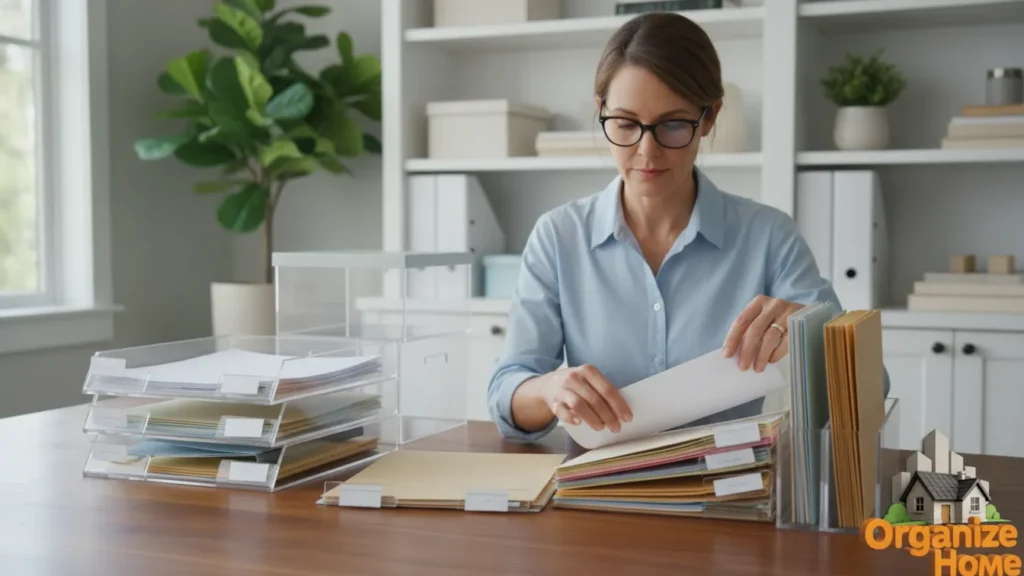
Home Office Organization Systems That Are Easy to Maintain
Home office organization systems only work long term when they are easy to maintain alongside real work routines. In a space that may be used daily, shared with others, or set up and taken down frequently, overly complex systems tend to fail. The most effective home office organization systems are designed to support habits naturally, not rely on motivation or constant adjustment.
Simplicity is one of the most important characteristics of low-maintenance systems. Storage should be easy to understand at a glance. When it’s obvious where items belong, putting them away becomes automatic instead of a decision. Home office organization improves when systems reduce thinking and support routine actions throughout the workday.
Accessibility also plays a key role. Items used every day—such as notebooks, chargers, or writing tools—should be stored within easy reach. When storage feels inconvenient, supplies tend to stay on the desk or nearby surfaces. Home office organization stays intact longer when storage placement reflects how often items are actually used.
Flexibility is another essential factor. Easy-to-maintain home office organization systems allow for change without requiring a full reset. Adjustable shelves, movable containers, and broad categories make it easier to adapt as work routines shift. Rigid systems often break down because they don’t account for evolving tasks or schedules.
Consistency across the workspace supports maintenance as well. When drawers, shelves, and surfaces follow the same logic—clear categories, defined zones, and simple placement—the system feels cohesive. Home office organization becomes easier when the same principles apply everywhere instead of changing from one area to another.
Leaving intentional open space is equally important. Storage that is packed to capacity is fragile and difficult to reset during busy moments. Home office organization works best when there is room to return items quickly without rearranging everything else. Empty space isn’t wasted—it’s what makes systems forgiving.
Ultimately, home office organization systems that are easy to maintain don’t demand attention. They quietly support daily work, allowing the space to reset naturally through regular use. When systems feel intuitive, flexible, and realistic, home office organization becomes sustainable instead of stressful.
How to Maintain Home Office Organization With Minimal Effort
Maintaining home office organization doesn’t require constant tidying or rigid routines. The most sustainable systems are those that stay functional with minimal effort because they are built around real work habits. When organization supports daily routines naturally, the home office remains usable without becoming another task to manage.
One of the most effective ways to maintain home office organization is reducing the distance between use and return. Items should be stored close to where they are used so putting them away feels like the natural next step. When tools, supplies, and documents are easy to return, clutter is less likely to build up on the desk or nearby surfaces.
Avoiding overfilled storage is another key principle. Drawers, shelves, and containers that are packed too tightly make it harder to reset the space, especially during busy workdays. Home office organization lasts longer when there is a small amount of open space that allows items to be returned quickly without rearranging everything else.
Consistency also plays an important role in low-effort maintenance. When categories and zones stay the same, there’s no need to rethink where items belong. This familiarity reduces friction and helps everyone using the space follow the same logic. Home office organization systems that rely on habit rather than rules are much easier to sustain.
Small, informal check-ins can help without turning maintenance into a routine. Taking a minute at the end of the day to clear the desk surface or return items to their zones prevents clutter from accumulating. Home office organization benefits more from frequent small resets than from occasional large reorganizations.
It’s also important to accept realistic standards. A home office doesn’t need to look perfect to function well. Systems designed for minimal effort allow for occasional messiness without falling apart. Home office organization becomes sustainable when it supports real schedules, energy levels, and workloads.
When maintenance is simple, flexible, and aligned with daily work habits, home office organization largely takes care of itself. Instead of constantly fixing the same issues, the workspace stays functional, calm, and ready for work through everyday use.
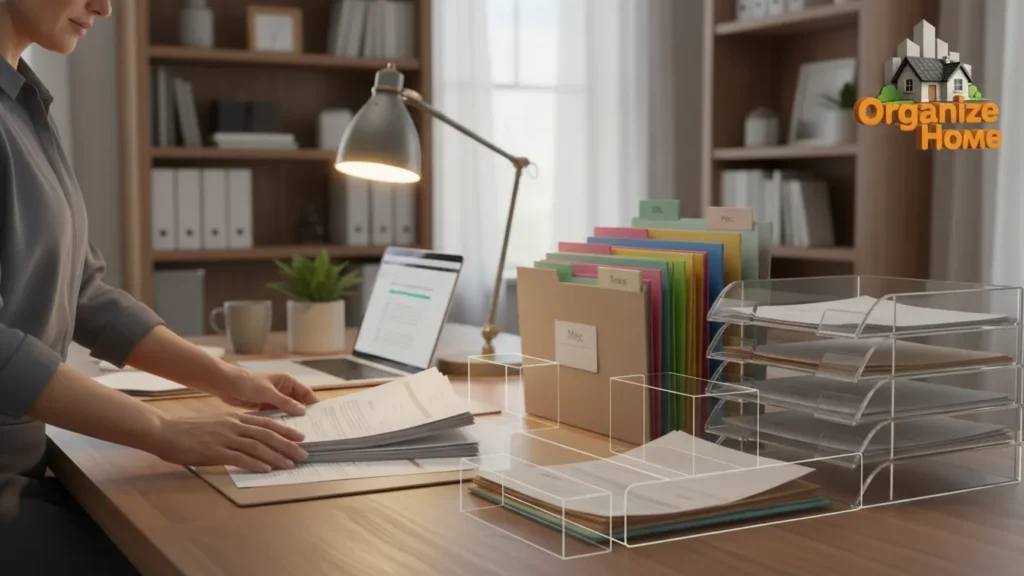
Home Office Organization Habits That Support Daily Work
Long-term home office organization depends less on storage products and more on the habits that reinforce the systems already in place. Even the most well-designed workspace can become cluttered if daily behaviors don’t support organization. The goal is to build simple, realistic habits that keep the home office functional without adding extra effort to the workday.
One of the most important habits is returning items to their place as part of finishing a task. When a work session ends, notebooks go back to their shelf, supplies return to drawers, and papers are placed in their designated category. Home office organization works best when putting things away feels like the natural final step, not a separate chore.
Respecting categories is another key habit. Items should consistently return to the category they belong to, even during busy moments. Home office organization often starts to break down when supplies or documents are placed “just for now” in random spots. These small exceptions tend to repeat and slowly turn into clutter.
Limiting what enters the workspace also plays an important role. Because home offices are often part of shared spaces, non-work items can easily migrate onto desks or shelves. A helpful habit is treating the home office as a work-only zone whenever possible. When items don’t support work, they should move back out of the space instead of settling there.
Quick daily resets help maintain order without taking much time. Taking one or two minutes at the end of the day to clear the desk surface and return items to their zones prevents clutter from building up. This habit keeps home office organization stable without requiring large reorganizing sessions.
Shared responsibility matters in home offices used by more than one person. When everyone understands the organization systems and follows the same habits, the space stays functional without relying on one person to manage it. Clear, simple home office organization makes it easier for everyone to participate.
Finally, allowing room for imperfection is essential. A home office that works well most of the time is more valuable than one that looks perfect occasionally. Habits that are flexible and forgiving help home office organization survive real workloads and changing schedules.
When supportive habits align with simple systems, home office organization becomes largely self-sustaining. Instead of constantly correcting clutter, the workspace stays ready for daily work, supporting focus, productivity, and ease throughout the day.