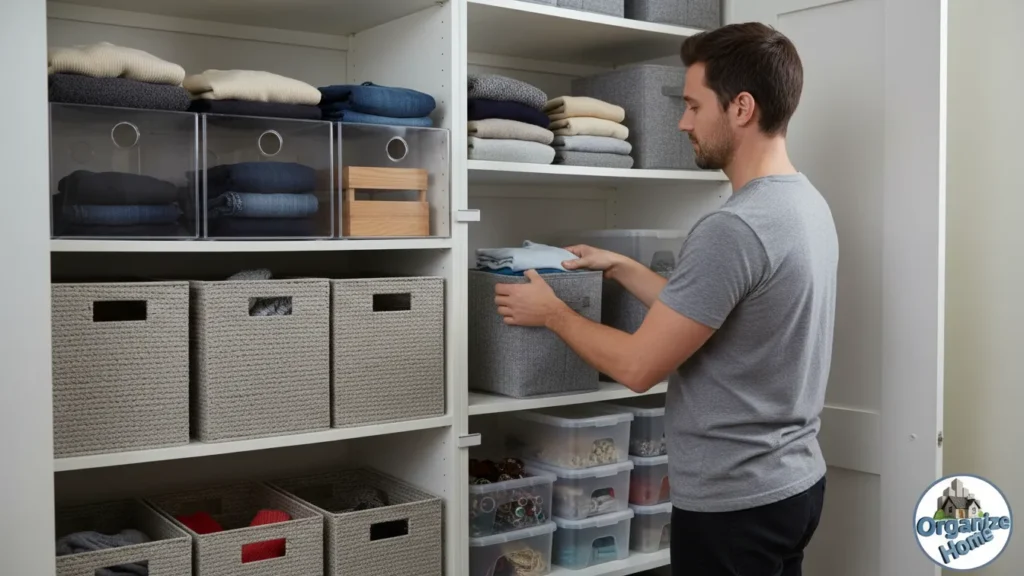
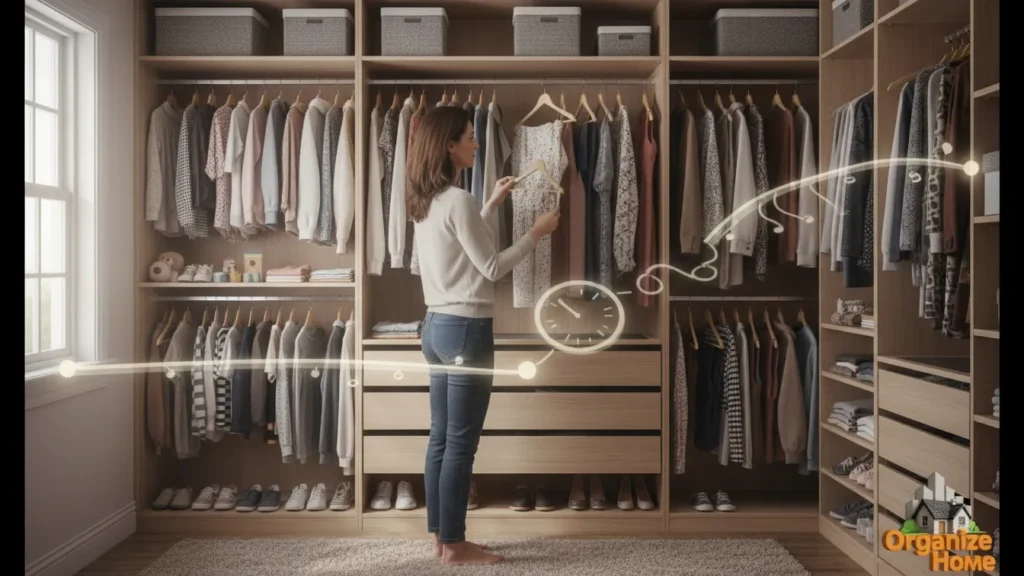
Decluttering Without Feeling Guilty
Decluttering without feeling guilty is often harder than deciding what to get rid of. Many people know their homes feel too full, yet every attempt to declutter brings up discomfort, hesitation, or self-judgment. The guilt doesn’t come from the objects themselves—it comes from the meanings we attach to them and the stories we tell ourselves about letting go.
Guilt shows up in many forms. You might feel bad about wasting money, disrespecting a gift, or letting go of something connected to a past version of yourself. Sometimes the guilt isn’t even about the item—it’s about what keeping it represents. Items can carry expectations, memories, or pressure to be someone you’re no longer trying to be.
One reason decluttering triggers guilt is that we’re taught to assign moral value to possessions. Keeping things can feel responsible, grateful, or respectful. Letting go can feel careless or unappreciative. When these beliefs go unexamined, decluttering feels like doing something “wrong,” even when the clutter is actively making life harder.
Another common source of guilt is sunk cost. Time, money, or effort already invested in an item can make letting go feel like admitting failure. The thought process often sounds like, “I should keep this because I paid for it,” or “I might use it someday.” But keeping something out of guilt doesn’t recover what was spent—it only adds ongoing stress and takes up space you need now.
It’s also important to recognize that guilt thrives in cluttered environments. When items are packed together and constantly visible, they compete for attention. Each one feels like an unresolved obligation. Decluttering brings those feelings to the surface, which can be uncomfortable—but it also creates the opportunity to address them honestly.
Decluttering without guilt starts by separating the item from the emotion. An object is not a promise. It’s not a reflection of your character, your gratitude, or your worth. It’s simply something you own—or something that no longer needs to be owned. Letting go doesn’t erase the memory, effort, or intention behind it.
It also helps to reframe decluttering as an act of care rather than loss. You’re not taking something away from yourself; you’re creating space for clarity, ease, and function. You’re choosing an environment that supports who you are now, not who you were expected to be.
Guilt often softens when decisions are made thoughtfully instead of reactively. Decluttering doesn’t have to be fast or extreme. It can be gentle, intentional, and respectful. You’re allowed to pause, reflect, and choose at a pace that feels safe.
This article will walk through common guilt triggers and how to move past them—without forcing yourself, without harsh rules, and without judgment. Decluttering doesn’t require emotional toughness. It requires honesty, permission, and the understanding that letting go can be a healthy, forward-looking choice.

Why Guilt Is So Common When Decluttering
Guilt is one of the most common emotional reactions people experience while decluttering, and it shows up regardless of how organized or practical someone is. This is because decluttering isn’t just a physical process—it’s an emotional one. Letting go of belongings often activates deeper beliefs about responsibility, gratitude, waste, and identity.
One major reason guilt is so common is how we’re taught to relate to objects. Many people grow up hearing messages like “don’t waste,” “you should be grateful,” or “you never know when you might need that.” Over time, these ideas turn possessions into moral obligations. Keeping things feels like the “right” choice, while letting go feels selfish or careless—even when the items no longer serve a purpose.
Guilt also appears when items represent effort or sacrifice. Objects tied to money spent, time invested, or hard work often feel heavier to release. Decluttering them can feel like admitting a mistake or invalidating past choices. This emotional weight has nothing to do with the item’s usefulness today, but it strongly influences decision-making.
Another reason guilt surfaces is attachment to other people. Gifts, hand-me-downs, or items inherited from family members often carry emotional expectations. Letting go can feel like rejecting the person or the relationship, even though the object itself is no longer needed. This is especially true when there’s fear of disappointing someone or appearing ungrateful.
Guilt is also connected to unfinished versions of ourselves. Items kept “for someday” often represent goals, identities, or lifestyles we once imagined. Decluttering these things can feel like giving up on those versions of ourselves, which naturally brings discomfort. The guilt isn’t about the object—it’s about releasing an old expectation.
It’s important to understand that guilt during decluttering doesn’t mean you’re doing something wrong. It means you’re touching beliefs that haven’t been questioned before. These emotions surface precisely because decluttering challenges long-held assumptions about what it means to be responsible, appreciative, or prepared.
Recognizing why guilt is so common helps soften its impact. When you understand that guilt is a learned response—not a signal—you can acknowledge it without letting it control your decisions. Decluttering becomes easier when guilt is seen as information, not instruction.
By identifying the roots of guilt, you create space to make calmer, more intentional choices. Decluttering doesn’t require you to silence guilt—it requires you to understand it, so it no longer dictates what stays in your home.
The Emotional Weight Behind Keeping Too Much
Keeping too much is rarely about space alone—it’s about emotion. Many items stay in our homes not because we use or need them, but because they carry emotional weight. Over time, that weight accumulates, making decluttering feel far heavier than it actually is.
Objects often represent more than their function. They can symbolize effort, identity, relationships, or hope. Clothes may represent a version of yourself you once were or planned to be. Books, hobbies, or supplies may reflect intentions that never quite materialized. Letting go of these items can feel like letting go of meaning, not just things.
Another layer of emotional weight comes from responsibility. Items can feel like unfinished business—something you should use, fix, donate, or appreciate more. When too many of these objects coexist in one space, they create a constant sense of obligation. Even when you’re not actively thinking about them, they quietly demand attention.
There’s also fear underneath excess. Fear of regret, fear of needing something later, fear of making the “wrong” choice. Holding onto items can feel like a form of emotional insurance. The problem is that this insurance has a cost: crowded spaces, mental fatigue, and ongoing guilt.
Keeping too much can also blur self-trust. When you consistently avoid decisions, objects start to make choices for you. Storage fills, surfaces disappear, and clutter dictates how your home functions. This loss of control adds to the emotional burden, reinforcing the idea that decluttering is overwhelming or unsafe.
It’s important to recognize that the emotional weight isn’t a personal flaw. It’s a natural response to how meaning, memory, and responsibility get attached to possessions. Decluttering brings this weight to the surface, which is why it can feel intense—even when you’re letting go of items you don’t actively want.
Understanding the emotional weight behind keeping too much helps you approach decluttering with compassion instead of pressure. When you acknowledge what objects represent, decisions become gentler and clearer. You’re no longer fighting yourself—you’re listening, then choosing what truly supports you now.
Letting Go Without Judging Yourself
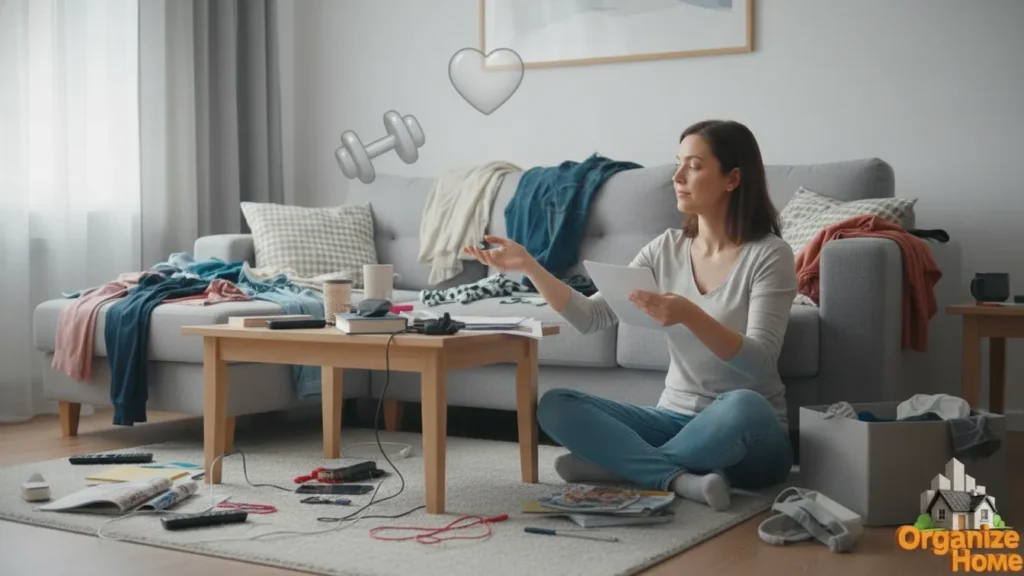
One of the hardest parts of decluttering is not deciding what to let go of—it’s how harshly we judge ourselves while doing it. Many people approach decluttering with an inner critic running in the background, commenting on past purchases, unfinished projects, or “bad decisions.” This self-judgment is what turns decluttering into an emotionally exhausting experience.
Letting go without judging yourself starts with understanding that every item you own once made sense. At some point, it served a purpose, met a need, or felt right in the moment. Judging yourself now using today’s perspective ignores the context in which those decisions were made. Growth naturally changes needs, priorities, and preferences.
Self-judgment also tends to show up as pressure. Thoughts like “I should have known better” or “I shouldn’t have bought this” make decluttering feel punitive, as if you’re being punished for past choices. This pressure doesn’t improve decisions—it slows them down and increases resistance.
Another form of judgment is comparison. Seeing minimalist spaces online or hearing how easily others declutter can trigger shame about your own pace or process. Decluttering is deeply personal. Comparing your journey to someone else’s environment or timeline only adds unnecessary weight to an already emotional task.
Letting go without judgment means shifting from blame to curiosity. Instead of asking “Why did I keep this for so long?” ask “What made this feel important to me at the time?” Curiosity creates understanding. Understanding creates compassion. And compassion makes decluttering possible without emotional burnout.
It’s also important to separate self-worth from possessions. Items don’t define intelligence, responsibility, or success. Keeping something too long doesn’t mean you failed. Letting go doesn’t mean you wasted your life or your money. These are stories we attach to objects—not truths.
A helpful practice is acknowledging the decision instead of the mistake. Each time you let something go, you’re making a present-moment choice that supports your current life. That choice matters more than the past action that brought the item into your home.
Decluttering without judging yourself creates emotional safety. When you feel safe, decisions become clearer and lighter. Letting go stops feeling like a confession and starts feeling like a correction—one made with kindness instead of criticism.
Decluttering Items You Paid Money For
Letting go of items you paid money for is one of the strongest guilt triggers in decluttering. The thought “I spent money on this” can instantly stop progress, even when the item no longer fits your life. This reaction is understandable—but keeping something solely because it cost money often creates more loss, not less.
Money spent in the past is already gone. Keeping an item does not recover that cost. In fact, holding onto things you don’t use often adds ongoing costs: lost space, visual stress, harder storage, and daily frustration. The real question isn’t whether you paid for the item—it’s whether it’s paying you back now through use or value.
Many people confuse decluttering paid items with waste. But waste doesn’t happen when you let go—it happens when an item sits unused, taking up space and mental energy. An object that isn’t being used has already stopped fulfilling its purpose, regardless of how much it cost.
Another layer of difficulty is self-blame. Items you paid for can feel like evidence of poor decisions. Decluttering them may feel like admitting a mistake. But growth involves changing preferences, needs, and circumstances. Releasing an item can be a sign of learning, not failure.
It also helps to recognize that value changes over time. Something that was useful or meaningful when you bought it may no longer be relevant now. That doesn’t invalidate the original purchase. It simply reflects that your life has evolved.
A helpful mindset shift is this: keeping an unused item doesn’t honor the money spent—using your space well does. Your home is valuable. Allowing it to function better is a valid and practical priority.
If guilt still shows up, try focusing on where the item might go next. Donating or passing it on allows someone else to benefit from it. While this doesn’t refund your money, it does restore purpose to the item instead of letting it sit unused.
Decluttering items you paid money for is not about ignoring the past—it’s about choosing not to let past spending control your present environment. When you release what no longer serves you, you stop paying for it every day in space, stress, and energy.
👉 How to Start Decluttering When You Feel Overwhelmed
How to Declutter Gifts Without Feeling Bad
Decluttering gifts can feel especially difficult because gifts often come with emotional expectations attached. Even when an item doesn’t fit your life, letting it go can feel like rejecting the person who gave it or disrespecting their intention. This is one of the most common sources of guilt during decluttering—but it’s also one of the most misunderstood.
A gift’s purpose is fulfilled at the moment it’s given. The act of choosing, giving, and receiving is the point—not the lifetime storage of the object. Once you’ve received it, the gift has already done its job. Keeping it forever is not a requirement, even if it feels that way emotionally.
Many people hold onto gifts out of fear of being ungrateful. But gratitude is not measured by how long you keep something. You can appreciate the thought behind a gift without allowing the item to take up permanent space in your home. The feeling and the object are not the same thing.
Another reason gifts feel hard to declutter is imagined judgment. We picture what the giver might think if they knew we no longer had the item. In reality, most people give gifts hoping to bring joy—not to create obligation. Your home is not a museum for other people’s choices.
It can also help to separate the relationship from the item. A relationship exists independently of an object. Letting go of a gift does not erase the memory, connection, or care behind it. Those things live with you, not inside the object.
If it feels right, passing a gift on can be a respectful way to release it. Donating or gifting it to someone who will use it allows the item to continue serving a purpose instead of sitting unused. This honors the intention behind the gift more than forced storage ever could.
Decluttering gifts without feeling bad requires permission. Permission to prioritize how your home functions. Permission to choose what supports your current life. And permission to understand that keeping an item is not the same as valuing the person who gave it.
When you release the obligation attached to gifts, decluttering becomes lighter. You’re no longer choosing between gratitude and space—you’re choosing both, in a way that respects your home and yourself.
Releasing Items Tied to the Past
Items tied to the past are often the hardest to declutter—not because they’re useful, but because they represent moments, identities, or versions of life that once mattered deeply. These objects can carry nostalgia, grief, pride, or unfinished emotions, making decluttering feel like rewriting history instead of simply clearing space.
One reason these items feel heavy is that they act as anchors to who you were. Clothes from a previous stage of life, objects connected to a former relationship, or items linked to a goal you once had can feel like proof that those experiences mattered. Letting them go can trigger fear that the memory—or its significance—will disappear too.
It’s important to recognize that memories do not live inside objects. They live in you. An item may remind you of a time or person, but it does not contain that meaning. Releasing the object does not erase the experience—it simply removes the physical reminder that may no longer support your present life.
Another challenge is unresolved emotion. Items from the past are often kept because the feelings attached to them haven’t been fully processed. Decluttering brings those emotions to the surface, which can feel uncomfortable. This doesn’t mean you’re not ready—it means the item has been standing in for emotional closure.
A helpful approach is to focus on what the item represents, not the item itself. Ask yourself what you want to honor: the memory, the lesson, the growth, or the relationship. Once that’s clear, you may realize the object is no longer necessary to hold that meaning.
It’s also okay to let go gradually. You don’t need to declutter all past-related items at once. Choosing one or two items to release can build confidence and show you that the memory remains intact. Over time, decisions often become easier as emotional distance grows.
Releasing items tied to the past is not about forgetting—it’s about making room for the present. Your home should support who you are now, not store every version of who you’ve ever been. When the past is acknowledged and respected, it no longer needs to occupy physical space.
Decluttering these items can be deeply freeing. It allows you to carry the meaning forward without carrying the weight. And that shift—from holding on to honoring—makes letting go feel less like loss and more like progress.
👉 Decluttering One Room at a Time
Decluttering “Just in Case” Items
“Just in case” items are some of the most common—and most quietly burdensome—things people keep. These are objects saved for hypothetical futures: just in case you need it someday, just in case it comes back in style, just in case you regret letting it go. While these items feel practical, they often contribute heavily to clutter and guilt.
The challenge with “just in case” items is that they’re rooted in uncertainty and fear, not actual need. They represent scenarios that may never happen, yet they take up very real space in your home right now. Over time, these items crowd out what you actively use and care about.
Many people keep “just in case” items because letting go feels risky. There’s fear of making the wrong decision or needing the item later. But it’s important to notice how rarely these items are actually used. If something has been stored untouched for years, it’s likely serving emotional reassurance rather than practical function.
Another issue is that “just in case” thinking blurs priorities. When everything might be needed someday, it becomes hard to see what truly matters today. Storage fills with backup versions, outdated tools, or items kept for unlikely situations, making daily life harder and more cluttered.
A helpful way to approach these items is by asking more grounded questions. Instead of “What if I need this?” ask “How likely is that, and what would I realistically do instead?” Often, the answer is that you could borrow, replace, or adapt without much trouble. This realization reduces fear and clarifies decisions.
It’s also useful to limit how much space “just in case” items are allowed to occupy. If you choose to keep some, give them a small, defined boundary. When that space is full, something must leave before something new stays. This keeps hypothetical futures from taking over your present home.
Decluttering “just in case” items isn’t about being reckless—it’s about trusting yourself to handle future situations when they actually arise. Your home doesn’t need to prepare for every possible scenario. It needs to support your real life now.
When you let go of excess “just in case” items, you’re choosing clarity over fear. You’re freeing space, reducing mental load, and allowing your home to reflect reality instead of possibilities that may never come.
Why Keeping Everything Is Not Respecting the Item
Many people believe that keeping everything is a form of respect—respect for money spent, for gifts received, or for the effort behind an item. But in reality, keeping everything often does the opposite. When items are stored unused, buried, or forgotten, they aren’t being respected—they’re being neglected.
An item’s purpose is to be used, appreciated, or to serve a function. When something sits untouched for years, crammed into a drawer or box, it’s no longer fulfilling that role. Holding onto it out of guilt doesn’t honor the item; it turns it into background clutter and emotional weight.
Respecting an item means allowing it to live a useful life. If you’re not using it, enjoying it, or even remembering it’s there, the item isn’t being valued—it’s being stalled. Decluttering gives items the chance to move on to a place where they can be useful again, whether that’s through donation, reuse, or recycling.
Keeping everything also creates competition. Items compete for space, attention, and care. When too many things are kept, even meaningful items lose visibility and appreciation. What truly matters gets buried alongside what doesn’t, and nothing receives the respect it deserves.
Another important shift is recognizing that respect is not permanent possession. You can respect an item for what it represented or provided in the past without keeping it forever. Gratitude doesn’t require storage. Appreciation doesn’t require clutter.
It’s also worth noticing how keeping everything affects you. When your space is crowded, it becomes harder to care for your home and yourself. Choosing to let go of what no longer serves you is a way of respecting your time, energy, and environment—things that matter just as much as objects.
Letting go can actually be an act of respect. It acknowledges that an item has completed its role in your life. It allows closure instead of neglect. And it frees both you and the object from an obligation that no longer makes sense.
Respect isn’t measured by how much you keep. It’s measured by intention. When you choose what stays thoughtfully and release what doesn’t belong anymore, you honor both the items that remain and the life you’re living now.

How Decluttering Can Be an Act of Self-Respect
Decluttering is often framed as a practical task—something you should do to be more organized. But at a deeper level, decluttering can be an act of self-respect. It’s a way of choosing your well-being, your time, and your current needs over guilt, pressure, or outdated expectations.
When clutter accumulates, it quietly demands energy. It takes time to manage, mental space to navigate, and emotional effort to ignore. Living with excess often means constantly adapting to your things instead of letting your space support you. Decluttering shifts that dynamic. It says your comfort and clarity matter.
Self-respect shows up when you stop forcing your home to carry what no longer fits your life. Items kept out of obligation—because you should keep them, because someone else might expect it, or because letting go feels uncomfortable—often create ongoing stress. Choosing to release those items is choosing to stop prioritizing pressure over peace.
Decluttering as self-respect also means trusting your present self. It means believing that your current needs are valid, even if they differ from the past. When you let go of items tied to guilt or old identities, you’re acknowledging growth instead of punishing yourself for change.
There’s also respect in creating an environment that works for you. Clearer spaces make daily life easier. Tasks take less time. Decisions feel lighter. When your home supports your routines instead of complicating them, you’re treating your energy as something valuable—not something to be constantly drained.
Importantly, self-respect doesn’t require harsh rules or extreme minimalism. It doesn’t mean forcing yourself to let go of things you’re not ready to release. It means listening honestly to what feels supportive and choosing accordingly. Gentle, thoughtful decluttering is still an act of respect.
When decluttering is approached this way, guilt starts to loosen its grip. You’re no longer asking, “Am I allowed to let this go?” You’re asking, “What helps me live better now?” That shift changes everything.
Decluttering isn’t about proving discipline or achieving a certain look. It’s about aligning your space with your values. And choosing an environment that respects you is one of the clearest forms of self-respect there is.
Reframing Decluttering as a Forward Choice
One of the most powerful ways to release guilt while decluttering is to reframe it as a forward choice, not a correction of the past. Many people approach decluttering by looking backward—judging past decisions, purchases, or phases of life. This backward focus is what keeps guilt alive. Decluttering becomes lighter when it’s grounded in the present and oriented toward the future.
A forward choice asks a different question. Instead of “Why did I keep this?” or “I shouldn’t have bought this,” the question becomes “Does this support the life I’m living now?” This shift removes blame and replaces it with intention. You’re not undoing mistakes—you’re making updated decisions based on current reality.
Reframing decluttering this way also acknowledges growth. Needs change. Priorities evolve. What made sense five or ten years ago may no longer fit, and that’s not a failure—it’s evidence that life moved forward. Decluttering simply reflects that movement. It’s a natural adjustment, not a rejection of the past.
Another benefit of a forward focus is emotional relief. When decluttering is about who you’re becoming rather than who you were, decisions feel less personal and less loaded. Items lose their power to define you. They become choices instead of judgments.
This mindset also reduces pressure to “get it right.” Forward choices don’t need to be perfect—they just need to be reasonable for now. You’re allowed to change your mind later. Decluttering is not a permanent verdict; it’s a present-moment alignment.
Reframing decluttering as a forward choice helps clarify what stays. Items that genuinely support your routines, values, and comfort naturally stand out. What doesn’t fit becomes easier to release, not because it’s bad, but because it belongs to a different chapter.
Most importantly, a forward-focused approach restores agency. You’re no longer reacting to guilt or obligation. You’re choosing deliberately. That sense of control is what makes decluttering feel empowering instead of draining.
When decluttering is seen as a forward choice, it stops being about loss. It becomes about direction. You’re not taking things away—you’re making room for what matters next.
Moving On Without Guilt or Regret
Moving on without guilt or regret is the natural conclusion of decluttering done with intention. When you’ve taken the time to understand why items stayed, what they represented, and how they fit into your life now, letting go no longer feels abrupt or careless. It feels complete.
Guilt and regret usually linger when decisions feel rushed or forced. Decluttering without pressure allows you to release items thoughtfully, which creates emotional closure. You’re not discarding parts of yourself—you’re acknowledging that certain things have fulfilled their role and no longer need to stay.
Another important part of moving on is trusting your judgment. Doubt often shows up after decluttering, especially when guilt has been present. Remind yourself that decisions were made based on clarity, not impulse. You chose what supports your current life, and that choice deserves confidence.
It also helps to focus on what replaces the clutter. Space, ease, and calm are not abstract benefits—they show up in daily routines, quicker resets, and a home that feels supportive instead of demanding. These gains are real and ongoing, unlike the hypothetical value of items kept “just in case.”
Moving on doesn’t mean forgetting. Memories, lessons, and experiences move forward with you, independent of objects. Decluttering simply removes the physical burden of carrying everything from the past into the present.
It’s normal to feel a moment of uncertainty after letting go. That feeling doesn’t mean you made the wrong choice—it means you stepped out of an old pattern. Over time, that uncertainty is replaced by relief as you experience the benefits of a lighter environment.
Decluttering without guilt or regret is not about emotional toughness. It’s about alignment. When your space reflects who you are now, there’s nothing to regret. You’re not losing anything—you’re choosing clarity, intention, and forward movement.
Letting go is not an ending. It’s a transition. And when it’s done with care and understanding, moving on feels not only possible, but deeply freeing.