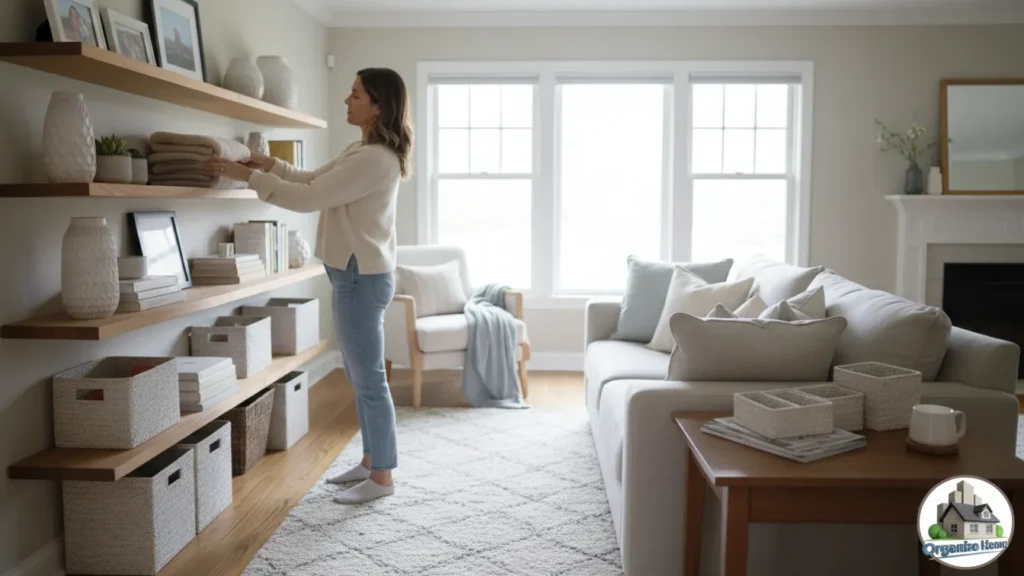

How to Build a Daily Organization Habit That Actually Sticks
Building a daily organization habit that lasts isn’t about discipline, motivation, or having more free time. It’s about designing a habit that fits naturally into your real life. Most people don’t struggle because they don’t care about organization—they struggle because the habits they try to build are unrealistic, too big, or disconnected from how their days actually work.
If you’ve ever started a new organization routine with enthusiasm only to abandon it weeks later, you’re not alone. This happens because many habits are built around ideal conditions instead of everyday ones. Busy mornings, low-energy evenings, unexpected interruptions, and imperfect days are the norm—not the exception. A habit that only works when life is calm will never stick.
A daily organization habit works when it’s small, predictable, and easy to repeat, even on bad days. The goal isn’t to keep your home perfectly organized. The goal is to create a simple rhythm that prevents mess from building up and makes recovery easy when it does.
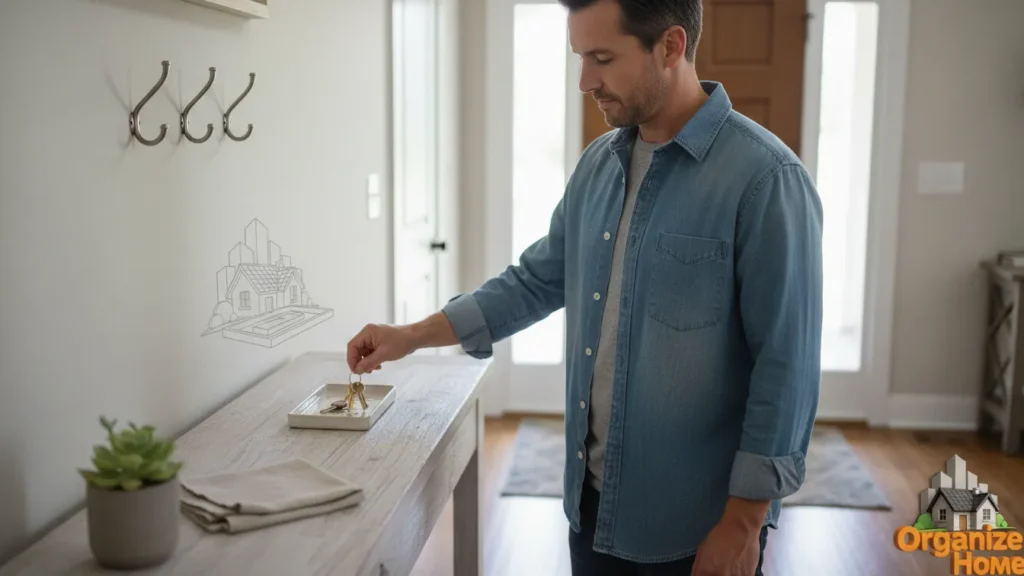
One of the biggest mindset shifts is understanding that habits don’t form through intensity—they form through consistency. Organizing for an hour once a week feels productive, but it doesn’t change daily behavior. A habit built around five minutes a day, done regularly, is far more powerful over time.
Another important factor is identity. When organization is treated as a task you have to do, it feels heavy. When it becomes something you just do, it becomes part of your routine. This shift doesn’t happen overnight. It happens when the habit is simple enough to repeat without resistance.
It’s also essential to separate habits from outcomes. A daily organization habit isn’t successful because your home looks perfect. It’s successful because it happens regularly. Some days the result will be barely noticeable—and that’s okay. Habits grow stronger through repetition, not visible transformation.
A habit that sticks also respects energy levels. The best daily organization habits are designed for your lowest-energy moments, not your most motivated ones. If you can do it when you’re tired, rushed, or distracted, you’ve chosen the right habit.
Ultimately, learning how to build a daily organization habit that sticks is about working with your life instead of fighting it. When organization feels light, flexible, and achievable, it stops being something you start and stop—and becomes something that simply stays.
In the next sections, we’ll break down exactly why most organization habits fail, what makes habits sustainable, and how to create a daily system that fits seamlessly into your routine.

Why Most Organization Habits Fail After a Few Weeks
Most organization habits don’t fail because people lack discipline or commitment. They fail because they’re built on short-term motivation instead of long-term sustainability. In the beginning, everything feels doable. Energy is high, expectations are optimistic, and routines seem easy to maintain. But as daily life settles back in, the habit starts to feel heavier—and eventually fades out.
One common reason habits fail is that they start out too big. Many people try to change everything at once: multiple routines, long checklists, or ambitious daily goals. This approach works briefly, but it quickly becomes overwhelming. When a habit requires too much time or mental effort, it’s one of the first things to be dropped on busy days.
Another issue is relying on willpower. Willpower is limited and inconsistent. Some days you have plenty of it; other days you don’t. Habits that depend on feeling motivated or “in the mood” are fragile. Once motivation dips—as it inevitably does—the habit stops.
Timing also plays a major role. Organization habits often fail because they’re scheduled at moments of low energy or high stress, like late evenings or rushed mornings. Even a good habit becomes hard to maintain if it competes with exhaustion or urgency.
Lack of flexibility is another silent problem. Life changes, schedules shift, and energy levels fluctuate. Habits that don’t allow room for adjustment feel restrictive, which leads to guilt and avoidance. Missing one day can quickly turn into quitting altogether if the habit feels all-or-nothing.
Finally, many habits fail because success is measured by visible results instead of consistency. When people don’t see immediate changes in their home, they assume the habit isn’t working. In reality, habits work quietly at first. Their impact shows up over time, not overnight.
Understanding why organization habits fail is essential. Once you stop blaming yourself and start designing habits that account for real life, it becomes much easier to build routines that last beyond the first few weeks.
The Difference Between Motivation and Sustainable Habits
One of the most misunderstood parts of building a daily organization habit is the role of motivation. Motivation feels powerful at the beginning—it creates momentum, excitement, and the urge to make big changes. But motivation is temporary, and habits that rely on it rarely last.
Motivation is emotional. It depends on mood, energy, and circumstances. Some days you feel inspired to organize, declutter, and reset everything. Other days, you’re tired, distracted, or simply focused on more urgent priorities. When a habit depends on feeling motivated, it automatically becomes inconsistent.
Sustainable habits work differently. They don’t require emotional buy-in every day. Instead, they rely on structure, simplicity, and predictability. A sustainable habit is something you do almost on autopilot—not because you feel like it, but because it fits naturally into your routine.
Another key difference is effort. Motivation-driven habits tend to be effort-heavy. They often involve doing a lot at once: multiple rooms, long sessions, or detailed organization. Sustainable habits are low-effort by design. They focus on small actions that are easy to repeat, even on low-energy days.
Motivation also tends to fade once results become less visible. Early progress feels rewarding, but as organization becomes maintenance instead of transformation, motivation drops. Sustainable habits don’t depend on visible change. They’re successful simply because they happen consistently.
This is why organized homes aren’t maintained by bursts of motivation. They’re maintained by habits that feel almost boring in their simplicity. Putting things back where they belong. Doing quick resets. Handling small messes before they grow.
When you stop trying to stay motivated and start designing habits that don’t need motivation, everything shifts. Organization becomes lighter, more reliable, and far easier to maintain over time.
Starting Small: The Power of One Simple Daily Action
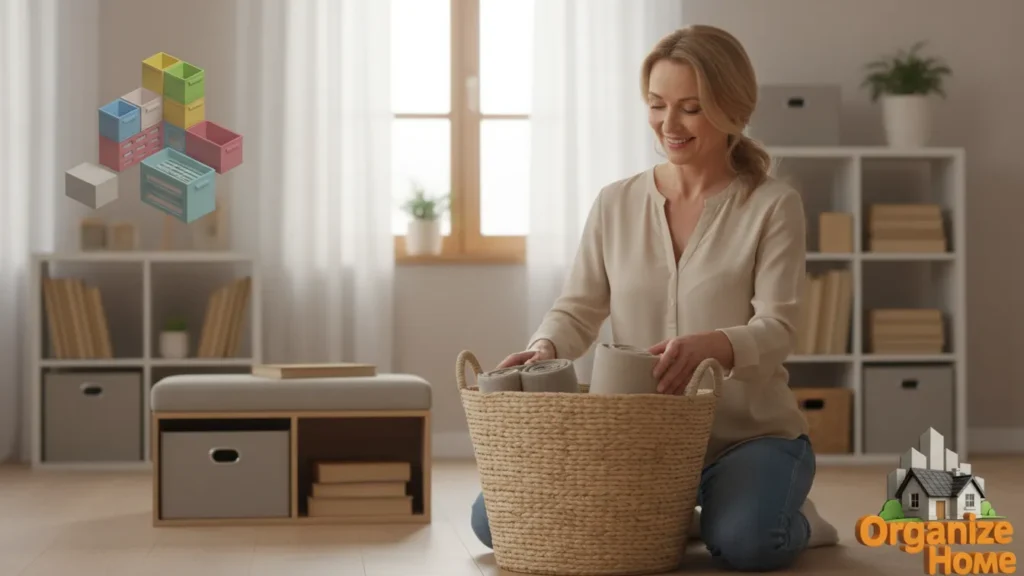
One of the most effective ways to build a daily organization habit that actually sticks is by starting much smaller than you think you need to. Most habits fail not because they’re ineffective, but because they ask for too much, too soon. When organization feels big, it triggers resistance—and resistance is what stops habits from forming.
Starting small doesn’t mean your goal is small. It means your starting action is intentionally simple. One drawer. One surface. One basket. One minute. When the action feels almost too easy, you’re doing it right.
Small actions lower the mental barrier to getting started. Instead of asking, “Do I have time to organize?” you’re asking, “Can I put five things back where they belong?” The brain is far more willing to say yes to the second question. This is how habits begin to form naturally, without relying on motivation.
Another advantage of starting small is consistency. A habit only becomes a habit through repetition. Doing a tiny action every day is far more powerful than doing a big one occasionally. Over time, that small action builds trust—you start seeing yourself as someone who follows through, even on busy or low-energy days.
Small habits also adapt better to real life. When days are chaotic, a large routine is easy to skip. A small habit can still happen. This keeps the streak alive, which is far more important than the size of the task itself.
It’s also common for small habits to grow on their own. Once you start, momentum often follows. You might begin with clearing one surface and end up doing a quick reset. But the key difference is that growth is optional—not required. The habit succeeds even if you stop at the minimum.
Starting with one simple daily action removes pressure. It makes organization approachable, repeatable, and sustainable. And that’s exactly what turns a good idea into a habit that lasts.
Choosing the Right Time for Your Organization Habit
Even the simplest organization habit can fail if it’s placed at the wrong time of day. Timing matters more than most people realize, because habits are easier to maintain when they work with your energy instead of against it.
Many organization habits are scheduled based on what sounds logical, not what feels realistic. For example, planning a reset late at night might seem smart, but evenings are often when energy is lowest. After a long day, even a small task can feel heavy, which increases the chance of skipping it.
The best time for an organization habit is a moment that’s already predictable and repeatable. This might be right after dinner, immediately after getting home, or as part of a morning routine. Consistency is more important than choosing the “perfect” time.
Another key factor is emotional load. Habits stick better when they happen during low-stress moments. If a time of day is already rushed or emotionally charged, adding a new habit there creates friction. The habit starts feeling like an extra obligation instead of a natural part of the day.
It’s also helpful to match the habit to your natural rhythm. Some people have more energy in the morning; others function better in the afternoon or early evening. There’s no universal best time—only the best time for you.
When the timing feels right, the habit feels lighter. You’re less likely to debate whether to do it, and more likely to complete it automatically. Choosing the right time doesn’t require discipline—it removes the need for it.
A well-timed organization habit fits seamlessly into your day. And when a habit fits, it has a much better chance of lasting long term.
👉 Daily Organization Checklist (Simple & Flexible)

Linking Organization to Existing Daily Routines
One of the easiest ways to make a daily organization habit stick is by linking it to something you already do every day. This removes the need to remember, plan, or motivate yourself—because the habit becomes part of an existing routine instead of an extra task.
When organization habits fail, it’s often because they float on their own. “I’ll organize later” or “I’ll do it when I have time” relies on memory and decision-making, both of which are unreliable in busy daily life. By attaching organization to a routine that already exists, you create a built-in trigger.
This approach works because the brain loves patterns. When one action consistently follows another, it starts to feel automatic. For example, clearing the kitchen counter after dinner, resetting the entryway when you get home, or doing a quick pickup before brushing your teeth. The organization habit borrows stability from the routine that’s already established.
The key is choosing routines that are non-negotiable. Eating dinner, coming home, getting ready for bed—these things happen whether the day is good or bad. When your organization habit is tied to something that always occurs, it has far fewer chances to be skipped.
It’s also important to keep the habit small when linking it to a routine. The goal isn’t to turn your entire evening into an organizing session. It’s to add a light, manageable action that fits naturally into the moment. If the habit feels intrusive, it won’t last.
Over time, this connection strengthens. You stop thinking, “I need to organize,” and start thinking, “This is just what happens next.” That’s when organization stops feeling like a chore and starts becoming a natural part of your day.
Linking habits to existing routines doesn’t require more discipline—it removes the need for it. And that’s exactly what makes daily organization sustainable.
Making Organization Easier Than Not Organizing
For a daily organization habit to stick, organizing must feel easier than leaving things where they are. When the opposite happens—when putting something away takes more effort than dropping it—the habit will slowly disappear, no matter how good your intentions are.
Most clutter forms because the path of least resistance leads to mess. Items are set down on chairs, counters, or floors because those options are fast and effortless. If putting things away requires opening doors, moving other items, bending down, or deciding where something belongs, the brain avoids it—especially when energy is low.
This is why sustainable organization is less about motivation and more about reducing friction. The easier it is to put something away, the more likely it is to happen automatically. Hooks instead of hangers. Open baskets instead of lidded bins. Broad categories instead of detailed sorting. These choices make organization faster than not organizing.
Another important factor is visibility. When storage is hidden or overcomplicated, items feel disconnected from their “home.” Clear, visible, and obvious storage makes the decision immediate. There’s no pause, no thinking—just action.
Distance matters too. If an item’s home is far from where it’s used, it won’t be returned consistently. Daily-use items should live as close as possible to where they naturally land. This small adjustment can dramatically increase follow-through.
Making organization easier also means accepting imperfection. If a system only works when everything is done perfectly, it creates resistance. Systems that allow items to be placed quickly—even if not perfectly—get used far more often.
When organizing feels lighter than leaving a mess behind, habits don’t require effort. They happen naturally, even on busy days. And once organization becomes the easier choice, it starts to stick without force.
👉 Why Your Home Gets Messy So Fast (And How to Fix It)

What to Do When You Miss a Day (Without Quitting)
Missing a day is one of the most common moments when a daily organization habit falls apart—not because the habit failed, but because of how the missed day is interpreted. Many people see one skipped day as proof that the habit “isn’t working,” and that belief is what causes them to quit entirely.
The truth is simple: missing a day is normal. Life happens. Schedules change, energy drops, unexpected situations come up. A sustainable habit isn’t one that’s never missed—it’s one that’s easy to return to.
The real danger isn’t missing a day. It’s letting that missed day turn into guilt, discouragement, or an all-or-nothing mindset. When people think, “I already messed up, so what’s the point?” the habit loses momentum far more quickly than the mess itself ever would.
A helpful mindset shift is to treat habits as flexible, not fragile. One missed day doesn’t undo progress. Habits are built over time, not erased by short interruptions. What matters most is what happens next, not what happened yesterday.
Another important strategy is having a “minimum version” of your habit. On days when energy is low or time is limited, the habit can shrink instead of disappear. Clearing one surface, putting away five items, or doing a one-minute reset still counts. This keeps the habit alive without pressure.
It’s also useful to avoid trying to “make up” for missed days by doing extra. Overcorrecting often leads to burnout and reinforces the idea that organization has to be intense to be valid. Returning calmly to your normal routine is far more effective.
The goal isn’t perfection—it’s continuity. When missing a day doesn’t feel like failure, habits become resilient. And resilient habits are the ones that actually last.
How Long It Really Takes to Build an Organization Habit
One of the biggest misconceptions about habits is the idea that they form quickly and on a fixed timeline. You’ve probably heard that it takes 21 days—or 30 days—to build a habit. In reality, there is no universal number, especially when it comes to daily organization.
Organization habits depend heavily on context. Your schedule, energy levels, household dynamics, and the simplicity of the habit itself all affect how long it takes to feel natural. For some people, a small daily reset can start feeling automatic within a few weeks. For others, it may take a couple of months before it truly sticks.
What matters more than the number of days is repetition under real-life conditions. A habit forms when your brain starts recognizing a pattern and expects it to happen. This only occurs when the habit is repeated consistently—even on busy, imperfect days. Habits built only during “good weeks” take much longer to settle in.
Another important factor is habit size. Small habits become automatic faster than large ones. Clearing one surface daily is easier for the brain to adopt than committing to a full-home reset. This is why starting small dramatically shortens the time it takes for a habit to feel normal.
It’s also helpful to recognize that habits don’t suddenly “lock in.” There’s usually a gradual shift. At first, the habit feels intentional. Then it feels familiar. Eventually, it feels slightly off not to do it. That subtle discomfort is often the first sign that a habit has formed.
Instead of tracking days, focus on reliability. Ask yourself: Can I return to this habit easily after a disruption? If the answer is yes, the habit is forming—even if it doesn’t feel automatic yet.
Building a daily organization habit isn’t about racing a timeline. It’s about creating a rhythm your life can support long term. When the habit fits your reality, it will stick—no matter how long it takes.

Adjusting the Habit as Your Life Changes
A daily organization habit that sticks long term is one that can adapt as your life changes. Routines that work perfectly in one season often stop working in another—and that doesn’t mean the habit failed. It means it needs adjustment.
Life isn’t static. Work schedules shift, kids grow, energy levels change, and responsibilities increase or decrease over time. When an organization habit is treated as fixed and non-negotiable, these changes create friction. Eventually, the habit feels outdated or unrealistic, and it’s quietly abandoned.
The most sustainable habits are flexible by design. They have a clear core—such as a short daily reset—but allow the details to change. The timing can move. The location can shift. The size of the habit can expand or shrink depending on what life looks like at the moment.
A common mistake is trying to restart from scratch every time life changes. Instead of rebuilding the habit, it’s far more effective to modify what already exists. If evenings become too exhausting, move the habit to earlier in the day. If your home gets busier, reduce the scope instead of quitting altogether.
Another important adjustment is recognizing when a habit has outgrown its original purpose. What started as clearing one surface may naturally evolve into resetting a whole room—and that’s okay. Growth should feel organic, not forced.
It’s also helpful to revisit your habit periodically and ask one simple question: Does this still fit my life right now? If the answer is no, the solution isn’t more discipline. It’s refinement.
When organization habits are allowed to evolve, they stay relevant. And habits that stay relevant are the ones that last through different seasons of life—without needing to be restarted over and over again.
How Daily Organization Habits Reduce Mental Load
One of the most overlooked benefits of daily organization habits is how much they reduce mental load. While most people focus on how their home looks, the real impact of consistent organization is how it makes life feel—lighter, calmer, and easier to manage.
Mental load comes from constantly tracking unfinished tasks, remembering where things are, and making repeated decisions throughout the day. When a home lacks simple organization habits, the brain stays in a low-level state of alert. You’re always thinking about what needs to be put away, what you’ll deal with later, and what you might be forgetting.
Daily organization habits reduce this pressure by creating predictability. When items have clear homes and resets happen regularly, fewer decisions are required. You don’t have to remember where something might be—you know where it goes. This frees up mental energy for more important things.
Another way habits reduce mental load is by preventing buildup. Large messes are mentally heavy because they represent multiple postponed decisions. Small daily habits stop those decisions from piling up. Instead of facing one overwhelming task, you handle many tiny ones that barely register as effort.
There’s also emotional relief in knowing that mess has a boundary. When you trust your daily habit, clutter stops feeling urgent or stressful. You know it will be handled soon, so it no longer occupies your thoughts throughout the day.
This reduction in mental load is especially important in busy homes. When routines are simple and consistent, organization becomes part of the background instead of a constant concern. You spend less time thinking about your home—and more time actually living in it.
Over time, daily organization habits don’t just keep your space under control. They create mental breathing room. And that sense of ease is often the reason people stick with these habits long after the novelty wears off.

Turning Organization Into a Natural Part of Your Day
The final step in building a daily organization habit that sticks is turning it into something that feels natural, not forced. When organization becomes part of how your day flows—rather than a task you have to remember—it stops requiring effort and starts sustaining itself.
This shift happens gradually. At first, the habit feels intentional. You remind yourself to do it. Then it becomes familiar. Eventually, it feels slightly uncomfortable not to do it. That subtle discomfort is a sign that organization has become integrated into your routine.
One of the biggest reasons habits become natural is repetition without pressure. When organization is small, flexible, and forgiving, the brain stops resisting it. You’re no longer asking, “Do I feel like organizing today?” You’re simply moving through a familiar pattern that fits your life.
Language also matters. When you stop thinking of organization as a chore and start seeing it as part of daily maintenance—like brushing your teeth or making your bed—it loses its emotional weight. It’s no longer something you start and stop. It’s just something you do.
Another important element is trust. Once you trust your habit to keep mess from spiraling, you stop worrying about constant control. You know that even if today is messy, your system will bring things back to baseline. That trust reduces stress and makes the habit easier to continue.
Daily organization becomes natural when it supports your life instead of competing with it. When it adapts, stays small, and fits your routines, it no longer feels optional—or overwhelming.
The goal was never perfect organization. The goal was consistency without effort. And when organization becomes a natural part of your day, that goal becomes sustainable long term.