

Mistakes That Waste Time in Organization Without You Noticing
Some of the biggest time losses in organization don’t come from obvious messes or neglected spaces. They come from small, repeated mistakes that feel harmless — even productive — but quietly drain time day after day. These mistakes often go unnoticed because they blend into routines and masquerade as “being organized.” Understanding them is the first step toward eliminating unnecessary effort.
One common mistake is mistaking activity for effectiveness. Rearranging, re-labeling, or tweaking systems can feel like progress, but if these actions don’t reduce daily effort, they aren’t saving time. In many cases, they increase it by adding maintenance. Organization should make everyday actions faster, not create ongoing work disguised as improvement.
Another subtle time-waster is overthinking placement. When items don’t have a clear, intuitive home, each interaction becomes a decision. These micro-decisions accumulate, slowing behavior and increasing mental load. Over time, this hesitation leads to postponement — items are set down “for now,” and clutter begins to form. What looks like a minor pause becomes a repeated time leak.

Temporary solutions are another hidden culprit. Piles, trays, and “deal with later” spots feel convenient in the moment, but they double handling time. Items are touched once to place them temporarily and again to put them away. This repetition quietly consumes time and creates the illusion that organization is never finished.
Perfectionism also wastes time in subtle ways. When organization is tied to ideal outcomes, people wait for the right moment or the right energy level to act. This delay allows small issues to grow into larger ones that take more time to fix. The pursuit of perfect order often costs more time than functional order ever would.
Another overlooked mistake is failing to design for real behavior. Systems that work only when followed perfectly are fragile. When they don’t match how people naturally move and decide, they are bypassed under pressure. The time spent fixing the resulting breakdowns far exceeds the time saved by the system itself.
Ultimately, these mistakes waste time because they don’t change default behavior. Organization saves time only when it removes friction from daily life. When systems add thinking, steps, or maintenance, they quietly steal time instead. Recognizing these hidden mistakes allows organization to shift from busywork to genuine support — saving time not through effort, but through smarter design.
Why Organizing More Often Doesn’t Mean Organizing Better
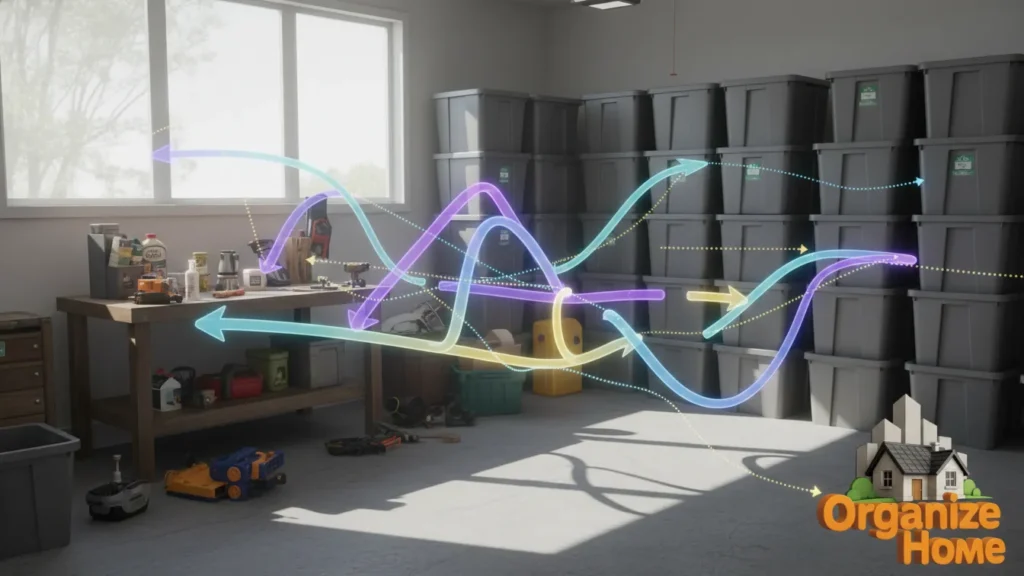
It’s easy to assume that frequent organizing leads to better results. When spaces fall apart quickly, the instinct is often to organize them more often. In reality, organizing more frequently usually signals that something is wrong with the system itself. Mistakes that waste time in organization often show up as repeated effort without lasting improvement.
When a space needs constant reorganization, it usually means the system doesn’t align with daily behavior. Items drift out of place because returning them requires too much effort, too many decisions, or inconvenient movement. Organizing again and again treats the symptom, not the cause. Time is spent resetting instead of stabilizing.
Another reason frequent organizing fails is that it creates a false sense of productivity. Reorganizing feels active and responsible, but it doesn’t necessarily make future interactions faster. If each reset requires the same amount of effort as the last, no time is being saved. In fact, time is being lost to repetition.
Frequent organizing also increases mental fatigue. Knowing that a space will need to be reorganized again creates resistance. People delay engaging with the system because they associate it with work rather than support. This avoidance leads to larger messes that require even more time to address.
Better organization reduces the need to organize at all. When systems are simple, accessible, and forgiving, maintenance happens naturally in small moments. There’s no need for frequent resets because clutter doesn’t accumulate to the same degree.
Ultimately, organizing better means organizing less often. Time is saved not by increasing effort, but by designing systems that hold under real conditions. When organization supports daily behavior instead of fighting it, repetition disappears — and so does the wasted time.
Overcomplicating Systems and Losing Time Daily
One of the most common mistakes that waste time in organization is overcomplicating systems. Complexity often looks like control, but in practice it creates friction that slows daily behavior. The more rules, categories, and steps a system has, the more time it quietly consumes every time it’s used.
Overcomplicated systems demand constant thinking. Deciding where something belongs, remembering specific categories, or following a sequence of steps turns simple actions into mental tasks. These micro-decisions may seem small, but repeated throughout the day they add up to significant time loss. When effort feels disproportionate to the task, people naturally avoid engaging with the system.
Another issue with complex systems is maintenance. Detailed organization requires frequent correction to stay functional. Categories overflow, labels lose relevance, and precision breaks down. Time is then spent fixing the system instead of benefiting from it. What was meant to save time becomes an ongoing project.
Complexity also reduces speed. Systems that require opening multiple containers, sorting items carefully, or navigating layered storage slow down both use and return. On busy days, these steps are skipped entirely, causing clutter to form elsewhere. The time spent later recovering from that clutter far exceeds any benefit the complexity was meant to provide.
Overcomplicated systems are also fragile. When one part stops working, the whole structure feels compromised. This leads to abandonment and repeated reorganizing — a cycle that drains time and energy without producing stability.
Ultimately, organization saves time only when it is easy to use. Overcomplicating systems turns organization into work instead of support. Simpler systems reduce thinking, speed up actions, and require far less maintenance. By stripping systems down to what actually helps, daily time loss is replaced with effortless consistency.
👉 Simple & Time-Saving Organization

Mistakes That Increase Decision Fatigue
Decision fatigue is one of the quietest yet most damaging mistakes that waste time in organization. It doesn’t show up as visible clutter, but it slows every interaction with a space. When organization requires frequent choices, mental energy is drained long before physical energy runs out — and time is lost through hesitation and avoidance.
A major source of decision fatigue is too many categories. When items could reasonably belong in several places, the brain must pause to choose. These pauses may last only seconds, but repeated dozens of times a day they significantly slow behavior. Over time, this mental effort leads people to postpone decisions altogether, allowing clutter to build.
Another contributor is inconsistent systems. When similar items are handled differently in different areas, the brain can’t rely on pattern recognition. Each interaction becomes a fresh decision instead of a familiar habit. This inconsistency forces constant thinking and increases mental load, which reduces speed and follow-through.
Decision fatigue also increases when systems rely on rules rather than intuition. Remembering rules like “this goes here only if…” or “this must be done in this order” turns organization into a cognitive task. On busy or low-energy days, these rules are ignored, and the system breaks down — creating more work later.
Even visual clutter can contribute to decision fatigue. When spaces are crowded or unclear, the brain has more information to process before acting. This slows decisions and increases the chance that items will be set aside instead of put away.
Ultimately, organization should reduce decisions, not create them. Mistakes that increase decision fatigue steal time by slowing every small action. Simple, consistent systems with clear outcomes allow behavior to flow automatically — conserving mental energy and saving time throughout the day.
When Perfectionism Becomes a Time Trap
Perfectionism is one of the most deceptive mistakes that waste time in organization. It often presents itself as high standards or attention to detail, but in practice it slows decisions, increases maintenance, and delays action. What feels like striving for order quietly turns organization into a time-consuming obligation.
One way perfectionism wastes time is by raising the entry barrier. When organization must be done “the right way,” people hesitate to start unless they have enough time, energy, and focus. This delay allows small issues to grow into larger ones that require even more time to fix. Functional order could have been maintained quickly, but perfectionism postponed it.
Perfectionism also increases maintenance. Highly precise systems require constant correction to stay perfect. Items must be aligned, categories must remain exact, and small deviations feel like failure. Time is then spent restoring an ideal state rather than supporting daily use. The effort invested rarely produces proportional benefits.
Another time trap is over-refinement. Tweaking layouts, rearranging containers, or optimizing labels may feel productive, but if these actions don’t reduce everyday effort, they aren’t saving time. In many cases, they add complexity that slows use and increases decision fatigue.
Perfectionism can also discourage participation. When systems feel fragile or demanding, people avoid using them out of fear of doing something wrong. This avoidance leads to clutter, which then requires larger cleanup sessions — costing far more time than simple, imperfect maintenance would have.
Ultimately, organization works best when it’s allowed to be imperfect. Perfectionism wastes time by making organization harder than it needs to be. When standards are lowered to “easy and functional,” actions happen faster, maintenance becomes lighter, and organization starts saving time instead of consuming it.
👉 Time-Saving Organization Tips
Reorganizing Instead of Fixing the Real Problem
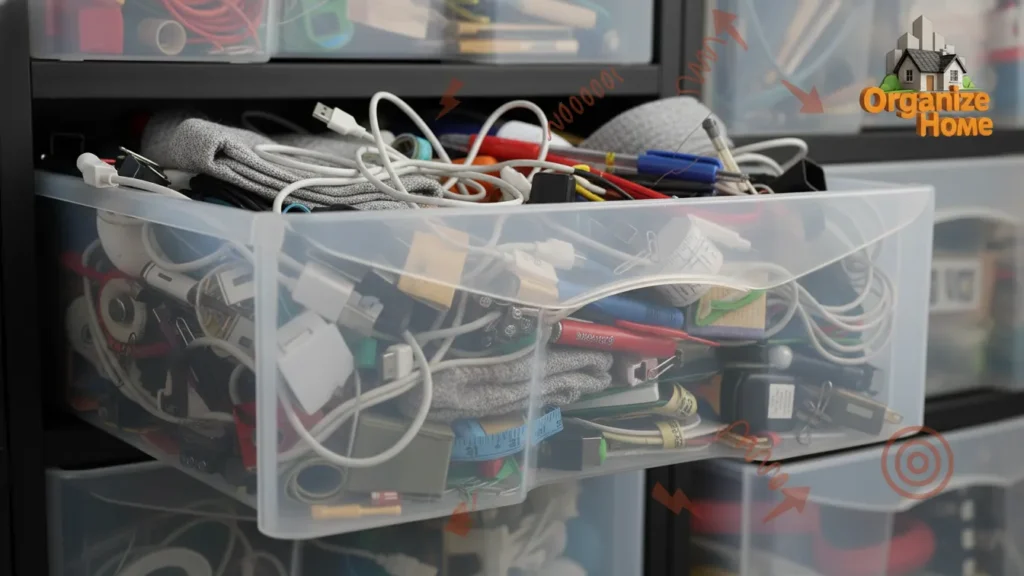
One of the most persistent mistakes that waste time in organization is reorganizing a space repeatedly instead of fixing the underlying issue that causes it to fall apart. Reorganization feels active and productive, but when it doesn’t address the root problem, it becomes a loop that quietly consumes time.
This mistake usually happens when the focus is placed on layout instead of behavior. A space looks messy, so items are rearranged, containers are changed, or categories are refined. The space looks better — briefly. But if returning items still requires too much effort, too many decisions, or inconvenient movement, the same breakdown happens again. Time is spent resetting instead of stabilizing.
Another reason this cycle continues is that reorganization provides visible results. It creates a clear before-and-after moment, which feels satisfying. Fixing the real problem is less visible. It might involve moving storage a few steps closer, widening a category, or removing a step. These changes don’t look dramatic, but they permanently reduce friction — which is what actually saves time.
Reorganizing also ignores frequency. The most time-consuming problems come from actions repeated every day. If a space breaks down daily, no amount of rearranging will solve it unless the daily behavior is supported. Fixing the real problem means making the most common action easier, not making the space look better after it fails.
This mistake also leads to burnout. Reorganizing the same areas repeatedly creates frustration and the feeling that organization never “sticks.” That frustration discourages engagement and leads to larger messes that require even more time to address.
Ultimately, reorganizing instead of fixing the real problem wastes time because it treats symptoms, not causes. When the underlying friction is removed, the need to reorganize disappears. Organization becomes stable, and time stops being lost to the same fixes over and over again.
Using Temporary Solutions That Create Extra Work
Temporary solutions often feel like a smart way to save time, but they are one of the most common mistakes that waste time in organization. Trays, piles, and “deal with later” spots promise quick relief, yet they quietly create extra work by postponing decisions and doubling effort.
The main problem with temporary solutions is that they interrupt resolution. When an item is placed in a holding area, the decision about where it belongs is delayed. This means the item will need to be handled again later. Each additional touch adds time, and over days or weeks, these extra touches accumulate into significant time loss.
Temporary solutions also create visual clutter that demands attention. Even when items are technically “organized” in a tray or pile, they remain unresolved. This unresolved state creates mental noise and increases the feeling that organization is never finished. Time is then spent revisiting the same items repeatedly.
Another issue is that temporary zones tend to expand. What starts as a small, controlled area slowly grows as more items are placed there. As it fills, it becomes harder to sort through, which further delays resolution. The longer items remain in a temporary space, the more effort it takes to deal with them later.
Temporary solutions are sometimes useful in very limited situations, but when they become part of everyday organization, they stop saving time. They create a two-step process where one would suffice. Time-saving organization favors direct placement, where items go to their final home immediately.
Ultimately, temporary solutions waste time because they turn one action into two. By eliminating unnecessary holding zones and designing systems that allow immediate resolution, organization becomes faster, cleaner, and far less demanding over time.
👉 Low-Effort Organization Habits

Storage Choices That Slow Everything Down
Storage is often blamed when organization feels difficult, but the real issue is how storage is chosen and used. Poor storage choices are subtle mistakes that waste time in organization because they slow every interaction without appearing obviously wrong. Over time, these small delays add up to significant time loss.
One common problem is choosing storage that prioritizes appearance over access. Deep containers, stacked bins, tight drawers, or lids that must be opened create extra steps. Each step adds friction. When using or returning an item takes longer than setting it down nearby, organized behavior loses — especially on busy days.
Another time-wasting storage choice is placing storage far from where items are actually used. Even a short distance can be enough to discourage follow-through when repeated multiple times a day. Storage that makes sense logically but not behaviorally forces people to walk, reach, or search unnecessarily. Those seconds accumulate quickly.
Over-segmented storage is another issue. Containers with many compartments or dividers require sorting and precision. This slows both setup and daily use. Instead of speeding organization, these systems demand attention and correction. When categories are too narrow, people hesitate or skip the system entirely.
Opaque or hidden storage can also slow things down. When items aren’t visible, time is lost searching or opening multiple containers. Visual clarity reduces both physical and mental effort. Storage that allows quick recognition supports faster decisions and smoother habits.
Ultimately, storage should reduce steps, not add them. Storage choices waste time when they increase distance, effort, or thinking. When storage is accessible, visible, and aligned with real use, organization becomes faster by default — and time stops leaking away through unnecessary friction.
Ignoring Capacity Limits and Creating Friction
Ignoring capacity limits is a subtle but powerful mistake that wastes time in organization. Systems often work well at first, then slowly become harder to use as more items are added. When storage reaches or exceeds its capacity, friction increases — and every interaction begins to take longer.
When containers, drawers, or shelves are too full, access becomes difficult. Items must be moved to reach others, placement requires rearranging, and returning things feels annoying rather than effortless. These extra steps slow behavior and increase the likelihood that items will be left out instead of put away.
Overfilled systems also increase decision fatigue. When there’s no clear space to place an item, the brain must pause to decide where it can fit. This hesitation leads to postponement, and postponement leads to clutter. What appears to be a storage problem is actually a capacity problem.
Another issue is false organization. Spaces may look organized because items are technically contained, but usability is low. Time is then lost managing the container instead of benefiting from it. Organization should reduce handling, not increase it.
Respecting capacity doesn’t require constant decluttering. It requires maintaining breathing room. Systems function best when they are intentionally underfilled, allowing easy access and quick placement. This small margin preserves speed and reduces frustration.
Ultimately, ignoring capacity limits wastes time by turning simple actions into obstacles. When systems are kept within their functional limits, organization remains fast, intuitive, and supportive — saving time instead of consuming it.
Organization Habits That Look Productive but Aren’t
Some organization habits feel productive while quietly wasting time. They create motion, visible change, or a sense of control — but they don’t reduce future effort. These are classic mistakes that waste time in organization because they substitute appearance for performance.
A common example is constant micro-adjusting. Straightening items, realigning rows, or perfecting spacing can look like care, but if these actions don’t make finding or returning items faster, they add maintenance without payoff. Over time, these habits train people to spend time maintaining looks instead of supporting use.
Another deceptive habit is excessive labeling. Labels can help when they remove ambiguity, but when everything is labeled, reading replaces recognition. The brain slows down to process text instead of acting automatically. What was meant to clarify ends up adding a decision step — and that step repeats every day.
Frequent system “upgrades” are another trap. Swapping containers, refining categories, or testing new layouts can feel like improvement, but unless these changes reduce daily friction, they reset learning and add transition costs. Time is spent relearning systems instead of benefiting from them.
Organizing for rare situations also wastes time. Creating elaborate systems for items used occasionally adds complexity that must be navigated daily. The system becomes heavier for the sake of edge cases, slowing everything else down.
Ultimately, productive-looking habits waste time when they don’t change default behavior. True organization efficiency is measured by speed and ease, not activity. Habits that look busy but don’t reduce future effort should be questioned — and often removed — so organization can do its real job: quietly saving time.
How Small Mistakes Compound Into Big Time Loss
Small organization mistakes often feel insignificant in isolation, which is why they’re easy to ignore. However, these are some of the most damaging mistakes that waste time in organization because they repeat quietly, day after day. What costs a few seconds once can cost hours over time when multiplied by frequency.
The compounding effect starts with friction. A drawer that’s slightly too full, a container that’s just inconvenient to open, or a category that requires a moment of thought doesn’t seem like a problem. But when that friction is encountered dozens of times a day, it changes behavior. Items are set down instead of put away. Decisions are postponed. Small delays become habitual avoidance.
Another way small mistakes compound is through repetition of handling. Touching the same item multiple times — moving it, sorting it later, then finally putting it away — turns one action into several. Each extra touch adds time, and over weeks and months, that extra handling becomes a significant time sink that often goes unnoticed.
Compounding also affects mental load. Each unresolved decision adds background stress. Even when not consciously addressed, these open loops demand attention. The cumulative effect is fatigue, which slows future actions even further. Organization becomes mentally heavier, not because of one big problem, but because of many small unresolved ones.
Small mistakes also erode trust in systems. When organization feels slightly annoying or unreliable, people engage with it less often. That reduced engagement allows clutter to build, which then requires larger, more time-consuming interventions. The original mistake didn’t look serious, but its ripple effects created major time loss.
Ultimately, small mistakes waste time not by their size, but by their frequency. Time-saving organization depends on removing friction at the smallest level. When minor inefficiencies are corrected early, organization stays light, fast, and supportive — preventing small leaks from turning into major drains on time.

Replacing Time-Wasting Mistakes With Simple Fixes
Once time-wasting mistakes are identified, the most important step is replacing them with fixes that are simple, targeted, and sustainable. The goal is not to overhaul organization, but to remove friction where it actually steals time. Effective fixes are small changes that permanently improve daily behavior, rather than temporary adjustments that require ongoing effort.
The first principle of a good fix is directness. If a mistake adds steps, the fix removes steps. If a mistake creates decisions, the fix creates clarity. For example, replacing narrow categories with broader ones reduces decision fatigue instantly. Moving storage closer to the point of use eliminates hesitation without requiring discipline. These fixes work because they change the default action.
Another key principle is addressing frequency. Time-saving fixes focus on actions repeated many times a day. Improving a high-frequency behavior by even a few seconds has more impact than optimizing a rare task. Simple fixes target the moments where clutter forms, items are left out, or decisions are postponed. When these moments are resolved quickly, the need for larger organizing efforts disappears.
Simple fixes also respect capacity. Many time-wasting mistakes come from overfilled systems. A fix doesn’t require minimalism — it requires breathing room. Restoring a small margin of space allows systems to function smoothly again, reducing both physical effort and mental resistance.
Importantly, fixes should be reversible and low-risk. If a change doesn’t work, it should be easy to adjust without breaking the system. This encourages experimentation and prevents paralysis. Organization improves faster when changes feel safe and lightweight.
Finally, replacing mistakes with simple fixes shifts organization from correction to prevention. Instead of repeatedly fixing the same problems, the system stops producing them. Time is saved not by working faster, but by removing the reasons work is needed at all.
Ultimately, time-saving organization improves when mistakes are replaced with simple, behavior-aligned fixes. When organization supports how life actually functions, time stops leaking away — and order becomes a quiet, reliable background presence rather than an ongoing task.