Why Bathroom Organization Is Essential for Daily Routines
Bathroom organization plays a critical role in how smoothly daily routines unfold, especially in busy homes where the bathroom is used multiple times a day by more than one person. Morning preparation, nighttime wind-downs, and quick transitions throughout the day all depend on a space that feels functional and predictable. When bathroom organization is missing, even simple tasks can feel rushed and frustrating.
One of the main reasons bathroom organization is so important is timing. Bathrooms are often used under time pressure, particularly in the morning. When essentials are hard to find, stored inconsistently, or scattered across different areas, small delays quickly add up. A well-organized bathroom removes unnecessary pauses and helps routines flow naturally without extra mental effort.
Bathroom organization also reduces visual and mental clutter. Because bathrooms tend to be smaller spaces, disorganization becomes noticeable very quickly. Overcrowded counters, drawers filled with mixed items, or cabinets packed without clear categories can make the space feel chaotic. When everything has a defined place, the bathroom feels calmer and easier to use, even if the space itself is limited.
Another key benefit of bathroom organization is consistency. When items are stored in predictable locations, routines become automatic. You reach for what you need without thinking, which saves time and energy. This consistency is especially valuable in shared bathrooms, where multiple people rely on the same systems. Clear bathroom organization reduces confusion and prevents items from being left out simply because their storage isn’t obvious.
Bathroom organization also supports maintenance without turning it into a chore. When storage systems are simple and logical, putting things back after use becomes effortless. Instead of creating new messes throughout the day, the space naturally resets itself. This doesn’t require strict rules or constant tidying — it requires systems that align with real habits.
For busy households, bathroom organization can also reduce tension. When everyone knows where items belong, there’s less frustration around missing products, cluttered surfaces, or crowded drawers. Simple, intuitive organization systems make it easier for everyone to participate in keeping the space functional.
It’s important to understand that bathroom organization isn’t about perfection or creating a spa-like environment. It’s about supporting daily life. An organized bathroom should work for quick routines, shared use, and real schedules. When systems are designed around how the bathroom is actually used, organization becomes supportive rather than restrictive.
Ultimately, bathroom organization sets the tone for daily routines. Starting and ending the day in a space that feels orderly and manageable can make everyday life feel more controlled and less stressful. By focusing on function, clarity, and ease, bathroom organization becomes an essential foundation for smoother daily routines.
Common Bathroom Organization Mistakes That Create Clutter
Many bathrooms feel cluttered not because they are small, but because a few common bathroom organization mistakes quietly undermine the system. These issues often develop over time and become so familiar that they go unnoticed, even though they create daily frustration.
One frequent mistake is storing items based on available space instead of function. When products are placed wherever they fit, daily routines become inefficient. For example, keeping everyday toiletries in hard-to-reach cabinets or mixing personal care items with backup supplies forces unnecessary searching. Bathroom organization works best when storage reflects how and how often items are used.
Another common problem is mixing too many categories in the same drawer or cabinet. When skincare, hair tools, medications, and miscellaneous items share one space, everything becomes harder to find. This lack of clear categories causes drawers to overflow and items to end up on counters instead. Strong bathroom organization depends on simple, well-defined groupings.
Overcrowding is another major contributor to clutter. Cabinets and drawers that are filled to the limit leave no room for easy returns. When there’s no breathing space, items are often left out after use, slowly eroding bathroom organization over time.
Many bathrooms also suffer from keeping too many “just in case” items within prime storage areas. Excess backups or rarely used products take up valuable space and make daily items harder to access. While this isn’t about deep decluttering, bathroom organization improves when storage prioritizes what is actually part of daily routines.
Finally, unclear ownership creates confusion in shared bathrooms. When it’s not obvious whose items belong where, products migrate across counters and drawers. Simple, intuitive bathroom organization systems help prevent this by making storage predictable for everyone.
Recognizing these common mistakes is an important step toward better bathroom organization. Once the causes of clutter are clear, it becomes much easier to build systems that are practical, sustainable, and easy to maintain.
How to Organize a Bathroom by Zones Instead of Products
One of the most effective ways to improve bathroom organization is to stop thinking in terms of individual products and start thinking in zones. Zones are functional areas based on how the bathroom is used, not on what items look like or how many containers you own. This approach makes daily routines smoother and systems much easier to maintain.
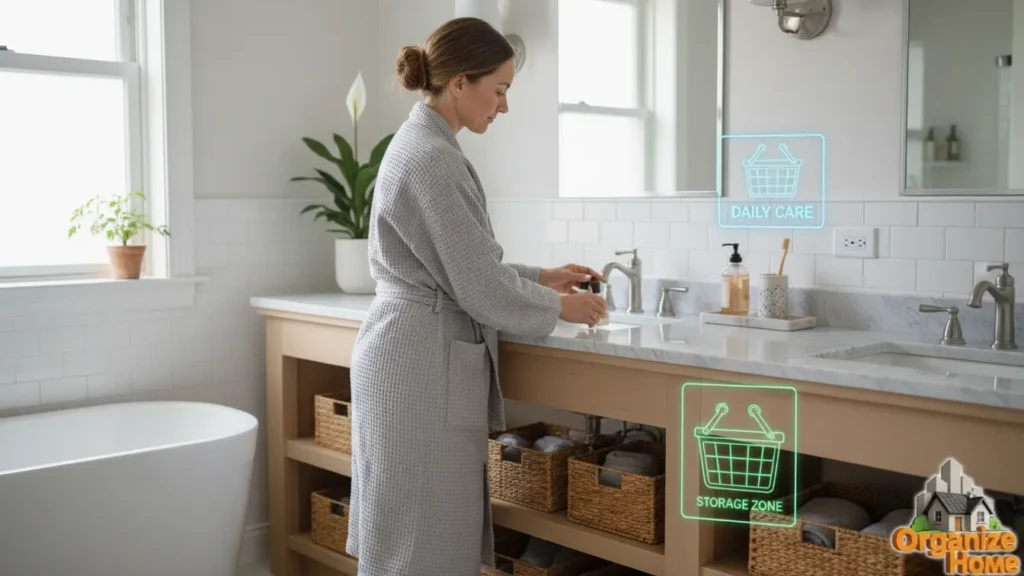
A bathroom zone groups together items that are used for the same purpose. For example, a morning routine zone might include toothbrushes, toothpaste, skincare basics, and hair tools. A shower zone could hold shampoo, conditioner, and body care items. When everything needed for a specific activity is stored together, bathroom organization becomes intuitive instead of confusing.
Zone-based bathroom organization reduces unnecessary movement. Instead of opening multiple drawers or cabinets to complete one task, everything is within reach. This is especially important in shared bathrooms, where time and space are often limited. Clear zones help everyone understand where items belong without needing instructions.
Another advantage of organizing by zones is that it highlights problem areas. If a zone feels overcrowded or spills into other spaces, it’s a sign that the zone needs adjustment. Bathroom organization becomes more self-correcting because clutter is easier to identify when zones are clearly defined.
Zones should reflect real habits, not ideal ones. If makeup is applied at the sink rather than in a vanity area, the daily-use makeup zone should live near the sink. Bathroom organization works best when it supports how the space is actually used, not how it was designed on paper.
It’s also important to keep zones simple. Most bathrooms don’t need many zones to function well. A few core zones — daily care, shower, storage for extras, and shared essentials — are often enough. Over-zoning can create confusion and make systems harder to maintain.
By shifting from product-based storage to zone-based thinking, bathroom organization becomes clearer, more functional, and far easier to sustain. Zones create structure without rigidity, allowing the bathroom to support daily life instead of complicating it.
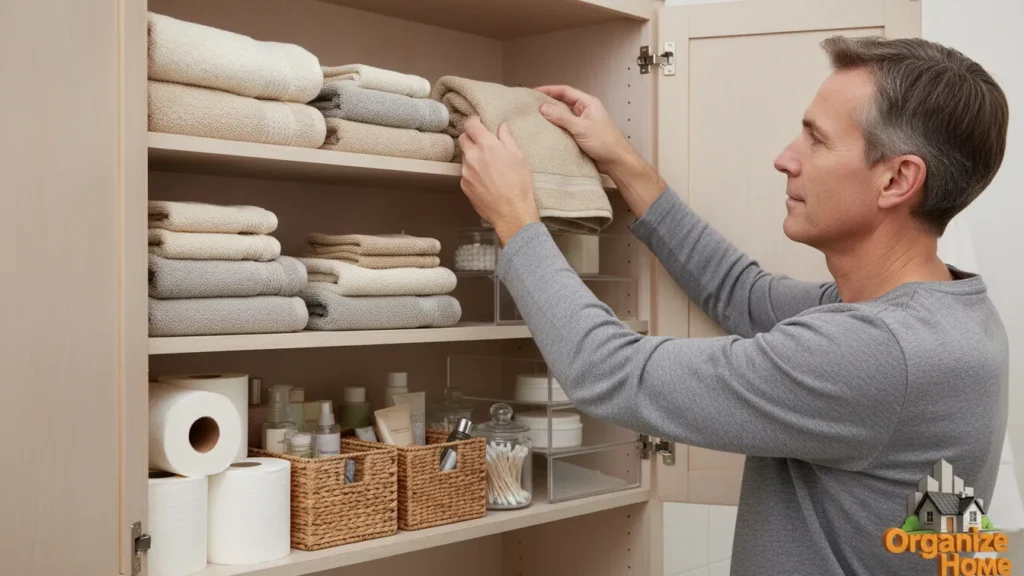
Bathroom Organization Starts With Clear Categories
Bathroom organization becomes significantly easier when it starts with clear categories instead of individual items or storage products. Categories create structure by defining what belongs together, which removes guesswork and helps systems stay consistent over time. Without clear categories, even the most organized-looking bathroom quickly becomes cluttered.
Categories are simply groups of similar items that serve the same purpose. In a bathroom, this might include daily hygiene items, skincare, hair care, oral care, medications, or backup supplies. When these groups are clearly separated, bathroom organization feels more intuitive and far less overwhelming.
Starting with categories also helps prevent overcrowding. When everything is grouped, it becomes obvious which categories take up the most space and which ones are manageable. This clarity allows bathroom organization systems to be adjusted realistically instead of forcing items into spaces where they don’t belong.
Another advantage of category-based bathroom organization is flexibility. Categories can grow or shrink as habits change. If skincare becomes part of a daily routine, that category can be given more accessible space. If certain items are used less often, their category can be stored higher or farther back. Categories adapt more easily than rigid storage layouts.
Clear categories also make maintenance easier. When everyone knows which category an item belongs to, putting things away becomes automatic. Bathroom organization stops relying on memory or effort and instead becomes a natural extension of daily routines.
It’s important to keep categories simple. Overly detailed categories can be hard to maintain and may create confusion in shared bathrooms. Broad, practical groupings usually work best and support long-term bathroom organization without constant adjustments.
By starting with clear categories, bathroom organization gains a strong foundation. Storage tools then serve a clear purpose: supporting categories rather than trying to replace them. This approach creates systems that are easier to use, easier to maintain, and far more sustainable.
How to Organize Bathroom Cabinets Without Overcrowding
Bathroom cabinets often become overcrowded because they are treated as catch-all storage spaces instead of purposeful zones. When too many items are packed into a single cabinet, daily use becomes frustrating and maintaining bathroom organization feels nearly impossible. The goal of cabinet organization isn’t to store more — it’s to store better.
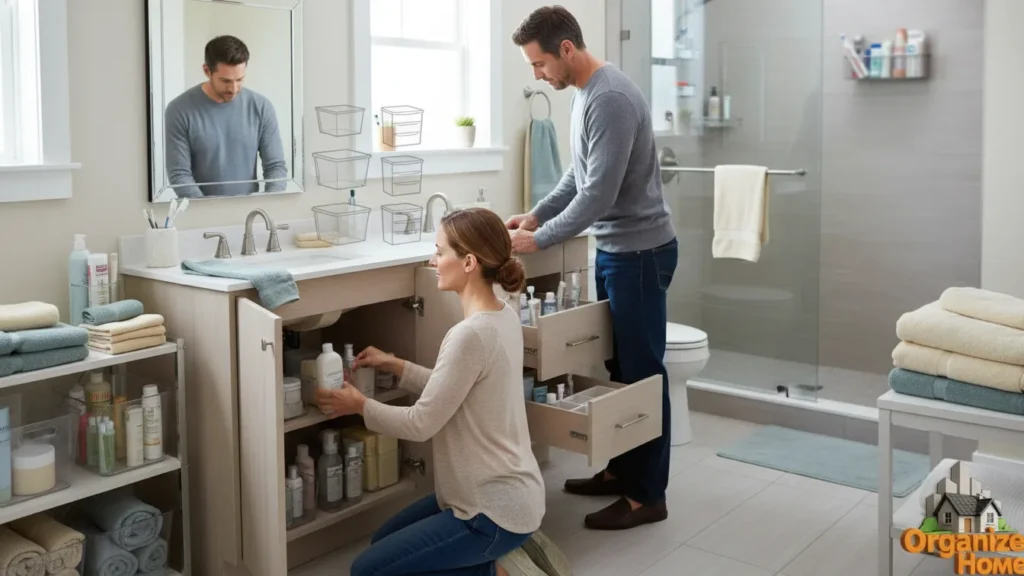
The first step to avoiding overcrowding is assigning a clear role to each cabinet. Instead of mixing multiple categories together, decide what each cabinet is meant to hold. One cabinet might store daily-use items, while another holds backup supplies or less frequently used products. This clarity immediately improves bathroom organization by reducing visual and physical clutter.
Frequency of use should guide placement. Items used every day should be easy to reach without moving other things out of the way. Products that are only used occasionally can be stored higher or deeper. When bathroom organization aligns with real routines, cabinets stay functional without constant rearranging.
Another important principle is spacing. Cabinets that are filled edge to edge leave no room for easy returns. A small amount of open space allows items to be put away quickly, even when time is limited. Bathroom organization systems last longer when they allow for flexibility instead of forcing everything to fit perfectly.
Simple tools like shelf risers or small bins can help, but they should support categories, not create new ones. Overusing organizers can add complexity and make cabinets harder to maintain. Bathroom organization works best when storage tools are minimal and purposeful.
Finally, it’s important to remember that cabinet organization doesn’t need to look perfect to be effective. A cabinet that functions smoothly every day is far more valuable than one that looks organized but is difficult to use. When cabinets are clear, breathable, and aligned with daily habits, bathroom organization becomes much easier to maintain over time.
👉 Bedroom Organization Small Busy Homes
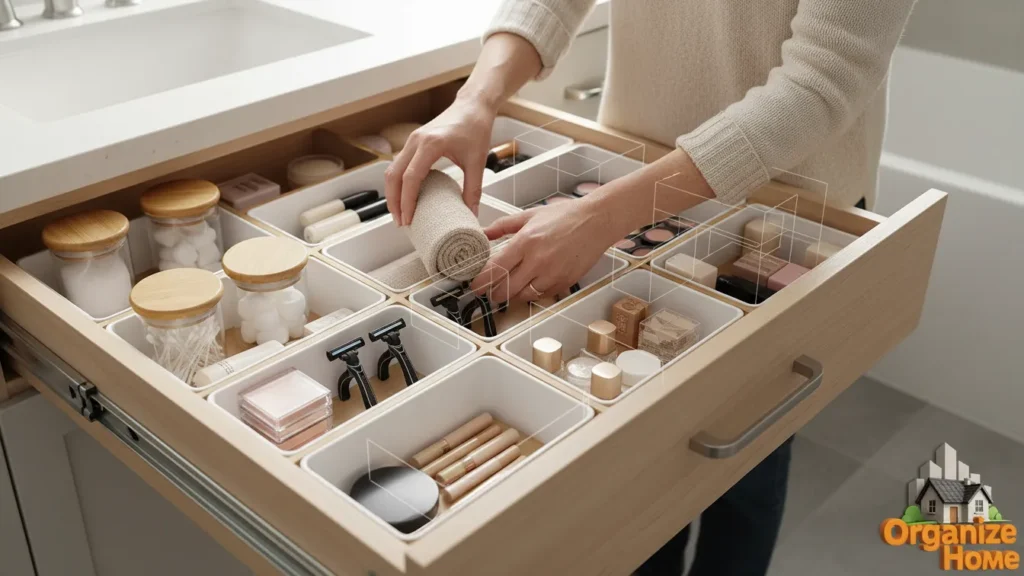
Simple Drawer Organization for Bathroom Essentials
Bathroom drawers are often small but heavily used, which makes their organization especially important. When drawers are cluttered or poorly divided, daily routines slow down and items are often left out on counters. Simple drawer organization focuses on clarity, accessibility, and ease of return, rather than fitting as much as possible into one space.
The first step in effective bathroom drawer organization is limiting each drawer to one main category. For example, one drawer may hold oral care items, while another is reserved for hair tools or daily skincare. Mixing multiple categories in the same drawer quickly leads to tangling and visual clutter. Clear categories make bathroom organization easier to maintain over time.
Dividers can be helpful, but they should be used thoughtfully. The goal is to create clear sections, not rigid compartments. Over-dividing drawers can make them harder to use, especially when items vary in size. Bathroom organization works best when dividers adapt to items, not the other way around.
Placement also matters. Drawers closest to the sink should store the items used most frequently, such as toothbrushes, face products, or daily makeup. Less frequently used items can be placed in lower or secondary drawers. This alignment with daily habits strengthens bathroom organization and reduces unnecessary movement.
Another important principle is visibility. When items are easy to see at a glance, they are more likely to be returned to their place. Storing items flat, facing the same direction, and avoiding stacking helps keep drawers functional and calm.
Finally, leaving a small amount of open space in each drawer is essential. Overfilled drawers are difficult to maintain and often become dumping grounds. Simple, breathable drawer organization supports daily routines and helps bathroom organization stay intact with minimal effort.
Bathroom Counter Organization That Still Feels Practical
Bathroom counters are often the first place where clutter becomes visible, especially in shared or busy bathrooms. Because counters are used frequently throughout the day, keeping them functional without making them feel crowded is a key part of effective bathroom organization.
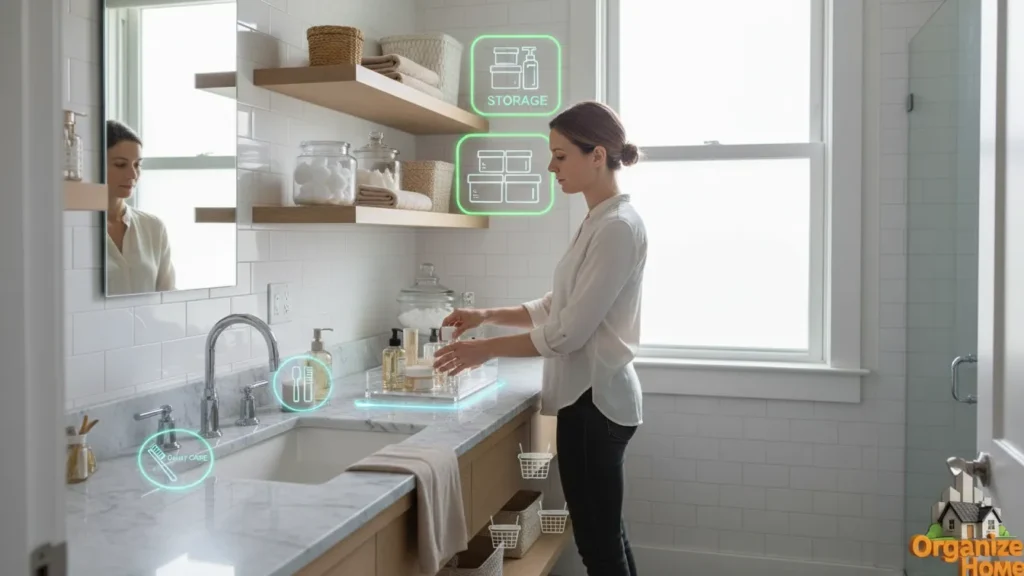
The first step in practical counter organization is deciding what truly needs to stay out. Items used daily, such as soap, toothbrushes, or a small tray of skincare essentials, may deserve a permanent spot. Everything else should have a clear storage location nearby. Bathroom organization improves when counters support routines instead of becoming storage overflow.
Grouping items into small, intentional zones can make counters easier to manage. For example, keeping daily-use items together on a tray helps contain visual clutter and makes cleaning and maintenance simpler. This zone-based approach mirrors the same principles used throughout good bathroom organization systems.
Vertical space can also be used selectively. Wall-mounted holders or small shelves can support bathroom organization without taking up valuable counter space. However, it’s important to avoid overcrowding. Too many items, even when stored vertically, can make the counter feel busy and harder to maintain.
Another important factor is return effort. If an item is difficult to put away, it will likely stay on the counter. Bathroom organization works best when storage for non-counter items is easy to access, making it more appealing to clear surfaces after use.
Ultimately, practical counter organization balances visibility and restraint. When counters hold only what supports daily routines, the bathroom feels calmer, more functional, and easier to keep organized over time.
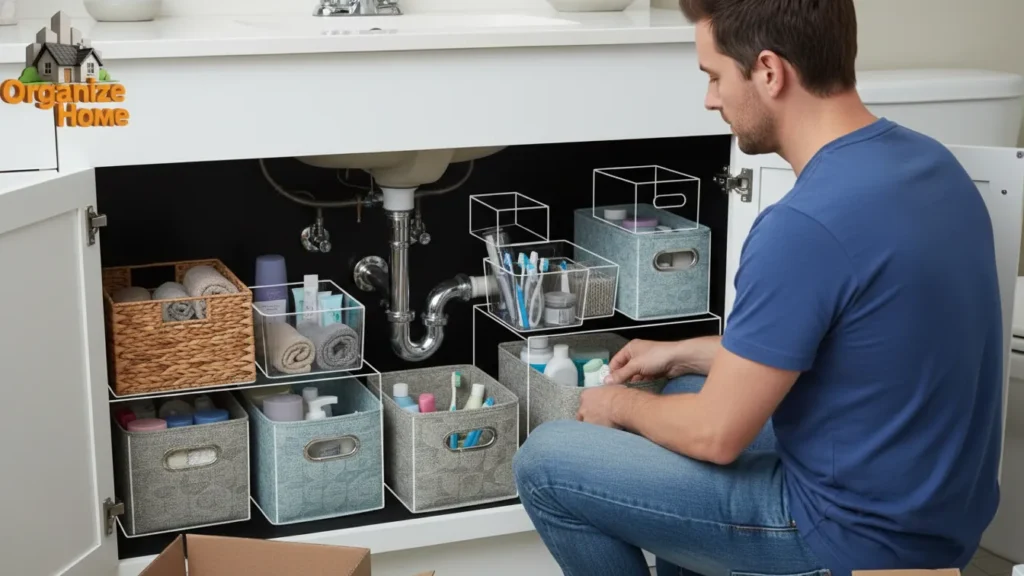
Under-Sink Bathroom Organization That Is Easy to Maintain
The area under the bathroom sink is often one of the most difficult spaces to keep organized. Pipes, limited height, and awkward layouts can make storage feel frustrating. However, with the right approach, under-sink bathroom organization can become one of the most functional areas in the room rather than a constant source of clutter.
The key to under-sink bathroom organization is working with the space as it is, not trying to force it into a perfect system. Instead of aiming to store everything there, this area works best when it holds a few specific categories that are easy to access and easy to return. Cleaning-support items, extra toiletries, or backup supplies are often good candidates, as long as they are grouped clearly.
Using the vertical space thoughtfully can make a big difference. Stackable bins, open containers, or simple shelf units designed to work around plumbing can help maximize space without overcrowding it. Bathroom organization improves when items are visible and reachable without having to remove multiple things to access one.
Another important principle is containment. Under-sink areas tend to collect loose items that slide, tip over, or get forgotten. Placing items inside bins or baskets keeps categories contained and prevents clutter from spreading. This makes bathroom organization easier to maintain, especially during busy routines.
Accessibility should always guide placement. Items used more frequently should be stored toward the front, while rarely used backups can be placed farther back. When bathroom organization respects frequency of use, the space naturally stays more organized over time.
It’s also helpful to leave some open space under the sink. Overfilling this area makes it harder to return items and increases the chance of messes. A bit of breathing room allows for quick adjustments and supports long-term bathroom organization without constant reworking.
When under-sink storage is simple, contained, and aligned with real habits, it becomes a reliable part of the overall bathroom organization system rather than a hidden problem area.
How to Organize a Small Bathroom With Limited Storage
A small bathroom can quickly feel cluttered when storage is limited, but lack of space doesn’t mean bathroom organization is out of reach. In fact, small bathrooms benefit the most from clear systems because every drawer, cabinet, and surface needs to serve a purpose. The key is being intentional with what is stored and where.
The first priority in a small bathroom is accessibility. Items used every day should be easy to reach without moving other things. When daily essentials are buried behind rarely used products, counters become cluttered and systems break down. Bathroom organization improves when prime storage is reserved for items that support daily routines.
Vertical space is especially valuable in small bathrooms. Using the full height of cabinets, adding slim shelving, or stacking items carefully can increase storage without crowding the room. However, it’s important to avoid overfilling. Bathroom organization works best when vertical solutions still allow items to be accessed easily.
Limiting duplicates is another important strategy. Small bathrooms fill up quickly when multiple versions of the same product are stored in the same space. While this isn’t about deep decluttering, bathroom organization benefits from being realistic about how much can comfortably fit in the room.
Clear categories are essential in limited spaces. When items are grouped logically, storage feels more manageable and easier to maintain. Even a small bathroom can feel organized when each category has a defined home, no matter how compact that home is.
Flexibility also plays a role. Simple bins, adjustable dividers, or movable containers allow bathroom organization systems to adapt as needs change. Rigid systems often fail in small spaces because they leave no room for adjustment.
When bathroom organization in a small space focuses on function, visibility, and realistic storage limits, the room feels more open and usable. With thoughtful systems, even the smallest bathroom can support daily routines without feeling crowded or chaotic.
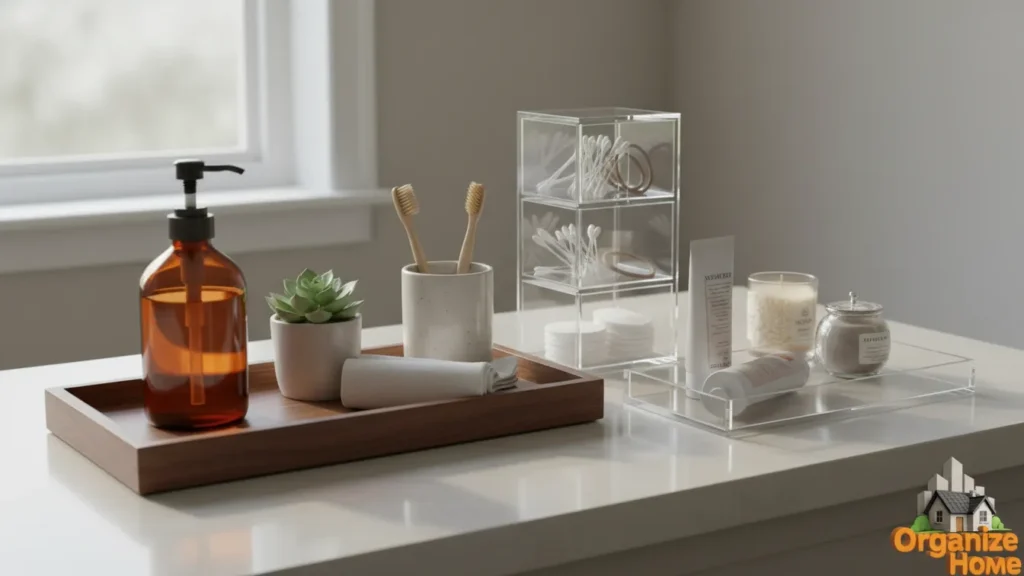
Bathroom Organization Systems That Work for Busy Homes
Busy homes need bathroom organization systems that are simple, flexible, and easy to follow. When multiple people share the same bathroom and routines are fast-paced, complicated systems tend to fail quickly. The most effective bathroom organization systems focus on reducing effort and supporting daily habits rather than enforcing strict rules.
One of the key elements of successful systems is clarity. Everyone using the bathroom should be able to understand where items belong without asking questions. Broad categories, clear zones, and intuitive placement make bathroom organization easier to maintain, even when time is limited.
Low-effort design is another essential factor. If putting something away requires multiple steps or careful rearranging, it’s unlikely to happen consistently. Bathroom organization systems for busy homes work best when returning items takes no more effort than leaving them out. Open bins, shallow drawers, and easily accessible cabinets often outperform more elaborate setups.
Flexibility also plays a major role. Busy households change constantly, and bathroom organization systems need to adapt along with them. What works during one phase of life may need adjustment later, and that’s normal. Systems that allow for quick changes are more sustainable than rigid layouts.
Visibility can further support daily use. When items are easy to see, they are easier to put back. Selective use of transparent containers or open storage can strengthen bathroom organization without creating visual clutter, as long as categories remain controlled.
Finally, effective bathroom organization systems don’t rely on one person to maintain them. When systems are shared, simple, and logical, everyone can participate. This shared responsibility helps prevent burnout and keeps the bathroom functional even during the busiest days.
Bathroom organization systems that work for busy homes prioritize practicality over perfection. When systems are intuitive, forgiving, and aligned with real routines, they support daily life instead of becoming another task to manage.
How to Maintain Bathroom Organization With Minimal Effort
Maintaining bathroom organization doesn’t require constant reorganizing or strict routines. In fact, the most effective bathroom organization systems are designed to stay in place with very little ongoing effort. Maintenance works best when it’s built into everyday use rather than treated as a separate task.
One of the most important factors is reducing the distance between use and return. When items are stored close to where they are used, putting them away becomes the natural next step. For example, keeping daily skincare near the sink or hair tools near the mirror helps bathroom organization stay intact without conscious effort.
Another key principle is avoiding overfilled storage. Cabinets and drawers that are packed too tightly make it harder to return items properly, especially during rushed moments. Bathroom organization is easier to maintain when each space has a small amount of breathing room. This allows items to be placed back quickly without rearranging everything else.
Consistency also plays a major role. When categories and zones remain stable, there’s no need to rethink where items belong. Everyone in the household can follow the same logic, which reduces friction and prevents clutter from reappearing. Bathroom organization systems that rely on familiarity rather than rules tend to last longer.
Small, informal check-ins can also help. Taking a moment every few days to notice whether items are drifting out of place allows for quick corrections before clutter builds up. This doesn’t require reorganizing — just minor adjustments that keep bathroom organization balanced.
It’s also important to accept realistic standards. A bathroom doesn’t need to look perfect to function well. Systems designed for minimal effort allow for occasional messiness without breaking down entirely. Bathroom organization becomes sustainable when it supports real life rather than demanding constant attention.
When maintenance is simple, flexible, and aligned with daily habits, bathroom organization becomes largely self-sustaining. Instead of repeatedly fixing the same problems, the space stays functional through normal use, which is the ultimate goal of any organization system.
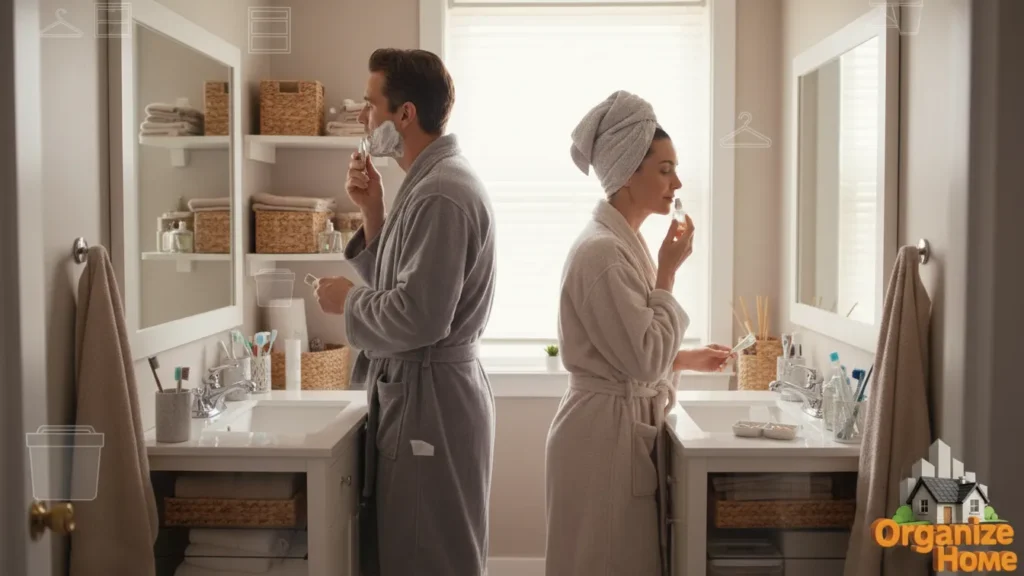
Bathroom Organization Habits That Prevent Clutter From Returning
Long-lasting bathroom organization is built on simple habits that reinforce the systems already in place. Without supportive habits, even the best organization setup can slowly fall apart. The goal isn’t to add more rules, but to create small, realistic behaviors that keep clutter from returning over time.
One of the most effective habits is returning items to their place immediately after use. This habit works only when bathroom organization systems are intuitive and easy to follow. If storage is logical and accessible, putting items away feels natural rather than like an extra step. When this habit becomes routine, clutter has little opportunity to build up.
Respecting categories is another key habit. Each item should consistently return to its assigned category, even during busy moments. Bathroom organization breaks down when items are placed “just for now” in random spots. Small exceptions tend to repeat, gradually eroding the system. Consistency keeps categories clear and functional.
Being mindful of what enters the bathroom also helps prevent clutter. While this article isn’t focused on decluttering, awareness plays an important role in bathroom organization. When new items are added, deciding where they belong — or what they replace — keeps storage from becoming overcrowded and disorganized.
Quick visual check-ins can also support healthy habits. Taking a moment every few days to notice if counters, drawers, or cabinets feel off allows for small adjustments before clutter spreads. This doesn’t require reorganizing, only awareness. Bathroom organization benefits greatly from early, low-effort corrections.
Shared responsibility is especially important in bathrooms used by multiple people. When everyone understands the organization systems and follows the same habits, the space stays functional without relying on one person to manage it. Clear, simple bathroom organization makes it easier for everyone to participate.
Finally, it’s essential to allow for imperfection. A bathroom that works most of the time is more valuable than one that looks perfect occasionally. Habits that are flexible and forgiving help bathroom organization survive real life without constant resets.
When supportive habits align with simple systems, bathroom organization becomes self-sustaining. Instead of repeatedly fixing the same issues, the bathroom stays organized through everyday use — which is exactly how effective organization should work.