Room-by-Room Organization: How to Create Order That Lasts
Room-by-room organization is one of the most effective ways to create order that actually lasts. Instead of trying to organize everything at once or jumping between categories throughout the house, this approach focuses on one physical space at a time. That focus is what makes the results more stable and easier to maintain over the long term.
When you organize room by room, you work within clear boundaries. Each room has a specific purpose, set of routines, and flow of use. Organizing within those boundaries allows decisions to be practical rather than abstract. You’re not asking, “Where should this go in the house?” You’re asking, “Does this belong in this room, and does it support how this room is used?”
One reason room-by-room organization creates lasting order is that it mirrors daily life. We live in rooms, not categories. We wake up in bedrooms, move through bathrooms, spend time in kitchens and living areas. When each room is organized around what actually happens there, systems feel intuitive instead of forced. Items return to their places more naturally because those places make sense.
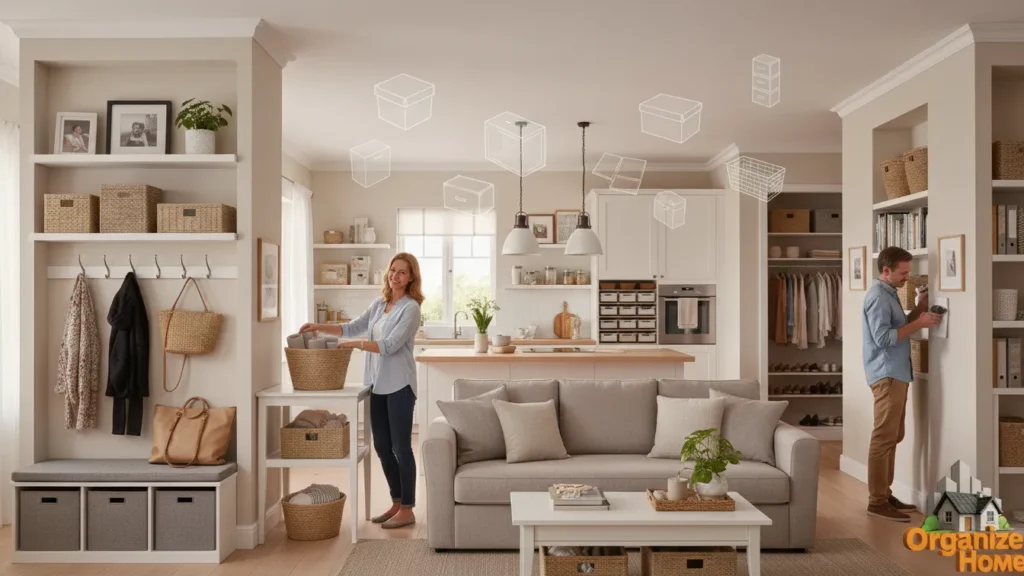
Another advantage of room-by-room organization is containment. Each room becomes its own system, with its own limits. This prevents clutter from spreading across the house. When something doesn’t belong in a room, the decision is clear: it either goes to the correct room or it leaves the home. This clarity reduces pile-building and unfinished organizing projects.
Room-by-room organization also prevents overwhelm. Organizing an entire home can feel impossible, especially when everything feels out of control. Focusing on one room at a time breaks the process into manageable pieces. Progress becomes visible quickly, which builds motivation and confidence to continue.
Lasting order depends on alignment, not perfection. Room-by-room organization encourages you to design spaces around real habits instead of ideal ones. If a room is used daily, organization should support speed and ease. If a room is used occasionally, organization can be simpler and more flexible. This adaptability is what keeps systems from breaking down.
Another key factor is maintenance. It’s far easier to reset one room than an entire house. When rooms are organized individually, small resets stay small. A messy living room doesn’t turn into a whole-house problem. This containment makes long-term maintenance realistic, even in busy homes.
Room-by-room organization also works well after decluttering. Once excess items are removed, organizing by room helps define what stays where and why. Each room becomes intentional instead of reactive. Storage is used more effectively because it’s assigned with purpose.
Creating order that lasts isn’t about complicated systems or constant effort. It’s about structure that fits how you live. Room-by-room organization provides that structure by keeping decisions local, clear, and practical. As you move through each room, you build a home that feels organized not just once—but consistently, over time.
This pillar will walk through how to organize each room with clarity, realism, and sustainability, so order doesn’t feel temporary or fragile. Instead, it becomes part of how your home naturally functions.
Why Organizing by Room Works Better Than Organizing by Category
Organizing by room works better than organizing by category because it aligns with how homes are actually used. While organizing by category sounds logical in theory, it often ignores the physical reality of daily life. Items don’t live in abstract groups—they live in specific rooms, serving specific purposes within those spaces.
When you organize by category, you’re forced to move items all over the house. This creates piles, temporary chaos, and decision fatigue. It also blurs boundaries. A category like “papers” or “electronics” may span multiple rooms, which makes it harder to decide where things truly belong. As a result, systems feel fragile and are harder to maintain.
Room-based organization keeps decisions grounded. Each room has a clear function, and organizing within that context simplifies choices. Instead of asking where something fits in a category system, you’re asking whether it supports how the room is used. This keeps organization practical rather than theoretical.
Another advantage is containment. Organizing by room naturally limits how much you keep in each space. Storage capacity becomes a guide instead of something to fight against. When a room reaches its limit, it’s a signal to adjust, not to overflow into other areas of the house.
Room-by-room organization also supports faster progress. Completing one room creates visible results, which builds motivation. Category-based organizing often leaves homes in a half-finished state because categories stretch endlessly across spaces. Rooms, by contrast, have clear start and end points.
Maintenance is also easier with room-based systems. When each room has its own logic, resetting it takes minutes instead of hours. A messy room stays contained instead of triggering disorder throughout the home.
Most importantly, organizing by room respects real habits. People naturally return items to the room they were used in. When organization follows that behavior instead of fighting it, systems last longer with less effort.
That’s why room-by-room organization creates order that feels stable, intuitive, and realistic—especially in busy homes where simplicity matters most.
How to Start Room-by-Room Organization Without Overwhelm
Starting room-by-room organization can feel intimidating when the home feels cluttered or unfinished. The idea of “doing every room” often creates pressure before you even begin. The key to avoiding overwhelm is understanding that room-by-room organization is a sequence, not a single project. You don’t organize the whole house—you organize one room at a time, fully and intentionally.
The first step is choosing the right starting room. This should not be the most chaotic or emotionally loaded space. Starting with the hardest room often leads to burnout. Instead, choose a room that is used daily but feels manageable, such as a bedroom, bathroom, or entryway. Early success builds confidence and momentum.
Once you choose a room, define clear boundaries. Room-by-room organization works best when you commit to staying inside one space until it’s complete. Avoid pulling items from other rooms or trying to solve whole-house problems at the same time. If something belongs elsewhere, move it out temporarily and continue. This keeps the process contained and mentally lighter.
Another important strategy is to organize in layers, not all at once. Start with visible surfaces, then move to drawers, cabinets, and storage areas. You don’t need to empty the entire room at the same time. Working in sections prevents visual overload and keeps the space usable during the process.
Time limits also reduce overwhelm. Room-by-room organization doesn’t require marathon sessions. Short, focused blocks of time—30 to 60 minutes—are often more effective than trying to finish everything in one day. Stopping with the room in a functional state is more important than finishing every detail.
It’s also essential to let go of perfection. The goal of room-by-room organization is function, not display. Systems should support how the room is actually used, even if that means choosing convenience over aesthetics. When expectations are realistic, progress feels lighter and more sustainable.
Another common source of overwhelm is decision fatigue. To reduce this, use simple rules while organizing each room. For example: items used daily stay easily accessible; rarely used items move to secondary storage; anything broken or unused leaves the room. Simple decision frameworks speed up the process and reduce emotional strain.
Finally, remember that room-by-room organization is cumulative. Each finished room reduces overall mental load. The home slowly becomes calmer as completed spaces stay organized, even while others wait their turn. This creates a sense of control instead of chaos.
Starting room-by-room organization without overwhelm is about pacing, boundaries, and focus. When you treat each room as its own small project, organization stops feeling endless and starts feeling achievable—one room at a time.
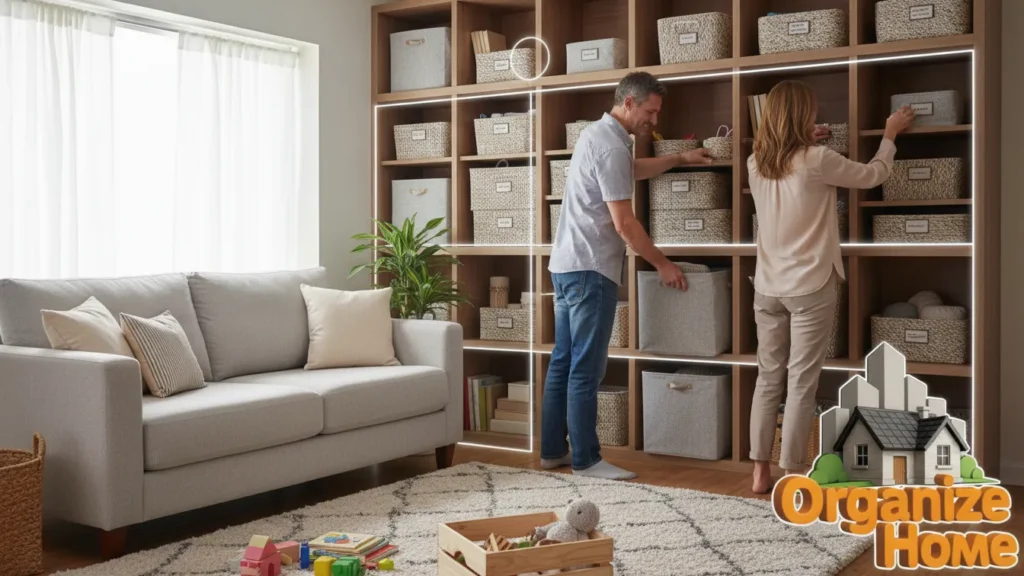
Organizing the Living Room for Daily Use
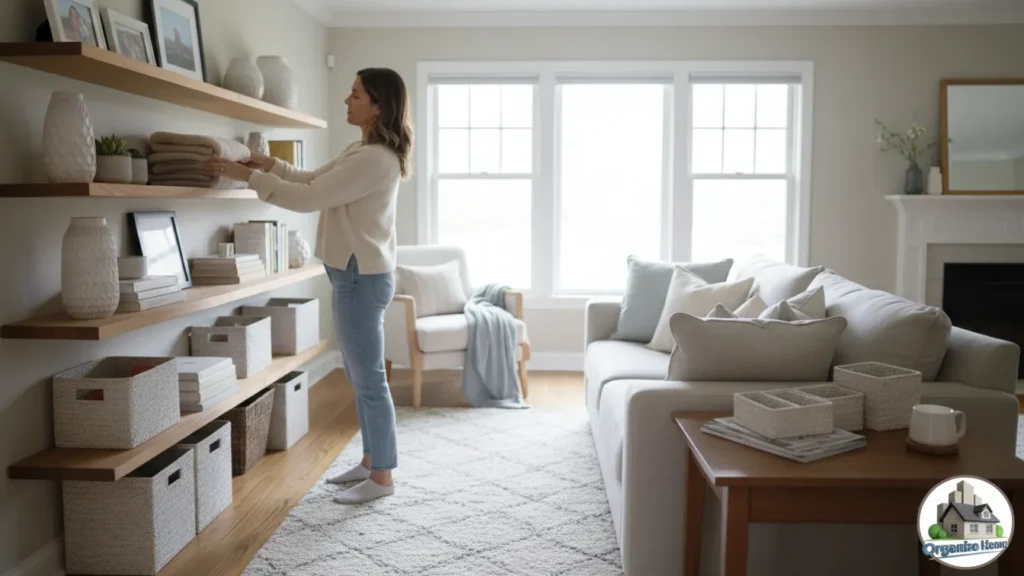
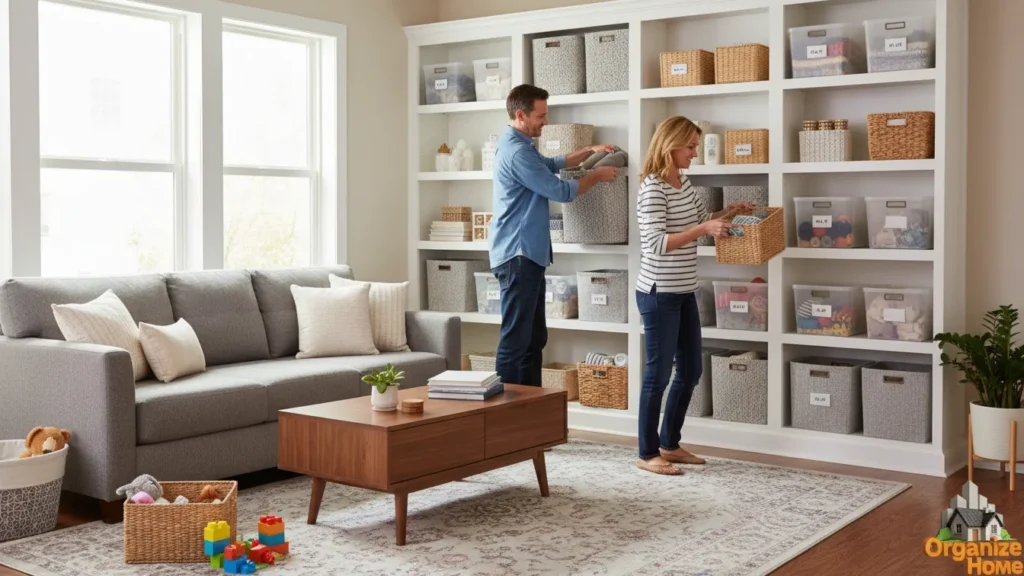
The living room is one of the most used spaces in the home, which makes it one of the easiest rooms to fall into disorder. Organizing the living room for daily use means prioritizing comfort, flow, and quick resets over perfect appearance. A living room that works well supports everyday activities without requiring constant effort to maintain.
The first step is clarifying how the living room is actually used. For some homes, it’s primarily a place to relax. For others, it’s a multi-purpose space used for entertaining, working, playing, or watching TV. Organization should reflect reality, not an ideal version of the space. When organization matches real use, items naturally return to their places.
Next, focus on limiting what belongs in the living room. Because it’s a shared and visible space, it often becomes a landing zone for items from other rooms. Organizing for daily use means clearly defining what stays and what doesn’t. Items that don’t support living room activities should be redirected to their proper rooms instead of being stored “temporarily.”
Storage in the living room should be simple and accessible. Closed storage works well for items used regularly but not constantly, such as blankets, remotes, or games. Open surfaces should be kept intentionally light. Too many decorative or functional items on surfaces make daily resets harder and increase visual noise.
Another key element is creating drop zones with limits. Small trays, baskets, or drawers can contain everyday items like remotes or reading glasses without letting them spread across the room. The important part is size—when a container is full, it’s a signal to reset, not to add another one.
Furniture placement also plays a role in daily organization. Walkways should be clear, and furniture should support movement instead of blocking it. When the room flows easily, clutter is more noticeable and easier to address quickly. Good flow reduces friction and makes the room easier to maintain.
Organizing the living room for daily use also means planning for fast resets. The room should be easy to tidy in five to ten minutes. If resetting the space feels complicated or time-consuming, the system is likely too complex. Simpler systems are easier to maintain consistently.
Finally, remember that the living room doesn’t need to look perfect to be organized. A well-organized living room feels usable, calm, and functional—even with signs of daily life. Organization here is about supporting routines, not controlling them.
When the living room is organized for daily use, it becomes a space that welcomes activity instead of reacting to it. That balance is what makes room-by-room organization sustainable over time.
How to Organize a Bedroom for Rest and Function
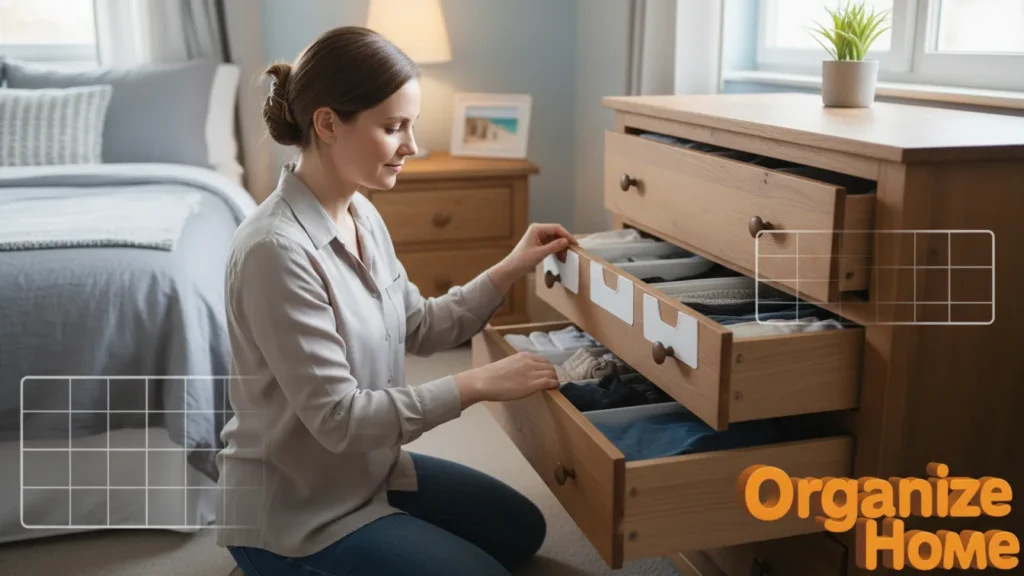
Organizing a bedroom should always start with one core principle: the bedroom exists to support rest and restoration. When organization decisions ignore this purpose, the room often becomes cluttered, overstimulating, or stressful. A well-organized bedroom balances function with calm, making it easier to rest and easier to maintain.
The first step is reducing visual noise. Bedrooms are not ideal places for excess items, open storage, or unfinished projects. Organizing for rest means limiting what’s visible and keeping only what truly belongs in the space. Items related to work, paperwork, or unrelated hobbies should be relocated to other rooms whenever possible.
Next, focus on organizing around daily routines. Morning and evening habits should guide where items are stored. Clothes worn daily should be easy to access. Nighttime essentials—like a book, glasses, or a charger—should have a clear, simple place near the bed. When organization supports routine, the room feels intuitive instead of cluttered.
Storage in the bedroom should be intentional and contained. Closets and drawers work best when they aren’t packed to capacity. Leaving some open space allows items to be put away easily, which is essential for maintaining order. Overfilled storage often leads to surface clutter, especially in bedrooms.
Furniture placement also affects function. Clear pathways around the bed and to storage areas reduce friction and make the room feel more open. When movement is easy, clutter becomes more noticeable and easier to address before it builds up.
Another important factor is limiting multi-purpose overload. While bedrooms sometimes double as offices or storage areas, organization should still protect the room’s primary function. If additional uses are necessary, they should be contained and visually minimized to preserve a restful atmosphere.
Organizing a bedroom for rest and function isn’t about perfection or aesthetics. It’s about creating a space that feels supportive at the beginning and end of each day. When the bedroom is calm, simple, and aligned with daily routines, organization naturally lasts—and rest comes more easily.
Closet Organization by Room, Not by Category
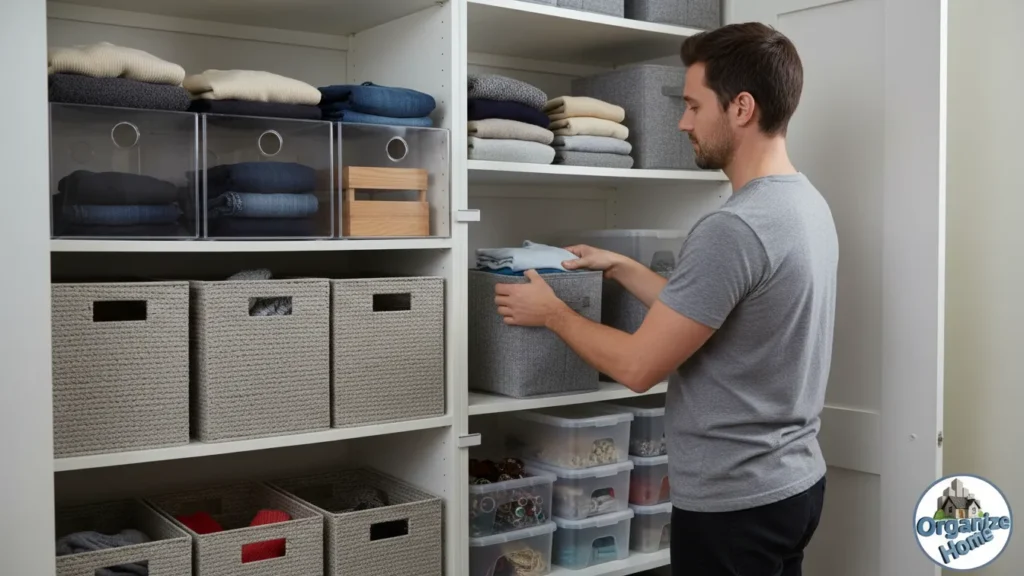
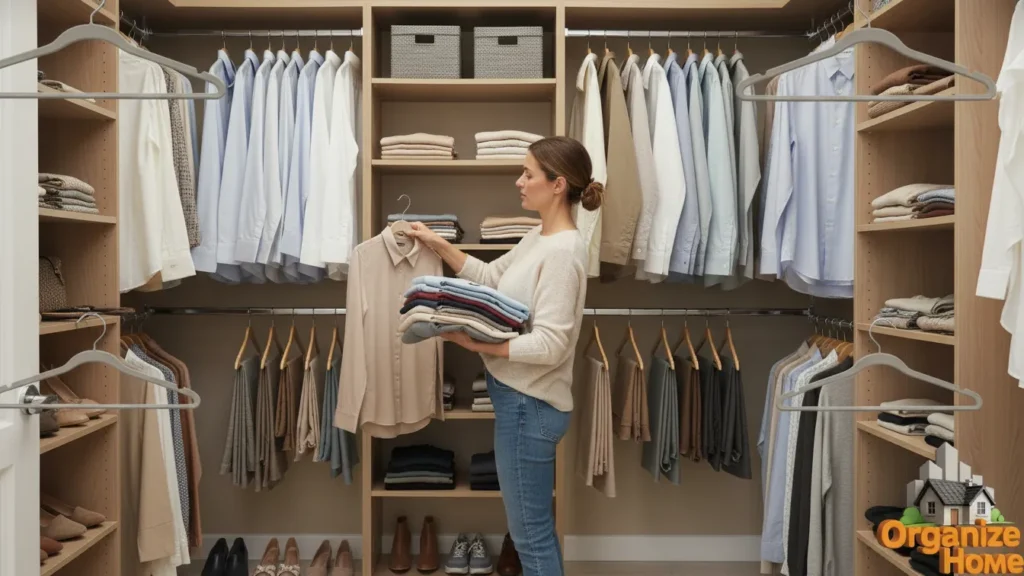
Closet organization works best when it’s approached by room, not by category. While it’s tempting to group all clothing or accessories together across the house, that method often creates friction and confusion. Closets function as extensions of the rooms they belong to, and organizing them within that context leads to systems that are easier to use and maintain.
A bedroom closet, for example, supports daily dressing and personal routines. Organizing it around those routines—work clothes, casual wear, sleepwear—keeps decisions simple. When closets are organized by abstract categories instead, items often feel disconnected from how and where they’re actually used.
Organizing closets by room also reinforces boundaries. Items stored in a specific closet should serve that room’s purpose. When closets become shared storage for unrelated categories, they quickly overflow and lose clarity. Keeping each closet focused prevents clutter from migrating and makes it obvious when something doesn’t belong.
Another advantage is accessibility. Closet organization by room allows you to prioritize items based on frequency of use within that space. Everyday items stay within easy reach, while seasonal or occasional items move to higher shelves or secondary areas. This reduces rummaging and keeps the closet functional.
Closets organized by category across rooms often require extra steps—moving items between spaces or remembering where something was stored “by type.” Room-based organization eliminates this mental load. You know where to look because the item lives where it’s used.
It’s also easier to maintain. When a closet supports one room’s needs, resetting it takes minutes instead of hours. You’re not managing a house-wide system—you’re maintaining a single, contained space.
Closet organization doesn’t need to be complex to work well. When each closet is organized to support its room, systems feel intuitive. Items return to their places naturally, clutter stays contained, and the entire home feels more organized without extra effort.
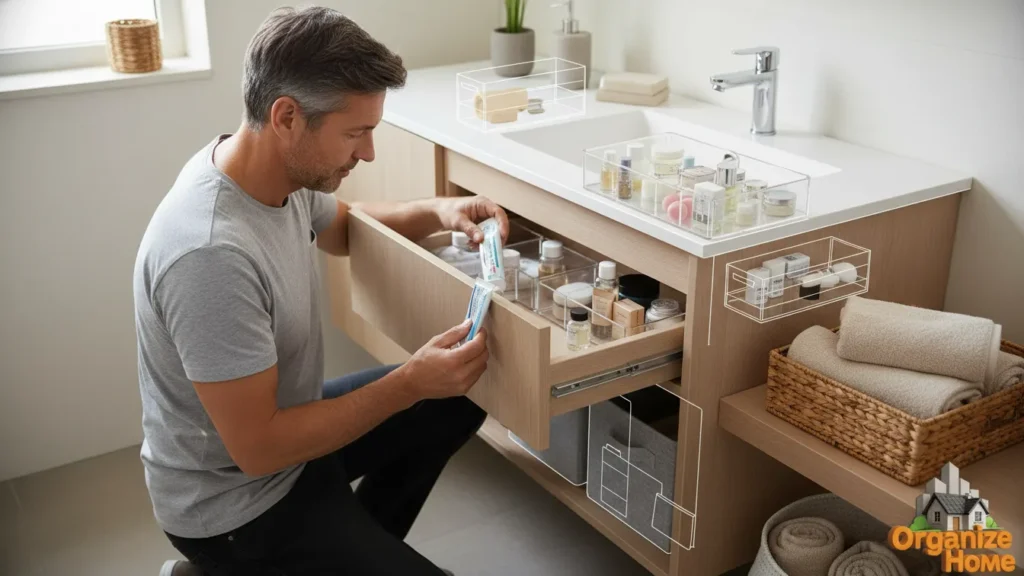
Organizing the Bathroom Without Overloading Storage
Bathrooms are small, high-traffic spaces, which makes them especially vulnerable to clutter. Organizing the bathroom without overloading storage requires a careful balance between accessibility and restraint. The goal is not to store everything you own, but to support daily routines with as little friction as possible.
The first step is defining what truly belongs in the bathroom. Many bathrooms become storage zones for backup products, rarely used items, or things meant for other rooms. Organizing effectively means limiting the bathroom to items that are used there regularly. Excess products and duplicates should be stored elsewhere or reduced.
Next, prioritize frequency of use. Daily-use items should be easy to reach and quick to put away. Items used occasionally can live in secondary storage, such as higher shelves or less accessible drawers. When everything competes for prime space, storage becomes overcrowded and frustrating.
It’s also important to avoid the “fill every inch” mindset. Bathrooms often have limited cabinets and drawers, but packing them tightly makes daily routines harder. Leaving a small amount of empty space allows items to move in and out easily and prevents clutter from spilling onto countertops.
Countertop organization should be minimal. Only the essentials used every day should stay visible. Too many items on surfaces increase visual noise and make the bathroom feel smaller and harder to maintain. Clear surfaces support quicker resets and a calmer atmosphere.
Another common issue is keeping too many backups in the bathroom. While having a few extras is practical, large quantities create clutter fast. Storing backups elsewhere prevents bathroom storage from becoming overloaded and keeps the space functional.
Organizing the bathroom without overloading storage is about intention, not perfection. When storage is kept light and purposeful, the bathroom becomes easier to clean, easier to reset, and easier to use every day.
A well-organized bathroom doesn’t feel full—it feels efficient. By limiting what’s stored and organizing around daily use, you create a space that supports routines without constantly fighting clutter.
👉 Bedroom Organization Small Busy Homes
How to Organize the Kitchen by Zones
Organizing the kitchen by zones is one of the most effective ways to make the space functional, efficient, and easier to maintain. Kitchens are action-based rooms. When organization follows how tasks actually happen, the space supports daily routines instead of slowing them down.
Kitchen zones are defined by function, not by item type. Common zones include food prep, cooking, cleaning, food storage, and serving. Organizing by zones means storing items close to where they are used, reducing unnecessary movement and decision-making during everyday tasks.
The first step is identifying your main kitchen activities. For most homes, the prep zone is near the counter space where chopping and mixing happen. Knives, cutting boards, mixing bowls, and prep tools belong here. When these items are scattered across cabinets, cooking becomes inefficient and frustrating.
The cooking zone centers around the stove or oven. Pots, pans, cooking utensils, oils, and spices used during cooking should be stored nearby. Keeping these items within arm’s reach reduces clutter because tools don’t get left out after use—they have an obvious place to return to.
The cleaning zone is usually located around the sink and dishwasher. Dish soap, sponges, towels, and trash bags should live here. Organizing this zone prevents cleaning supplies from spreading across the kitchen and keeps post-meal cleanup fast and contained.
Food storage zones include the refrigerator, pantry, and cabinets used for dry goods. Organizing these areas by category and frequency of use helps prevent overbuying and food waste. Items you use daily should be easy to see and reach, while backstock stays secondary.
Serving and dining zones support how food moves from kitchen to table. Plates, glasses, and serving tools should be stored close to where meals are assembled or served. This reduces traffic and keeps the kitchen flowing smoothly, especially in busy households.
Organizing the kitchen by zones also prevents overcrowding. When each zone has a clear purpose, it’s easier to notice when too much has accumulated in one area. This keeps storage balanced and stops clutter from spreading into unrelated spaces.
The goal of zone-based kitchen organization is simplicity. You’re not creating rigid rules—you’re aligning storage with behavior. When items live where they’re used, the kitchen feels intuitive, efficient, and far easier to maintain on a daily basis.
A kitchen organized by zones doesn’t just look better. It works better, supports real-life cooking habits, and keeps organization sustainable over time.
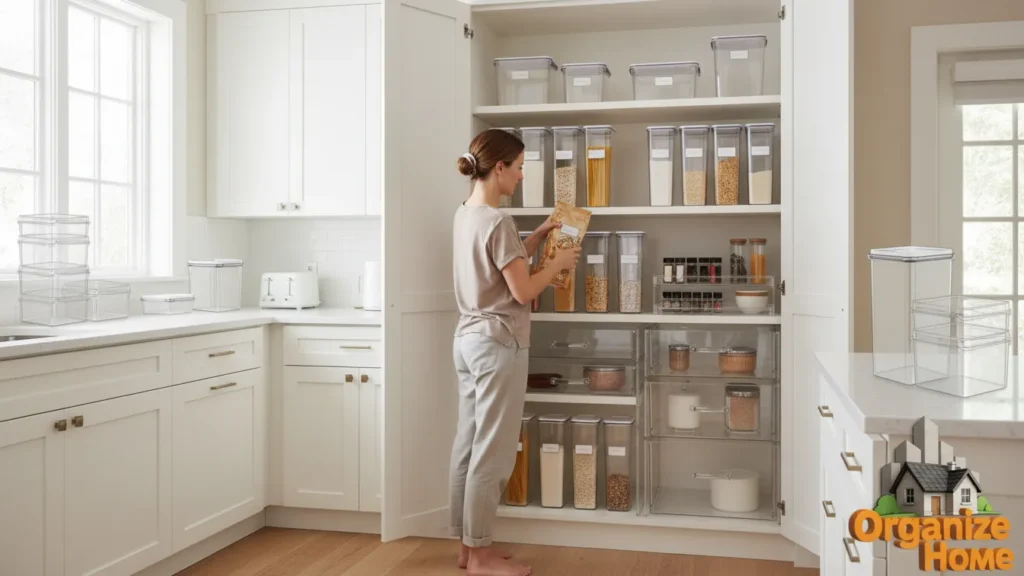
Pantry Organization That Works for Real Life
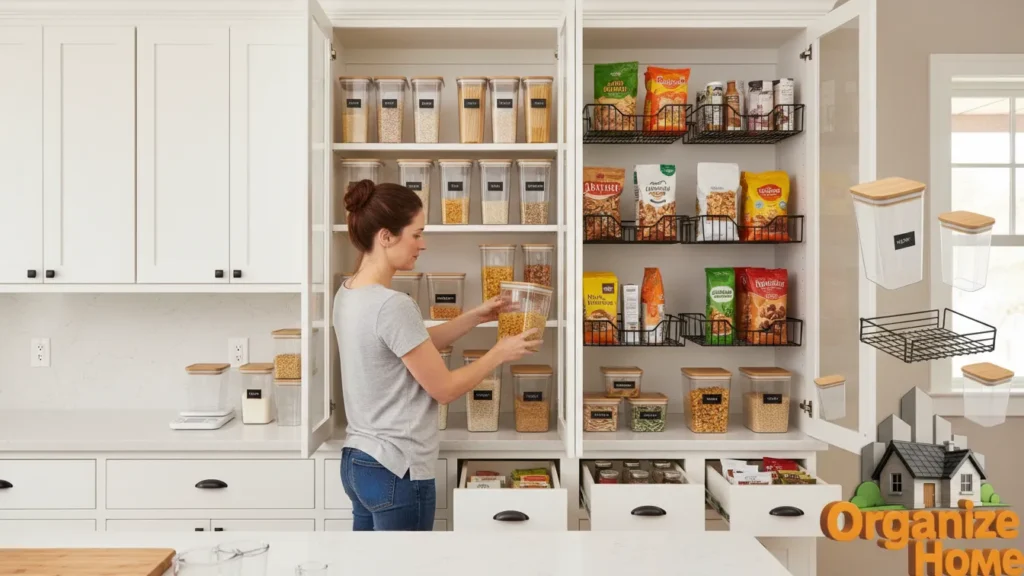
Pantry organization only works when it reflects how food is actually used in the home. Many pantries look organized at first but quickly fall apart because the systems are too rigid, too detailed, or disconnected from daily habits. Organizing a pantry for real life means prioritizing visibility, access, and flexibility over perfection.
The first step is organizing by how often items are used, not by how they look. Everyday foods should be easy to see and reach. When frequently used items are buried behind rarely used ones, clutter builds quickly and food gets forgotten. Visibility prevents overbuying and makes meal prep faster.
Another key principle is grouping by purpose. Instead of over-categorizing, keep groupings simple and intuitive—breakfast items together, snacks together, baking items together. These groupings mirror how people think and move through the pantry, making it easier to maintain without constant effort.
It’s also important to leave breathing room. Overstuffed shelves are one of the main reasons pantry organization fails. When shelves are packed tightly, items get pushed back, expire unnoticed, or fall over. Leaving some open space allows the pantry to absorb new groceries without immediate chaos.
Container use should be practical, not decorative. Containers are helpful when they improve visibility or prevent spills, but they shouldn’t add extra steps. If transferring food into containers feels like a chore, the system is too complicated. Simple, low-effort solutions last longer.
Another real-life consideration is managing backstock. Keeping too many extras clutters the pantry and creates stress. A small, defined area for backups is usually enough. When that space is full, it’s a signal to stop buying more until items are used.
Pantry organization should also account for change. Tastes, schedules, and routines shift over time. Systems that allow easy adjustment—rather than rigid layouts—stay functional longer. Regular, quick resets keep the pantry from slipping back into chaos.
A pantry that works for real life doesn’t need to look perfect. It needs to be clear, usable, and easy to reset. When organization supports how food is actually bought, stored, and used, the pantry becomes a helpful space instead of a constant source of frustration.
👉 Living Room Organization Zones
Organizing the Laundry Room for Simplicity
The laundry room is a functional space, not a storage catch-all. Organizing the laundry room for simplicity means reducing friction in a routine that already requires time and energy. When this room is overfilled or poorly organized, even small tasks feel heavier than they need to be.
The first step is defining the purpose of the laundry room. Its primary job is to support washing, drying, folding, and putting clothes away. Items that don’t support those tasks—random storage, excess supplies, or unrelated household items—create visual and physical clutter and should be removed or relocated.
Next, focus on workflow. Laundry moves in a clear sequence: dirty clothes → washing → drying → folding → returning to rooms. Organization should follow this flow. Hampers should be easy to access, supplies should be near machines, and folding space should be clear and uncluttered. When items are stored far from where they’re used, routines slow down and clutter builds.
Storage in the laundry room should be minimal and purposeful. Keep only the supplies you use regularly, and limit backups. Overloading cabinets with extra products makes it harder to find what you need and increases the chance of spills or forgotten items. A small, defined space for extras is usually enough.
Vertical storage can be helpful in laundry rooms, but only when it doesn’t overwhelm the space. Shelves should remain easy to reach and not packed tightly. Leaving open space makes the room feel lighter and allows quick resets after busy laundry days.
Another important element is surface control. Laundry rooms often accumulate piles because there’s nowhere clear to sort or fold. Keeping one surface intentionally clear—such as a counter or table—helps prevent temporary mess from becoming permanent clutter.
Organizing the laundry room for simplicity also means making it easy to reset. If putting things away feels complicated, the system won’t last. Simple storage, clear categories, and defined limits make daily use manageable, even in small laundry spaces.
A simple laundry room doesn’t need to look perfect. It needs to work smoothly. When organization supports the routine instead of complicating it, laundry becomes a manageable task rather than a constant source of frustration.
Home Office Organization by Function
Organizing a home office by function is essential for creating a space that supports focus, productivity, and ease of use. When office organization is based only on aesthetics or generic categories, the space often becomes cluttered and inefficient. Function-based organization ensures that everything in the room supports how you actually work.
The first step is identifying the main activities that happen in the home office. For many people, this includes computer work, writing, meetings, paperwork, and storage of supplies. Each of these functions should have a clear, defined area—even if the room is small. When functions are mixed together without boundaries, clutter builds quickly.
The primary work zone should be organized around your desk. Items used daily—such as a computer, notebook, pens, or planner—should be within easy reach. Keeping this zone clear of unrelated items helps reduce distractions and makes it easier to start work without mental resistance.
Paper management is another critical function. Instead of spreading papers across the room, create a simple system based on action: papers to handle now, papers to reference occasionally, and papers to archive or discard. Storing documents according to function keeps paperwork from overwhelming the space.
Supply storage should also follow function, not volume. Keep only the supplies you realistically use. Excess office supplies often create clutter because they’re kept “just in case.” Limiting quantity and storing supplies close to where they’re used makes the office easier to maintain.
Technology zones matter as well. Chargers, cables, and devices should have a dedicated, contained area. When tech items lack a clear home, desks quickly become tangled and chaotic. Simple containment prevents visual clutter and saves time.
Organizing a home office by function also supports better boundaries between work and rest. When the office is clear and purposeful, it’s easier to step away at the end of the day. Clutter-free systems reduce the feeling that work is constantly unfinished.
A functional home office doesn’t need to be large or elaborate. It needs clarity. When each area supports a specific task, the room feels calmer, more efficient, and easier to reset—making room-by-room organization truly effective.
How to Organize Kids’ Rooms Without Constant Mess
Organizing kids’ rooms without constant mess requires a different mindset than organizing adult spaces. Children interact with their environment in active, fast, and often unpredictable ways. Organization in kids’ rooms must support easy use and easy cleanup, not perfection.
The first principle is simplifying what’s kept in the room. Too many toys, clothes, or books make it impossible for kids to maintain order. Reducing volume is the foundation of organization here. When choices are limited, cleanup becomes manageable instead of overwhelming.
Next, organization should match the child’s age and abilities. Storage systems that require multiple steps or precision won’t work long-term. Open bins, low shelves, and clearly defined zones allow kids to participate in keeping their space organized without frustration.
Grouping items by activity works better than detailed categories. Toys used together should be stored together. Art supplies should have a dedicated area. When organization mirrors play patterns, items are more likely to be returned to their place after use.
Limits are essential. Each category should have a defined amount of space. When a bin or shelf is full, something must be removed before new items are added. These boundaries prevent clutter from quietly building up and make maintenance easier for both kids and adults.
Clothing storage should also be simple. Only current-season clothes should be easily accessible. Too many options create mess and decision fatigue. Simple drawers or bins help kids learn where things belong and make daily routines smoother.
It’s also important to accept a certain level of visual mess. Kids’ rooms are lived-in spaces. The goal is not constant neatness but quick resets. Organization should allow the room to return to order in a few minutes, not require a full overhaul each day.
Organizing kids’ rooms without constant mess is about designing systems that work with children, not against them. When organization is simple, flexible, and age-appropriate, kids can use their rooms freely—and cleanup becomes part of daily life instead of a constant struggle.
Entryway Organization for Smooth Daily Transitions
The entryway is a transition space, not a storage room. Its job is to support people coming in and going out without friction. When entryway organization ignores this purpose, clutter builds quickly and daily routines become harder than they need to be. Organizing the entryway for smooth transitions means prioritizing flow, clarity, and limits.
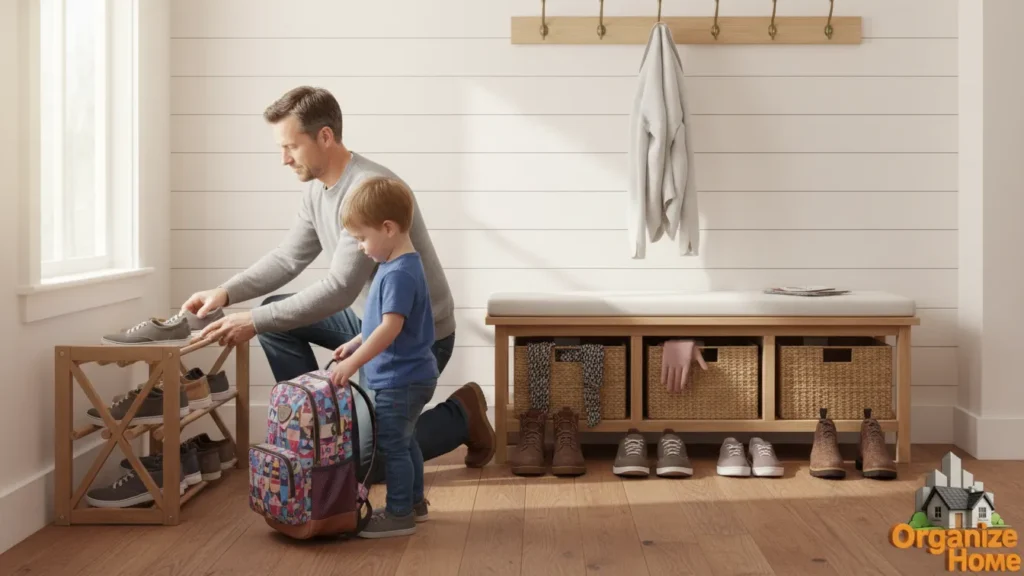
The first step is deciding what truly belongs in the entryway. Only items used during arrival and departure should live there—shoes worn regularly, everyday outerwear, keys, bags, and essentials. When unrelated items accumulate, the space loses function and becomes a bottleneck instead of a bridge.
Clear drop zones are essential. Each person in the household should have a simple, defined place for daily items. Hooks, baskets, or trays work well when they are easy to access and not overfilled. The goal is fast drop-off and fast grab, not perfect alignment.
Shoe storage should be realistic. Storing every pair near the door often creates clutter. Limiting entryway shoe storage to current, frequently worn shoes keeps the area manageable. Seasonal or rarely used shoes should live elsewhere.
Vertical space is especially valuable in entryways. Hooks and wall-mounted storage keep floors clear and preserve movement. Clear floor space improves flow and makes the entryway feel calmer and more functional.
Another key principle is capacity control. Entryways fill up quickly when limits aren’t defined. Containers should be sized intentionally—when they’re full, it’s a signal to reset. Adding more storage usually leads to more clutter, not better organization.
Finally, entryway organization should support quick resets. The space should be easy to tidy in a few minutes. If it takes longer, the system is too complex or holding too much.
A well-organized entryway doesn’t store your life—it supports your movement through it. When organization here is simple and intentional, daily transitions feel smoother, calmer, and far less stressful.
👉 Home Office Organization Systems
Organizing Small Rooms and Shared Spaces
Small rooms and shared spaces present unique organizational challenges because they must support multiple people or functions within limited square footage. Organizing these spaces effectively requires clarity, boundaries, and flexibility. The goal is not to fit everything in, but to make the space work smoothly for everyone who uses it.
The first principle is defining the primary function of the space. Even in shared rooms, one purpose should lead. A small guest room that also serves as storage, for example, should still function comfortably as a guest space. Organization decisions should protect the main function rather than letting secondary uses take over.
Shared spaces need clear ownership. When multiple people use the same room, clutter builds quickly if responsibility isn’t defined. Assigning specific zones, shelves, or containers to each person creates accountability and reduces friction. When everyone knows what belongs to them, tidying becomes faster and fairer.
In small rooms, vertical space becomes especially important. Wall-mounted storage, hooks, and shelves help keep floors clear and improve flow. However, vertical storage should still be limited. Overloading walls can make small spaces feel crowded and overwhelming.
Another key strategy is limiting duplicates. Shared spaces often collect multiple versions of the same item because ownership is unclear. Reducing redundancy frees up valuable space and simplifies storage.
Flexibility is essential in rooms that serve more than one purpose. Storage should be easy to adjust as needs change. Avoid overly rigid systems that break down when routines shift. Simple, adaptable solutions last longer in shared environments.
Visual simplicity also matters. In small rooms, clutter is more noticeable and more stressful. Keeping surfaces clear and storage contained helps the space feel larger and calmer, even when it’s heavily used.
Organizing small rooms and shared spaces is about compromise and intention. When boundaries are clear and storage is purposeful, these spaces can function smoothly without constant tension—supporting daily life instead of complicating it.
How to Organize Storage Rooms and Utility Areas
Storage rooms and utility areas are often the most neglected spaces in the home, even though they support many essential functions. Organizing these areas effectively is not about making them look perfect—it’s about making them usable, safe, and easy to maintain. When storage rooms are chaotic, they quietly create stress throughout the rest of the house.
The first step is clarifying the purpose of the space. Storage rooms and utility areas are meant to support the home, not to absorb everything that doesn’t have a place. Defining what types of items belong there prevents the space from becoming a dumping ground.
Next, organize by function and frequency, not by appearance. Items used often should be easy to access and stored at waist or eye level. Rarely used or seasonal items can be stored higher or deeper in the space. This reduces unnecessary digging and keeps everyday tasks efficient.
Containment is essential in utility areas. Using simple, sturdy containers helps group related items and prevents clutter from spreading. Containers should be labeled mentally by category, even if physical labels aren’t used. When each item has a clear group, putting things away becomes faster and more consistent.
It’s also important to leave open space. Overfilled storage rooms quickly become unmanageable. Leaving some empty shelves or floor space allows the area to absorb change without collapsing into chaos. This breathing room is what keeps storage areas functional long-term.
Safety and accessibility matter more here than aesthetics. Heavy items should be stored low, walkways should remain clear, and nothing should be stacked in unstable ways. An organized storage room reduces the risk of accidents and makes the space easier to use confidently.
Another common issue is keeping too much “maybe someday” clutter in these areas. Storage rooms often hide indecision. Regularly reassessing what’s stored helps prevent the space from becoming overwhelmed with items that no longer serve a purpose.
Organizing storage rooms and utility areas is about control and clarity. When these spaces are functional, the rest of the home benefits. They stop being stress zones and start acting as reliable support systems—quietly doing their job without demanding constant attention.
Room-by-Room Organization for Small Homes and Apartments
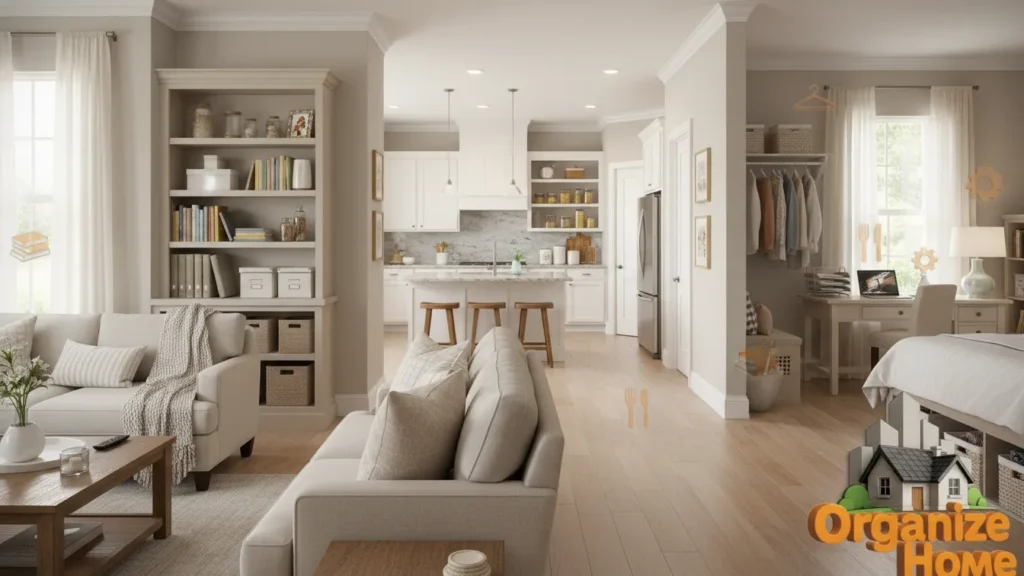
Room-by-room organization is especially effective in small homes and apartments because space is limited and every room must work efficiently. When square footage is tight, clutter becomes visible quickly, and disorganization spreads faster. Organizing one room at a time creates control and prevents small spaces from feeling chaotic or overwhelming.
In small homes, each room often serves multiple purposes. A living room may double as a workspace, or a bedroom may include storage and dressing areas. Room-by-room organization helps you define clear roles within each space, so functions don’t compete with one another. This clarity is what keeps small spaces usable.
The first priority is respecting room limits. Storage capacity in small homes should guide how much stays in each room. When a room feels full, it’s a signal to adjust, not to overflow into other spaces. Containing items within each room prevents clutter from spreading throughout the home.
Another key principle is visibility. In apartments and small homes, hidden clutter quickly becomes forgotten clutter. Organizing so items are easy to see and access reduces overbuying and simplifies daily routines. When you can see what you own, you’re more likely to use and maintain it.
Furniture choice and placement also play a major role. Multi-functional furniture can be helpful, but only when it doesn’t become a catch-all. Room-by-room organization ensures that even flexible furniture has clear boundaries and purpose instead of turning into hidden storage chaos.
Organizing small homes room by room also makes maintenance more manageable. Resetting one room takes far less time than tackling the entire home. When each space has its own logic, daily mess stays contained and doesn’t spiral into whole-house disorder.
It’s also important to avoid comparing small homes to larger ones. Organization should be based on what works within the space you have, not on unrealistic standards. Room-by-room organization adapts systems to fit the home, not the other way around.
In small homes and apartments, organization isn’t about fitting more in—it’s about making each room work better. Room-by-room organization provides the structure needed to create calm, functional spaces that support daily life without constant effort.
How to Maintain Organization Room by Room
Maintaining organization room by room is what turns initial effort into long-term stability. Many homes become organized once—but fall back into clutter because maintenance wasn’t built into the system. Room-by-room organization makes maintenance realistic by keeping responsibility, effort, and resets small and contained.
The most important principle of maintenance is local responsibility. When each room has its own organizational logic, it can be reset independently. You don’t need to reorganize the whole house to restore order—only the room that drifted. This prevents minor messes from turning into overwhelming projects.
Daily micro-resets are key. Spending a few minutes returning items to their places at the end of the day keeps rooms from accumulating clutter. Because room-by-room systems are simple and intuitive, these resets don’t feel like chores. They’re quick corrections, not full cleanups.
Another essential factor is respecting capacity. Maintenance becomes difficult when rooms are filled to the limit. Leaving some open space in drawers, shelves, and surfaces allows rooms to absorb daily use without breaking down. When a room feels tight again, it’s usually a sign that something needs to leave—not that the system failed.
It’s also helpful to schedule periodic room check-ins. This doesn’t mean reorganizing from scratch. It means reassessing whether the room still supports current routines. Needs change over time, and room-by-room organization stays effective when systems are adjusted instead of ignored.
One common mistake is trying to maintain everything at the same level all the time. Some rooms deserve more attention because they’re used more often. High-traffic rooms like kitchens and living rooms may need daily or weekly resets, while low-use rooms can be checked less frequently. This prioritization prevents burnout.
Another key to maintenance is keeping systems visible and simple. When organization relies on memory or complicated steps, it’s harder to sustain. Clear storage, obvious placement, and minimal categories reduce friction and make upkeep feel automatic.
Maintaining organization room by room is not about discipline—it’s about design. When each room is organized to match real habits, maintenance becomes part of daily life instead of an extra task. The home stays orderly not because you constantly fix it, but because the systems quietly support you every day.
Common Room-by-Room Organization Mistakes to Avoid
Room-by-room organization is highly effective, but only when it’s done with realistic expectations and clear boundaries. Many organization systems fail not because the method is flawed, but because common mistakes undermine otherwise good setups. Understanding what to avoid is just as important as knowing what to do.
One of the most frequent mistakes is trying to organize multiple rooms at once. This spreads focus too thin and creates unfinished systems throughout the home. Room-by-room organization works because it’s contained. Starting several rooms without finishing any of them leads to cluttered transitions and burnout.
Another common error is organizing before decluttering enough. When too many items remain, even well-designed systems become overloaded. Storage fills quickly, surfaces become crowded, and maintenance feels difficult. Organization works best when volume matches the space available.
Overcomplicating systems is another major issue. Using too many categories, containers, or steps makes rooms harder to maintain. If putting something away requires thought or extra effort, it likely won’t happen consistently. Simple systems are far more durable in everyday life.
Ignoring how the room is actually used is also a frequent mistake. Organization based on ideal routines instead of real habits quickly breaks down. Systems should support what truly happens in the room, not what should happen in a perfect scenario.
Another problem is failing to set limits. Without clear boundaries, rooms slowly accumulate items that don’t belong. When everything is allowed to stay, clutter returns. Defined limits—such as container sizes or storage capacity—are what keep room-by-room organization stable.
Trying to maintain every room at the same level is also unrealistic. High-traffic rooms need more frequent resets, while low-use rooms can be checked less often. Treating all rooms equally often leads to frustration and inconsistency.
Finally, expecting organization to be permanent is a mistake. Homes are dynamic. Needs change, seasons shift, and routines evolve. Room-by-room organization stays effective when it’s flexible and revisited as needed, not treated as a one-time project.
Avoiding these common mistakes helps room-by-room organization do what it’s meant to do: create clear, functional spaces that are easy to maintain over time. When systems are simple, realistic, and aligned with daily life, organization becomes a support—not another source of stress.