Decluttering Without Making a Bigger Mess: Why This Is So Common
One of the most frustrating parts of decluttering is when the process meant to create order ends up creating more mess than you started with. Many people begin with good intentions, pull items out to sort, and quickly feel overwhelmed by piles, half-finished decisions, and a home that looks worse than before. This experience is extremely common—and it doesn’t mean you’re doing something wrong.
Decluttering without making a bigger mess is difficult because decluttering is, by nature, a temporary disruption. You’re interrupting the current state of a space to make decisions, and that disruption can feel chaotic if it’s not contained. When items are removed from their places without a clear plan for where they’ll go next, visual clutter multiplies fast.
Another reason this happens is scope. Many people start decluttering with an unclear boundary—“I’ll just start here and see how it goes.” As items come out, the task expands. One surface leads to a drawer, which leads to a closet, which leads to another room. Without limits, clutter spreads faster than decisions can keep up.

There’s also a strong emotional component. Decluttering involves decision-making, and decisions slow down under pressure. As fatigue sets in, items get set aside “for later,” creating piles that feel unresolved. These piles aren’t a failure—they’re a sign that the process outpaced your decision capacity.
It’s important to understand that mess during decluttering isn’t always a mistake. Some level of temporary disorder is normal. The problem arises when there’s no containment—no clear system to prevent that temporary mess from taking over the entire space or lingering after the session ends.
Another common issue is trying to combine too many tasks at once. People often declutter, reorganize, clean, and redesign a space simultaneously. This multiplies both time and mess. Decluttering works best when it stays focused on one thing: deciding what stays and what goes.
Many people also underestimate how quickly visual clutter affects stress levels. Even when progress is being made, seeing items spread out can trigger anxiety and the urge to quit. When the environment feels out of control, the brain interprets the task as unsafe or too demanding.
The good news is that decluttering doesn’t have to create chaos. The mess is not inevitable—it’s usually the result of missing structure, unclear boundaries, or sessions that go on too long. With a calmer, more contained approach, it’s absolutely possible to declutter without making your home feel unlivable in the process.
Understanding why decluttering often turns messy is the first step toward preventing it. Once you see the patterns that lead to chaos, you can adjust the process—making decluttering feel controlled, manageable, and far less stressful from the start.
Why Decluttering Often Makes Homes Feel Worse at First
It’s very common for a home to feel worse before it feels better during decluttering, and this stage often catches people off guard. Many expect immediate relief once they start removing items, but instead they see surfaces covered, items pulled out, and spaces that look more chaotic than before. This reaction doesn’t mean decluttering is failing—it means the process is unfolding normally.
Decluttering creates disruption before it creates order. When items are taken out of drawers, closets, or shelves, they become visible all at once. What was previously hidden behind doors now sits in plain sight, making the space feel suddenly fuller and more overwhelming. The clutter was already there—you’re just seeing it clearly for the first time.
Another reason homes feel worse initially is unfinished decision-making. Decluttering slows down when choices become harder, and items get set aside temporarily. These “in-between” piles represent unresolved decisions, which create mental tension. The brain registers this as disorder, even if progress is happening.
Timing also plays a role. Decluttering sessions that run too long increase fatigue, which leads to slower decisions and more mess left out. As energy drops, items stop being put back intentionally, and the space feels increasingly chaotic. This is why long, unstructured sessions often end with discouragement.
There’s also an emotional factor. Seeing everything laid out can trigger guilt, stress, or regret about past purchases and unfinished intentions. These emotions amplify the feeling that things are out of control, even when you’re actively improving the space.
Understanding that this “worse before better” phase is temporary is crucial. It’s not a sign to quit—it’s a signal to add structure, reduce scope, or stop for the day and reset. Decluttering becomes calmer when you expect this phase and plan for it instead of being surprised by it.
When handled with boundaries and short sessions, this uncomfortable middle stage passes quickly. The home begins to feel lighter, decisions feel clearer, and progress becomes visible. Recognizing why decluttering often feels worse at first helps you move through this stage with confidence instead of frustration.
The Biggest Mistake That Turns Decluttering Into Chaos
The single biggest mistake that turns decluttering into chaos is starting without containment. Many people begin by pulling items out of drawers, closets, or shelves before deciding where those items will temporarily live. Without clear containment, clutter spreads faster than decisions can keep up—and the space quickly feels out of control.
This mistake often comes from good intentions. People think, “I’ll take everything out so I can see what I have.” While visibility can be helpful, removing items without a controlled system creates instant visual overload. Surfaces fill up, floors disappear, and suddenly there’s no clear place to work or walk. The mess grows before any progress feels real.
Another part of this mistake is letting the decluttering area expand unintentionally. One pile turns into several. Items migrate to nearby rooms. Decisions get paused “just for a moment” and those moments pile up into chaos. When boundaries aren’t defined, the task quietly becomes much bigger than planned.
Lack of containment also increases decision fatigue. When items are scattered everywhere, the brain is constantly processing unfinished decisions. This mental noise makes it harder to focus, slows progress, and increases the urge to quit early—often leaving the space worse than before.
This mistake is especially common when people try to declutter multiple goals at once. Decluttering, organizing, redesigning, and “figuring things out later” all compete for attention. Without containment, these overlapping goals create confusion instead of clarity.
The solution isn’t more discipline—it’s structure before action. Decluttering works best when every item that comes out has a temporary place to go, and when the scope of the space is clearly limited. Containment keeps the mess from spreading and allows decisions to happen calmly and sequentially.
Understanding this mistake is powerful because it’s easy to fix. Once containment is in place, decluttering stops feeling chaotic and starts feeling controlled. The space stays livable during the process, progress becomes visible sooner, and the urge to abandon the task drops significantly.
Avoiding this one mistake changes the entire decluttering experience—from stressful and messy to focused and manageable.
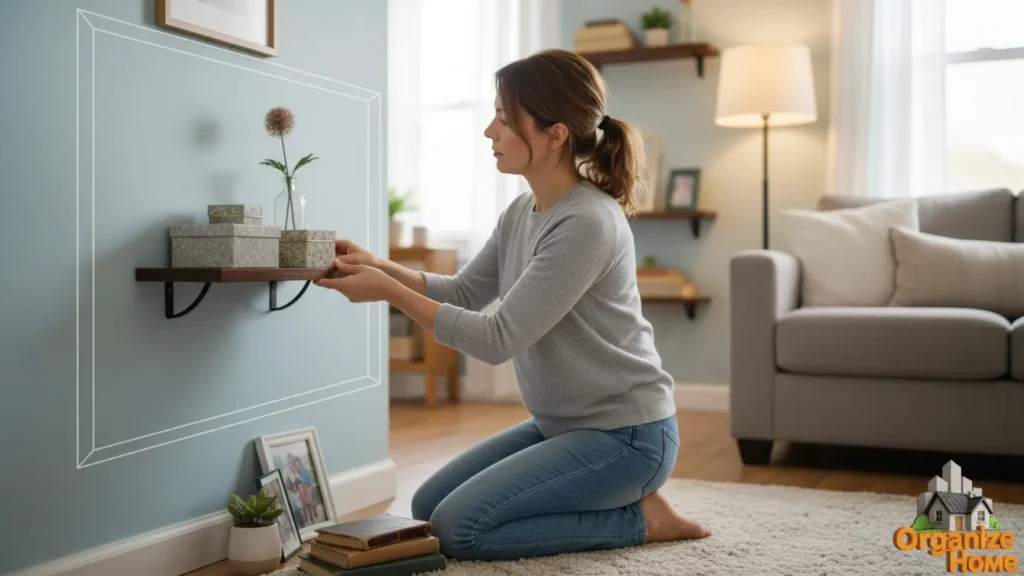
How to Prepare a Space Before You Start Decluttering
One of the most effective ways to avoid chaos while decluttering is preparing the space before you touch a single item. Preparation doesn’t mean setting up an elaborate system—it means creating just enough structure so decisions can happen without the mess spreading.
The first step in preparing a space is defining the exact area you’ll work on. Instead of thinking “this room,” narrow it down to one surface, one drawer, or one section of the room. Clear boundaries immediately reduce overwhelm and prevent the task from expanding beyond control.
Next, make sure the space is physically workable. This may mean clearing the floor, opening curtains for light, or moving a chair so you can sit comfortably. Decluttering requires focus, and a cramped or awkward setup makes fatigue set in faster.
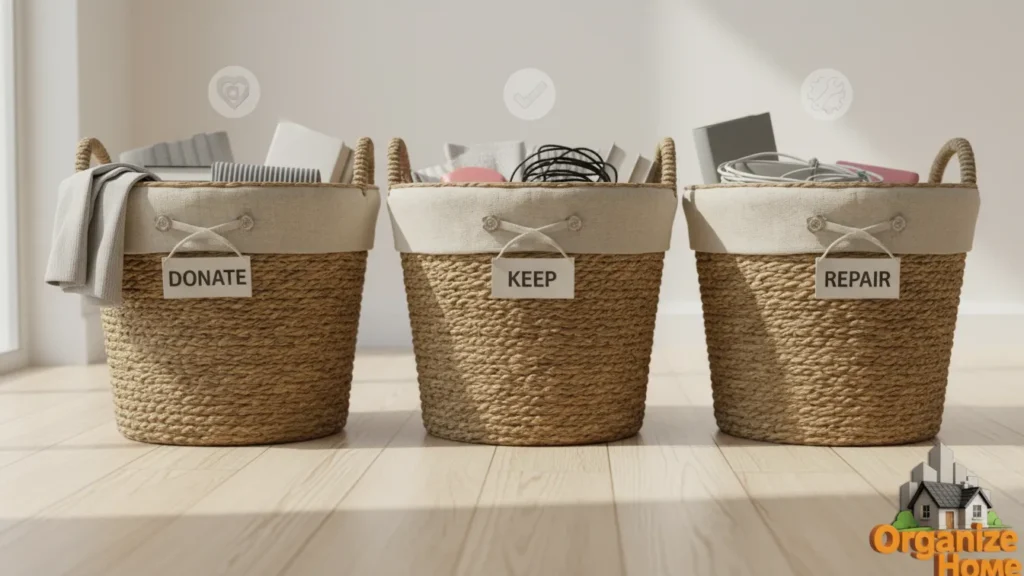
Before you start, set up basic containment. You don’t need many categories—just a few simple ones:
- Keep (stays in this space)
- Let go (donation or discard)
- Belongs elsewhere
Using bags, boxes, or baskets for these categories keeps items from spreading across surfaces. Every item you pick up immediately has a place to go, which prevents piles from multiplying.
It’s also helpful to remove distractions ahead of time. Silence notifications, turn off background noise that pulls your attention, and let others in the home know you’ll be focused for a short period. Fewer interruptions mean fewer half-finished decisions.
Time preparation matters too. Decide how long you’ll work before you begin—15 or 20 minutes is usually enough. Knowing there’s a clear end point makes starting easier and reduces the temptation to rush or overdo it.
Finally, reset your expectations. The goal of this session is not to finish everything or make the space perfect. The goal is to make clear decisions without creating a bigger mess. When expectations are realistic, the space stays calmer and progress feels manageable.
Preparing a space before decluttering is what separates a controlled process from a chaotic one. A few minutes of setup saves hours of frustration later—and makes it possible to declutter without turning your home upside down.
Setting Up Simple Containment Zones
One of the most effective ways to declutter without making a bigger mess is setting up simple containment zones before you start. These zones act as guardrails for the process, keeping items controlled and preventing clutter from spreading across the room—or the house.
Containment zones don’t need to be complicated or perfectly organized. In fact, the simpler they are, the better they work. Their purpose is not long-term storage or organization; their purpose is temporary control while decisions are being made.
At minimum, most decluttering sessions only need three containment zones:
- Keep (stays in this space)
- Let go (donate or discard)
- Belongs elsewhere
Using boxes, bags, laundry baskets, or bins for each zone creates immediate structure. Every item you pick up has a destination right away, which eliminates the habit of setting things down “just for a second” and accidentally creating piles.
The “keep” zone should remain small and close to where items will return. This prevents unnecessary reshuffling later and reinforces the goal of keeping only what truly belongs in the space. The “let go” zone should be clearly defined so decisions feel final, not tentative.
The “belongs elsewhere” zone is especially important. Without it, decluttering quickly turns into room-hopping. By parking these items temporarily, you stay focused on the current space and maintain momentum without ignoring reality.
Placement matters. Containment zones should be within reach but not in the way. If they block walkways or take over work surfaces, they become visual clutter themselves. Keeping zones clearly separated helps your brain process decisions faster and reduces mental noise.
It’s also important to resist over-categorizing. Adding too many zones—“maybe,” “decide later,” “store,” “organize”—slows decisions and increases mess. Simple zones encourage clarity and forward movement.
At the end of a session, containment zones should be cleared or intentionally paused. Donation bags leave the room. Trash goes out. “Belongs elsewhere” items are returned in one short reset. This prevents temporary zones from becoming permanent clutter.
Simple containment zones are what turn decluttering from chaotic to controlled. They keep the mess from growing, protect your focus, and make it possible to stop at any point without your space falling apart.
👉 Decluttering One Room at a Time

How to Declutter Without Spreading Items Everywhere
One of the biggest challenges during decluttering is keeping items from spreading across every available surface. Once that happens, the space can feel out of control very quickly—even if good decisions are being made. Decluttering without spreading items everywhere requires intentional movement and restraint, not more effort.
The most important rule is this: only remove what you can actively process. Instead of emptying an entire shelf, drawer, or closet at once, work in small sections. Take out a few items, make decisions, and return or remove them before pulling out more. This keeps the visible mess proportional to your decision capacity.
Another effective strategy is keeping items off flat surfaces whenever possible. Tables, beds, and floors fill up fast and visually amplify clutter. Using vertical containment—such as boxes, bags, or bins—helps keep items grouped and contained instead of spread out. Even when items are temporarily out, they feel controlled.
It also helps to handle items one at a time. Picking up multiple items and placing them in different spots creates scattered piles. When you pick something up, decide immediately where it goes—keep zone, let-go zone, or belongs-elsewhere zone. This single-touch approach reduces wandering piles and unfinished decisions.
Resist the urge to “lay things out to see everything.” While visibility can be helpful, full exposure often overwhelms the brain. Seeing too much at once slows decision-making and increases stress. Decluttering works best when visibility is limited to what you’re currently deciding.
Another common cause of spreading items is multitasking. Decluttering alongside other activities—talking, scrolling, or switching tasks—breaks focus and increases mess. Giving the process short, focused attention helps keep items contained and decisions clean.
Finally, stop before items start spreading. If you notice surfaces filling up or decisions slowing down, that’s your cue to pause and reset. Putting items back or clearing zones before continuing prevents the space from tipping into chaos.
Decluttering doesn’t require turning a room upside down. When you limit how much comes out, use containment intentionally, and stop at the right moment, it’s completely possible to declutter while keeping your space livable and calm throughout the process.
What to Do With Piles So They Don’t Take Over the Room
Piles are often the moment when decluttering starts to feel overwhelming. Even when decisions are being made, piles can multiply quickly and take over the room if they aren’t handled intentionally. The goal is not to eliminate piles entirely, but to control them so they stay temporary and contained.
The first rule with piles is to limit how many exist at one time. Too many piles create visual noise and mental overload. Ideally, piles should correspond only to your containment zones—keep, let go, and belongs elsewhere. If a pile doesn’t fit clearly into one of these categories, it’s a sign that decisions are being postponed instead of made.
Another important guideline is keeping piles small and defined. Large, spreading piles feel unfinished and intimidating. When a pile grows too big, it becomes harder to return to and easier to avoid. If you notice a pile expanding, pause and process it before continuing to pull out more items.
Placement matters as well. Piles should live in clearly designated spots, not scattered across the room. Using containers instead of loose piles helps tremendously. A bag, box, or basket visually communicates “temporary,” whereas loose items on a surface often feel permanent and stressful.
It’s also helpful to avoid creating “maybe” piles. These are the most dangerous because they delay decisions and tend to linger. If something truly needs more thought, limit that category to a very small container and revisit it at the end of the session—or in a separate session altogether.
Another key habit is clearing piles before you stop. Ending a decluttering session with piles left out is one of the main reasons homes feel worse after decluttering. Before you finish, return keep items to their place, remove donation bags from the room, and set aside the belongs-elsewhere container for a quick reset later.
Finally, remember that piles are a tool—not the goal. They exist to support decision-making, not replace it. When piles are used intentionally and cleared regularly, they stay manageable. When they’re allowed to grow unchecked, they quickly turn decluttering into chaos.
Managing piles well keeps decluttering calm, controlled, and livable. It allows you to make progress without sacrificing your space—or your sanity—in the process.
👉 Decluttering When You Don’t Have Storage Space
Decluttering in Short Sessions to Keep Order
One of the simplest ways to declutter without creating chaos is working in short, clearly defined sessions. Long decluttering sessions often start with motivation but end with fatigue, half-made decisions, and a room that feels more chaotic than before. Short sessions protect both your space and your energy.
Short sessions work because decluttering is mentally demanding. Every item requires a decision, and decision quality drops quickly when sessions go on too long. By limiting how long you declutter, you stop before decision fatigue leads to mess, avoidance, or rushed choices.
A short session can be as little as 10 or 15 minutes. This amount of time is enough to make meaningful progress but not long enough for clutter to spread out of control. Knowing the session is brief also reduces pressure, making it easier to start without procrastination.
Another benefit of short sessions is containment. When time is limited, you naturally pull out fewer items and focus on one small area. This keeps surfaces clearer and prevents piles from multiplying. Decluttering stays proportional to your capacity instead of expanding unchecked.
Short sessions also make resetting easier. At the end of a brief session, it’s much more manageable to put keep items back, remove donation bags, and clear temporary containers. The room returns to a livable state quickly, which prevents that “everything is everywhere” feeling.
Consistency matters more than duration. Decluttering for 15 minutes several times a week is far more effective than one long session followed by weeks of avoidance. Regular, short sessions create steady progress while keeping the home functional throughout the process.
It’s also important to stop on purpose when the session ends. Even if things are going well, stopping builds trust and prevents burnout. Ending while you still feel capable makes it easier to return next time.
Decluttering in short sessions keeps order because it respects your limits. It allows you to make clear decisions, maintain control of the space, and move forward without turning your home into a temporary disaster.
How to Reset the Space Before You Stop
One of the most important habits for decluttering without making a bigger mess is resetting the space before you stop. Skipping this step is what often makes decluttering feel discouraging later—even when good decisions were made. A simple reset turns progress into relief instead of stress.
Resetting the space doesn’t mean finishing everything or making it look perfect. It means returning the room to a stable, livable state before you walk away. This step closes the loop on the session and prevents temporary disorder from lingering.
Start by returning keep items to their place in the room. Don’t overthink placement. Items only need to go back in a way that makes sense for now. Decluttering is about reducing volume, not designing the final organization system.
Next, remove anything that no longer belongs in the room. Donation bags should leave the space immediately—either to the car, a drop-off spot, or a holding area outside the room. Trash should go out. This single action dramatically reduces visual clutter and reinforces that decisions were real, not tentative.
Then address the belongs-elsewhere container. You don’t need to put every item away perfectly, but gathering them into one contained spot outside the room prevents them from becoming background clutter. Ideally, these items are returned to their rooms in one short, focused reset later.
Surfaces matter during a reset. Clear floors, beds, tables, and counters as much as possible. Even if storage areas aren’t perfect yet, clear surfaces signal completion and calm. The room should feel easier to use than when you started.
A reset should be quick—usually five to ten minutes. If it starts taking longer, it’s a sign the session went too far. Keeping resets short helps maintain energy and makes it easier to return next time.
Resetting the space before you stop transforms decluttering from a stressful interruption into a controlled process. You leave the room better than you found it, not worse. And that feeling is what makes it possible to keep decluttering without dreading the next session.
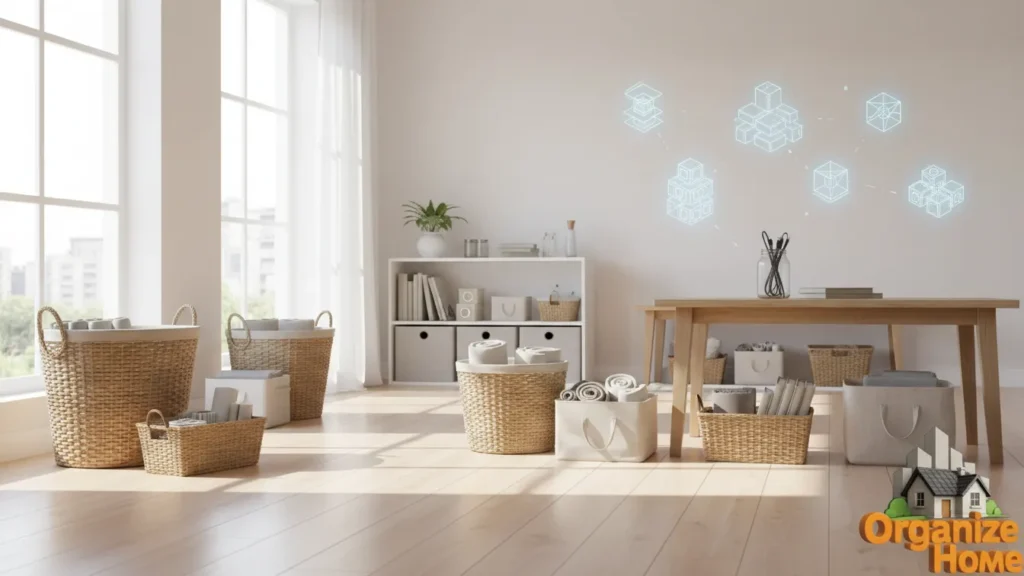
When to Pause Decluttering Instead of Pushing Through
One of the most important skills in decluttering without creating chaos is knowing when to pause instead of pushing through. Many people believe that stopping early means losing momentum, but in reality, pushing past your limits is what usually causes mess, regret, and burnout.
Decluttering requires mental clarity. When that clarity starts to fade, decision quality drops quickly. Signs that it’s time to pause include feeling irritated, indecisive, rushed, or tempted to keep items just to be done. These signals aren’t failures—they’re feedback that your brain has reached its decision limit for the session.
Another clear sign is when the space starts to feel visually out of control. If containment zones are overflowing, piles are spreading, or surfaces are filling up faster than you can clear them, pushing forward will only make the situation worse. Pausing at this point prevents temporary mess from turning into lingering chaos.
Emotional resistance is another cue. When you start avoiding certain items, feeling guilty, or second-guessing obvious decisions, it’s often better to stop. Decluttering emotional fatigue rarely leads to good outcomes. Those items will still be there later—often easier to handle after rest.
Pausing doesn’t mean abandoning the process. A pause is intentional. Before stopping, do a quick reset: return keep items, remove donation bags, and clear obvious clutter from surfaces. This ensures the room stays livable and makes restarting easier next time.
It’s also helpful to reframe pausing as protecting progress. Stopping at the right time preserves the good decisions you’ve already made. It prevents undoing progress by rushing or creating mess that feels overwhelming later.
Decluttering is not a test of endurance. It’s a series of thoughtful sessions. Knowing when to pause keeps the process calm, controlled, and sustainable—and that’s exactly how you declutter without making a bigger mess.
How to Prevent the Mess From Coming Back Tomorrow
One of the biggest frustrations with decluttering is seeing the mess return almost immediately. This usually happens not because decluttering failed, but because there’s no buffer between daily life and clutter rebuilding. Preventing the mess from coming back tomorrow doesn’t require strict rules or constant effort—it requires a few intentional habits that protect the progress you’ve made.
The first key is leaving open space on purpose. When every drawer, shelf, or surface is filled to capacity, daily use has nowhere to land. Even small amounts of incoming clutter quickly overflow. By keeping a bit of empty space after decluttering, you create breathing room that absorbs everyday activity without tipping into chaos.
Another important factor is clarity. When items have obvious homes and those homes aren’t overcrowded, it’s easier to put things back quickly. You don’t need perfect organization—just clear, realistic placement. If returning an item feels inconvenient, it’s far more likely to stay out and contribute to mess the next day.
Short daily resets also make a big difference. These don’t need to be formal routines. A few minutes at the end of the day to return items to their places prevents small messes from stacking up. The goal isn’t perfection—it’s interruption. You’re stopping clutter before it gains momentum.
Managing incoming items is just as important as removing existing clutter. Decluttering creates awareness. Use that awareness to pause before bringing new items into the space. Ask yourself whether there’s room for the item without crowding what you’ve already decluttered. This single pause prevents many future messes.
It’s also helpful to accept that some mess is normal. Decluttering doesn’t eliminate daily life—it makes it easier to reset after it. When expectations are realistic, you’re less likely to feel discouraged and more likely to maintain progress calmly.
Preventing the mess from coming back tomorrow isn’t about doing more. It’s about protecting the margin you created through decluttering. When space, clarity, and light habits are in place, the home naturally stays more manageable—day after day.

Turning Decluttering Into a Calm, Controlled Process
Decluttering without making a bigger mess ultimately comes down to how the process is structured, not how much effort you put in. When decluttering feels chaotic, it’s usually because too many decisions, items, or expectations are happening at the same time. Turning decluttering into a calm, controlled process means intentionally slowing it down and adding just enough structure to keep things manageable.
A calm process starts with clear limits. Working in one defined space, using simple containment zones, and setting a short time frame keeps the task from expanding beyond your capacity. These limits aren’t restrictive—they’re protective. They allow you to focus without feeling overwhelmed or rushed.
Control also comes from sequencing. When you prepare the space, declutter in small sections, and reset before stopping, each session has a beginning, middle, and end. This structure reduces mental clutter as much as physical clutter. You’re no longer reacting to mess—you’re guiding the process.
Another important element is respecting your energy. Calm decluttering doesn’t push through fatigue or emotional resistance. It pauses when decision quality drops and resumes later. This builds trust with yourself and prevents the cycle of overdoing it and avoiding the task altogether.
Consistency matters more than intensity. A controlled process is one you can repeat. Short, focused sessions done regularly create steady progress without disrupting daily life. Over time, decluttering stops feeling like a disruptive event and starts feeling like a normal, manageable activity.
It’s also helpful to redefine success. Success isn’t an empty room or perfect order—it’s making decisions without stress and leaving the space better than you found it. When success is measured this way, pressure drops and clarity increases.
Turning decluttering into a calm, controlled process doesn’t require new tools or strict rules. It requires intention. With clear boundaries, simple containment, and realistic expectations, decluttering becomes something you guide—rather than something that takes over your home.