Decluttering One Room at a Time: Why This Approach Actually Works
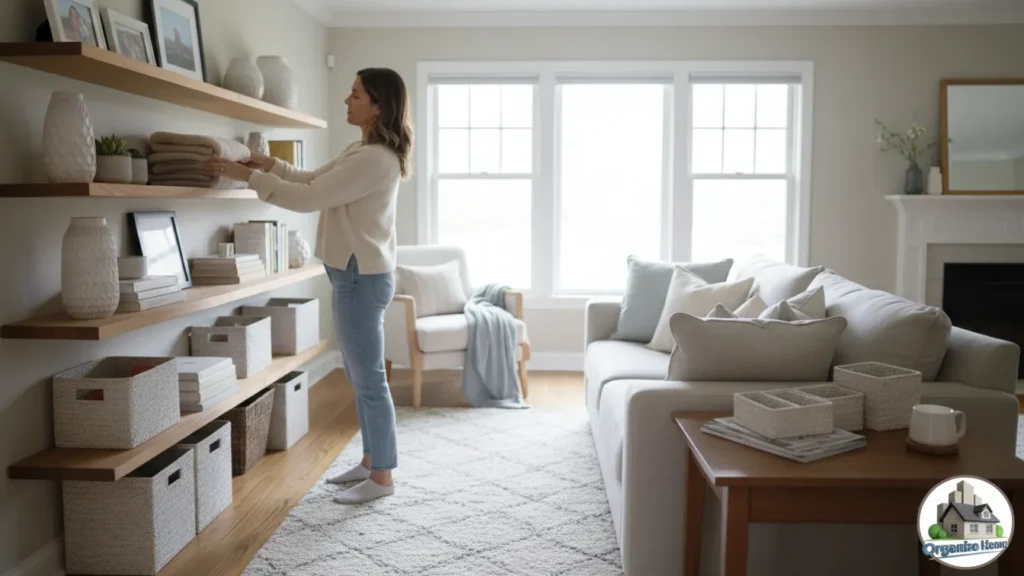
When clutter feels overwhelming, trying to fix everything at once is often what makes people give up. That’s why decluttering one room at a time is one of the most effective and sustainable ways to simplify a home. Instead of spreading your energy thin across multiple spaces, this approach creates focus, clarity, and visible progress—without burnout.
The biggest advantage of decluttering one room at a time is containment. When you limit your attention to a single space, your brain doesn’t have to track unfinished decisions everywhere else in the house. The task feels defined, which immediately lowers mental overload. You know where you’re working, what belongs there, and when you’re done.
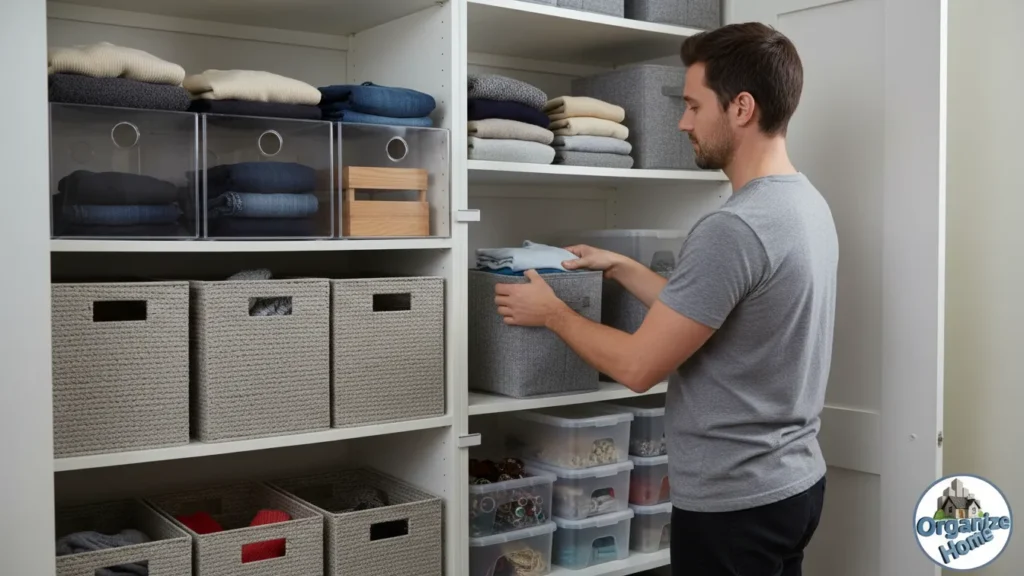
Another reason this approach works is completion. Finishing one room—even a small one—creates a sense of closure that decluttering the whole house rarely provides. That feeling of “this space is done” builds confidence and motivation. Instead of feeling stuck in an endless process, you experience progress you can see and feel.
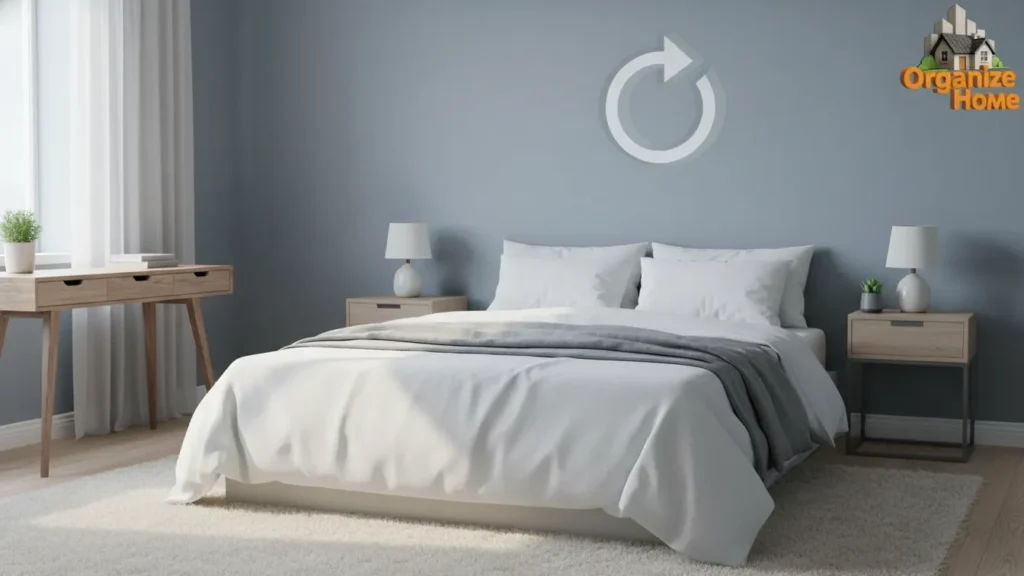
Decluttering one room at a time also improves decision-making. When items stay within their natural context, choices become clearer. It’s easier to decide whether something belongs when you see how it actually functions in that room. This reduces second-guessing and speeds up decisions, especially compared to decluttering by category across the entire house.
Many people assume this approach is slower, but it’s often faster in practice. Whole-house decluttering creates constant distractions: items that belong elsewhere, half-finished piles, and the temptation to jump between spaces. By contrast, a room-by-room method keeps your attention anchored, which saves time and energy over the long run.
There’s also an emotional benefit. One completed room creates a calm zone in the home. That calm space becomes proof that decluttering works and that it doesn’t have to be chaotic or exhausting. This emotional safety makes it much easier to continue to the next room.
It’s important to note that decluttering one room at a time doesn’t mean aiming for perfection. The goal isn’t to create a showroom-ready space—it’s to reduce excess and make the room easier to use. When expectations are realistic, the process feels supportive instead of demanding.
This approach works especially well during busy seasons of life. You can declutter one room over several short sessions instead of needing a full day or weekend. Each session moves the room closer to “done,” without disrupting the rest of the house.
In short, decluttering one room at a time works because it respects how the brain handles decisions, energy, and progress. It turns a big, overwhelming goal into a series of manageable wins—and that’s what makes decluttering stick long term.
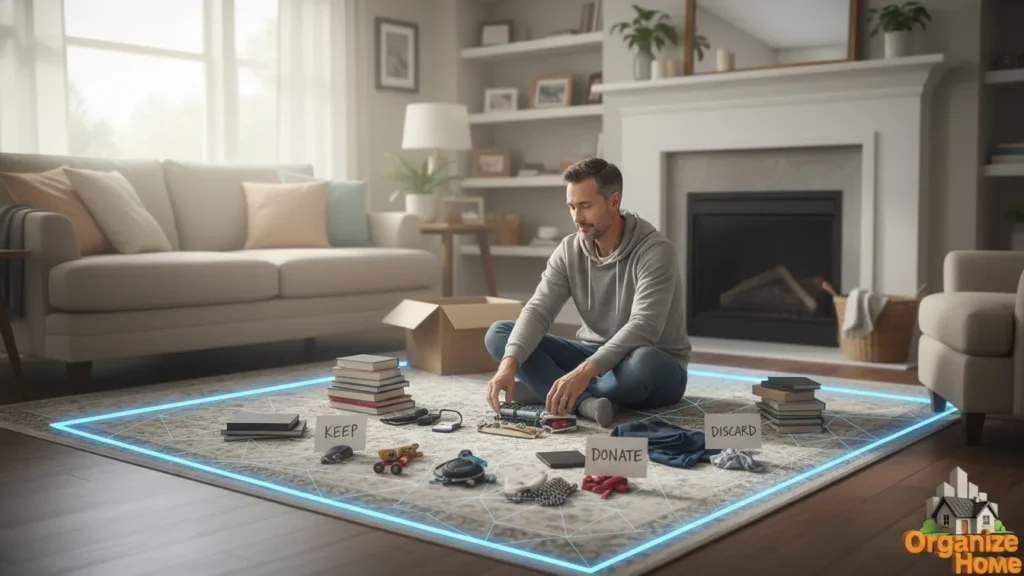
Why Decluttering the Whole House at Once Backfires
Decluttering the entire house at once sounds efficient, but for most people, it backfires quickly. What starts as a motivated plan often turns into unfinished piles, decision fatigue, and a feeling of failure that makes it hard to continue. The problem isn’t effort—it’s scale.
When you try to declutter the whole house at once, your brain is forced to juggle too many decisions at the same time. Every room, surface, and category competes for attention. Instead of focusing, your mind constantly switches contexts, which increases stress and slows decision-making. This mental overload is one of the main reasons people abandon decluttering projects halfway through.
Another issue is lack of visible completion. Whole-house decluttering rarely offers a clear “done” moment. You may work for hours and still feel like nothing is finished. Without completion, motivation drops fast. People need small wins to stay engaged, and large-scale decluttering often withholds those wins for too long.
Decluttering the whole house also creates physical chaos. Items get pulled out from multiple rooms, moved into shared spaces, and piled “temporarily” with the intention of sorting later. These piles become visual clutter that adds stress and makes the home harder to live in during the process. Instead of reducing overwhelm, the house feels worse before it feels better.
Decision quality suffers as well. As fatigue builds, people start making avoidance-based choices—keeping items “just in case,” rushing decisions, or skipping difficult categories entirely. This leads to shallow decluttering that doesn’t actually reduce volume, which is why clutter often returns quickly after a big push.
Time is another factor. Whole-house decluttering usually requires long, uninterrupted blocks of time. For most households, those conditions are rare. When the process depends on ideal circumstances, it becomes hard to restart once it’s interrupted.
There’s also an emotional cost. When a large decluttering attempt stalls, it often reinforces negative beliefs like “I’m bad at this” or “my house is just too cluttered.” These beliefs make future attempts feel heavier before they even begin.
This is why decluttering the whole house at once often backfires. It asks for too much focus, too many decisions, and too much endurance at the same time. By contrast, a room-by-room approach limits scope, protects energy, and creates visible progress—making it far more likely that decluttering actually gets finished and maintained.
How to Choose the First Room to Declutter
Choosing the first room to declutter is a strategic decision, not a random one. The room you start with can either build momentum—or drain it. When the goal is to make decluttering sustainable, the first room should support confidence, clarity, and visible progress.
A common mistake is starting with the room that feels the most overwhelming. While it may seem logical to tackle the “worst” space first, this often backfires. Highly cluttered or emotionally loaded rooms require more decisions, more time, and more energy. Starting there increases the risk of burnout before progress feels rewarding.
The best first room is one that offers quick wins. Look for a space that:
- Is relatively contained
- Has clear purpose
- Involves mostly neutral items
- Can realistically be finished in a few short sessions
Bathrooms, laundry rooms, guest rooms, or a home office are often good starting points. These spaces usually contain fewer sentimental items and clearer categories, which makes decision-making easier.
Another helpful factor is daily impact. Starting with a room you use regularly creates immediate benefits. When you see and feel the results every day, it reinforces that decluttering is worth the effort. That positive feedback loop increases motivation to continue.
It’s also important to consider emotional weight. Avoid rooms tied to stress, identity shifts, or unresolved decisions early on. Spaces like bedrooms, storage areas, or children’s rooms can be powerful—but they’re better handled after confidence is built.
If you’re unsure, ask yourself one simple question: Which room would feel most satisfying to finish first? Satisfaction matters more than logic at this stage. Decluttering works best when it feels encouraging, not punishing.
Choosing the right first room sets the tone for the entire process. When the first experience feels manageable and successful, decluttering stops feeling intimidating—and starts feeling possible.
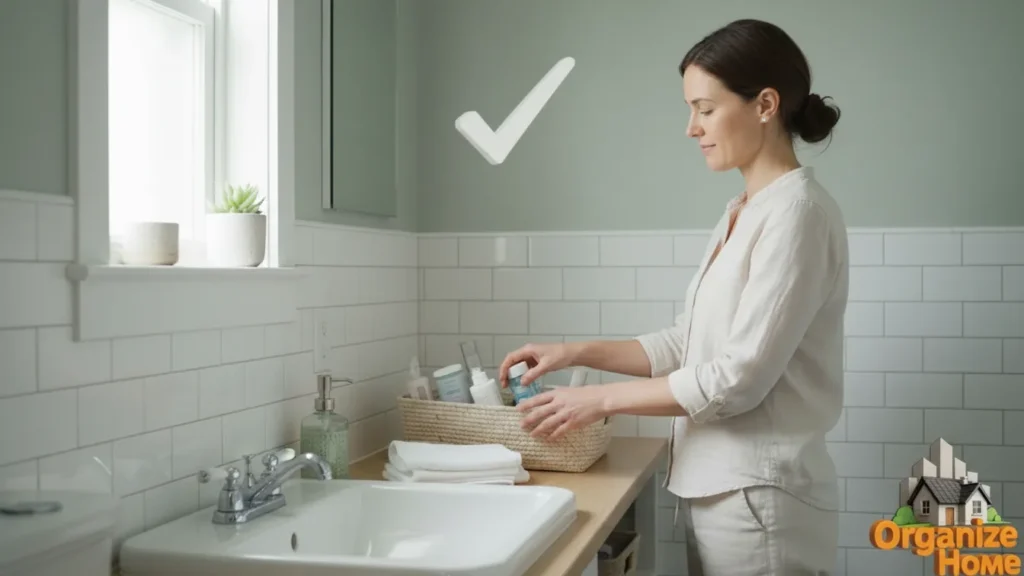
Setting Clear Boundaries Before You Start Each Room
One of the most important steps in decluttering one room at a time is setting clear boundaries before you begin. Without boundaries, a room-based approach can easily turn into whole-house chaos—items spread everywhere, decisions multiply, and overwhelm creeps back in.
Boundaries define where the work starts and where it stops. Before you touch anything, decide exactly what counts as “this room.” Is it the entire room, or just one zone within it? For example, a bedroom might be too large to handle at once, but a dresser, a closet, or one wall is a clear and manageable boundary.
Clear boundaries protect your energy. When the scope is defined, your brain doesn’t have to keep track of unfinished areas. You’re not mentally juggling the rest of the house—you’re focused on one contained space. This focus is what makes decluttering feel lighter and more controlled.
Boundaries also prevent distraction. It’s very common to find items that belong elsewhere while decluttering a room. Without boundaries, this leads to room-hopping and half-finished spaces. A simple rule helps: don’t leave the room. If an item belongs elsewhere, place it in a temporary container and keep going. Decisions stay anchored to the room you’re working on.
Another helpful boundary is time. Decide how long you’ll work—15 minutes, 30 minutes, or one short session. Time boundaries prevent burnout and reduce decision fatigue. They also make it easier to stop without guilt, which increases the likelihood that you’ll come back later.
Setting boundaries also means defining what “done” looks like. Done doesn’t mean perfect. It means excess has been reduced and the room functions better than before. When expectations are realistic, boundaries feel supportive instead of restrictive.
Clear boundaries turn decluttering from an overwhelming project into a structured process. Each room becomes a series of contained steps instead of an open-ended task. And that structure is what allows room-by-room decluttering to actually work.
What to Declutter First Inside a Room
When you start decluttering a room, knowing what to tackle first inside that space makes a big difference. Without a clear order, it’s easy to bounce between items, get distracted, or stall on difficult decisions. A simple internal sequence keeps momentum going and reduces mental strain.
The best place to start is always with obvious removals. This includes trash, broken items, expired products, and anything that clearly doesn’t belong in the room at all. These decisions require almost no emotional energy and create immediate visual relief. Clearing these first makes the rest of the process feel lighter.
Next, focus on items that are easy to decide on. These might be duplicates, things you haven’t used in a long time, or items that no longer match how the room is used today. Because the context of the room is clear, it’s easier to see what no longer fits its purpose.
After that, move to frequently used areas. Decluttering these zones early improves how the room functions right away. When drawers, surfaces, or shelves you use every day become easier to manage, the benefits are immediate—and motivating.
It’s best to save emotionally charged or “maybe” items for later in the session, or even a different session altogether. Starting with hard decisions too soon increases fatigue and slows progress. Decluttering works best when you build confidence before tackling complexity.
Another helpful guideline is to work from visible to hidden. Clearing surfaces and open shelves first reduces visual clutter quickly, which helps calm the space. Once the room looks and feels better, it’s easier to move on to closets, drawers, and storage areas.
Decluttering inside a room doesn’t need to follow a perfect system. It just needs to follow a gentle progression—easy decisions first, harder ones later. When the order supports your energy instead of fighting it, each room becomes easier to declutter from start to finish.
👉 How to Start Decluttering When You Feel Overwhelmed
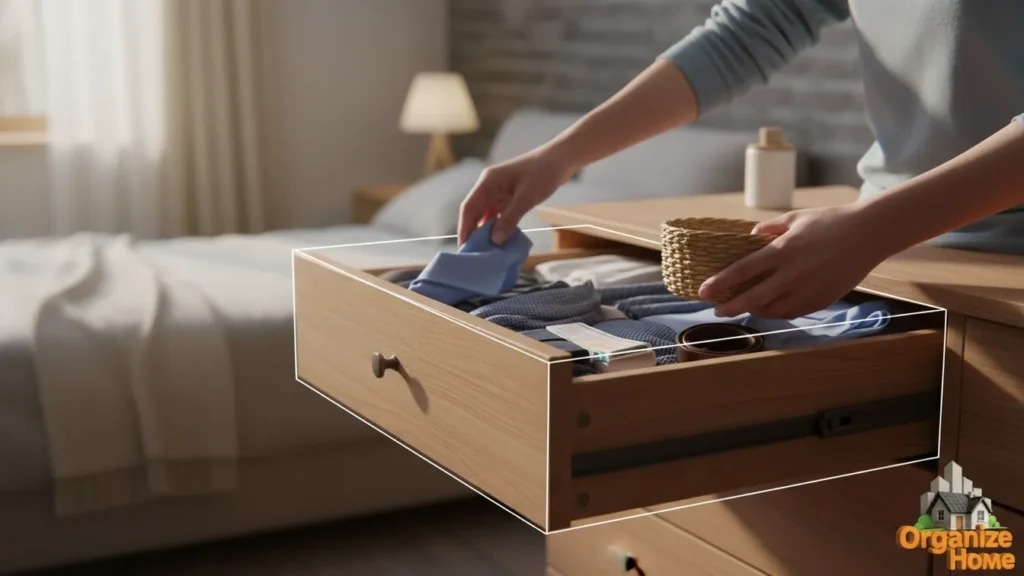
How to Avoid Getting Distracted While Decluttering a Room
Getting distracted is one of the fastest ways a room-by-room decluttering session turns into frustration. You start with good intentions, but suddenly you’re holding items that belong elsewhere, remembering unfinished tasks, or jumping between rooms. Without a clear strategy, focus slips—and progress slows.
The most effective way to avoid distraction is to commit to staying in the room you’re decluttering. Room-by-room decluttering only works when your attention stays anchored to that single space. The moment you leave the room to “quickly put something away,” the process begins to fragment.
A simple rule helps: do not leave the room while decluttering. If you find items that belong somewhere else, place them in a designated temporary container—such as a box, basket, or bag—and keep going. This allows you to maintain momentum without derailing the session.
Another major source of distraction is trying to solve future problems mid-session. While decluttering, it’s common to think, “I need a better system for this,” or “I should reorganize that drawer next.” These thoughts may be valid, but acting on them immediately pulls you out of decluttering mode. Decluttering is about decisions, not system design. Capture the idea mentally and return to it later.
Visual distractions matter too. Decluttering works best when the room is as calm as possible. Turn off notifications, avoid multitasking, and keep only what you’re actively working on in front of you. Too many open piles or surfaces increase mental noise and make it harder to stay focused.
Time boundaries also reduce distraction. When you know you’re only working for a short, defined period—such as 15 or 20 minutes—you’re less likely to wander mentally or physically. A clear end point keeps attention sharp.
Finally, accept that some distraction is normal. The goal isn’t perfect focus—it’s redirecting quickly when distraction happens. Each time you notice your attention drifting and gently bring it back to the room, you strengthen the habit of focused decluttering.
Avoiding distraction doesn’t require more discipline. It requires structure. When the room, the time, and the rules are clear, decluttering becomes calmer, faster, and far more effective.
Making Decluttering Decisions Faster Room by Room
One of the reasons decluttering drags on is slow, repetitive decision-making. When every item feels like a new dilemma, energy drains quickly. A room-by-room approach makes it much easier to speed up decisions, as long as you use a few simple guidelines.
The first way to make decisions faster is to let the room’s purpose lead the choice. Each room has a clear function. When you’re decluttering within that space, ask a simple question: Does this item support what this room is used for right now? If the answer is no, the decision becomes much easier. Context removes ambiguity.
Another effective strategy is limiting the questions you ask. Too many questions slow the process. Instead of analyzing every possible future scenario, focus on the present. Ask: Do I use this in this room? or Would I notice if this were gone? These questions lead to clearer, faster answers.
It also helps to decide categories in advance. For example, you might already know that broken items, duplicates, or things you haven’t used in years are likely to go. When those items show up, the decision is already made. This prevents you from reconsidering the same types of items repeatedly.
Trusting your first reaction is another powerful tool. The initial feeling you have when you pick something up is often the most honest. Overthinking usually leads to keeping items out of hesitation, not intention. When decisions feel obvious at first glance, honor that clarity.
Decision speed also improves when sessions are kept short. Mental fatigue slows judgment. By decluttering one room in multiple small sessions, you protect decision quality and keep your thinking sharp.
Finally, remember that decluttering decisions don’t have to be perfect. They just need to be good enough for now. You can revisit items later if needed. When you release the pressure to get every decision exactly right, speed and confidence naturally increase.
Making decisions faster room by room isn’t about rushing—it’s about removing unnecessary friction. When choices are guided by the room’s purpose and limited to simple questions, decluttering becomes smoother, calmer, and much more efficient.
👉 Decluttering Without Making a Bigger Mess
How to Handle Items That Belong in Another Room
When decluttering one room at a time, it’s inevitable that you’ll come across items that clearly belong somewhere else. This is one of the most common points where people lose focus and accidentally turn a room-by-room approach into a whole-house mess. Handling these items correctly is key to keeping the process calm and contained.
The most important rule is simple: do not leave the room. The moment you walk an item to another space, you open the door to distraction. One item leads to another, and suddenly you’re decluttering a different room without finishing the first. This breaks momentum and increases overwhelm.
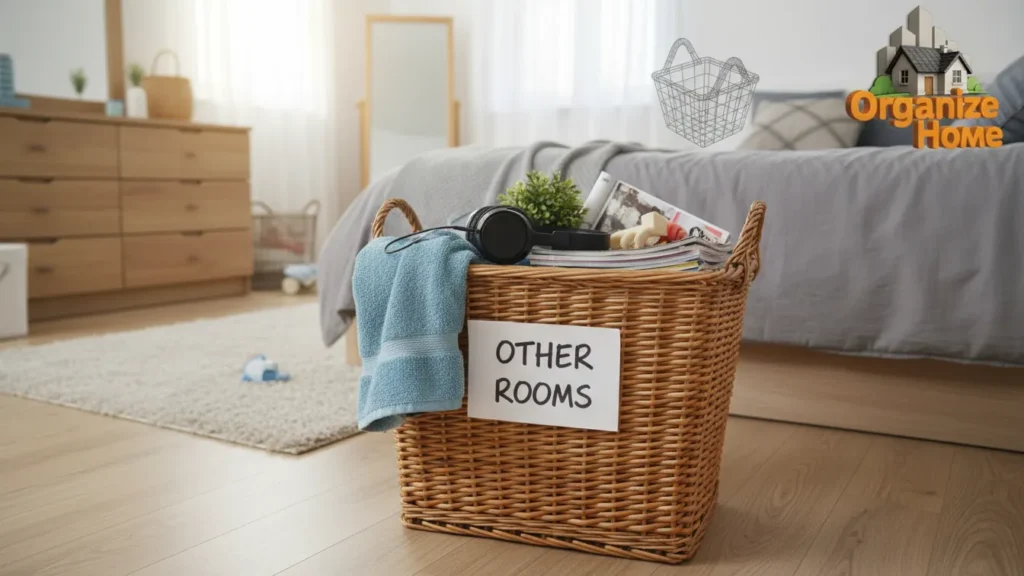
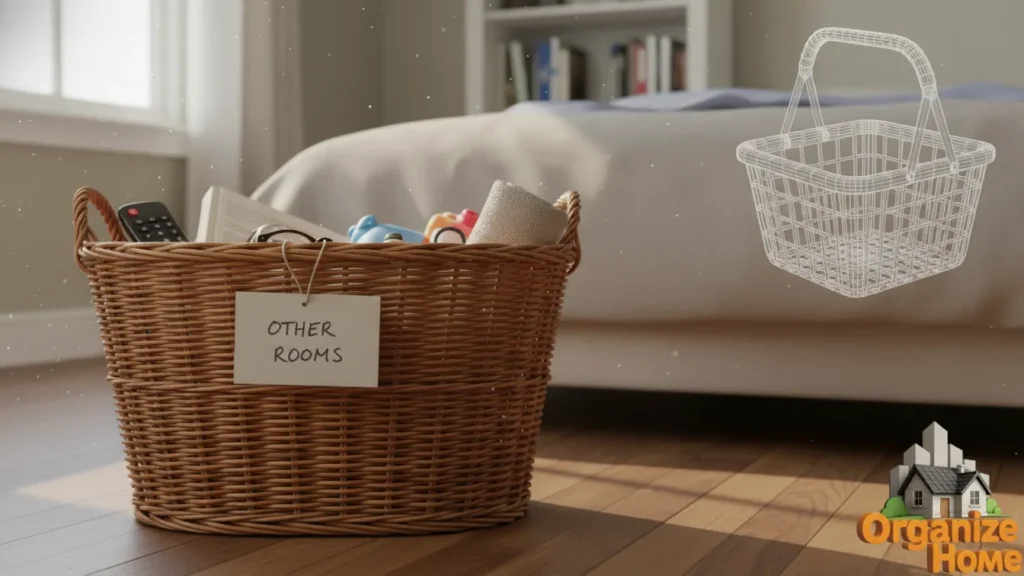
Instead, create a temporary holding solution before you start. Use a box, basket, or bag labeled “belongs elsewhere.” Whenever you find an item that doesn’t belong in the current room, place it directly into that container and continue decluttering. This keeps decisions moving forward without derailing your focus.
It’s important to treat this container as a parking spot, not a new sorting project. Don’t stop to organize it. Don’t decide where each item will go yet. The only decision you’re making in this moment is that the item does not belong in the room you’re decluttering.
Once the room is finished—or when your session ends—you can decide what to do with the container. At that point, you can return items to their proper rooms in one short, focused reset. This is far more efficient than walking back and forth throughout the session.
Another helpful mindset shift is letting go of the idea that every item needs to be resolved immediately. Decluttering works best when decisions are made in the right context. While decluttering a bedroom, your only job is to decide what belongs in that bedroom—not to fix the entire house.
Handling out-of-room items this way protects your energy and preserves the integrity of the room-by-room method. It keeps the process contained, reduces chaos, and makes finishing each room feel achievable. When boundaries stay intact, progress stays steady.
When to Stop Decluttering a Room (Even If It’s Not Perfect)
One of the biggest mistakes people make when decluttering a room is waiting for it to feel finished or perfect before stopping. This mindset often leads to exhaustion, frustration, and unfinished projects. Knowing when to stop decluttering a room is essential for keeping the process sustainable and preventing burnout.
A room is ready to pause when the main excess has been reduced and the space functions better than it did before. This doesn’t mean every drawer is flawless or every surface is styled. It means the room is easier to use, easier to move through, and easier to reset during daily life.
Another clear signal to stop is mental fatigue. When decisions start feeling harder, slower, or emotionally heavier, that’s your cue. Continuing past this point often leads to keeping items out of avoidance or making rushed choices you later question. Stopping protects the quality of your decisions.
It’s also important to respect the boundaries you set at the beginning. If you decided to declutter one zone, one closet, or work for a specific amount of time, reaching that limit is success. Finishing what you planned—rather than pushing further—builds trust and makes it easier to return to the process later.
Perfectionism is what usually makes stopping feel uncomfortable. There’s a temptation to “just do a little more” or fix everything while you’re already there. But decluttering doesn’t need to be completed in one pass. Rooms can be decluttered in layers. What feels unresolved now may feel clearer after a break.
A helpful question to ask is: Does this room feel lighter and more manageable than before? If the answer is yes, stopping is the right choice—even if some areas still need attention later.
Stopping at the right time keeps decluttering from becoming overwhelming. It turns the process into a series of successful sessions instead of one exhausting effort. And that’s what makes room-by-room decluttering something you can actually finish—and maintain.
How to Reset a Room After Decluttering
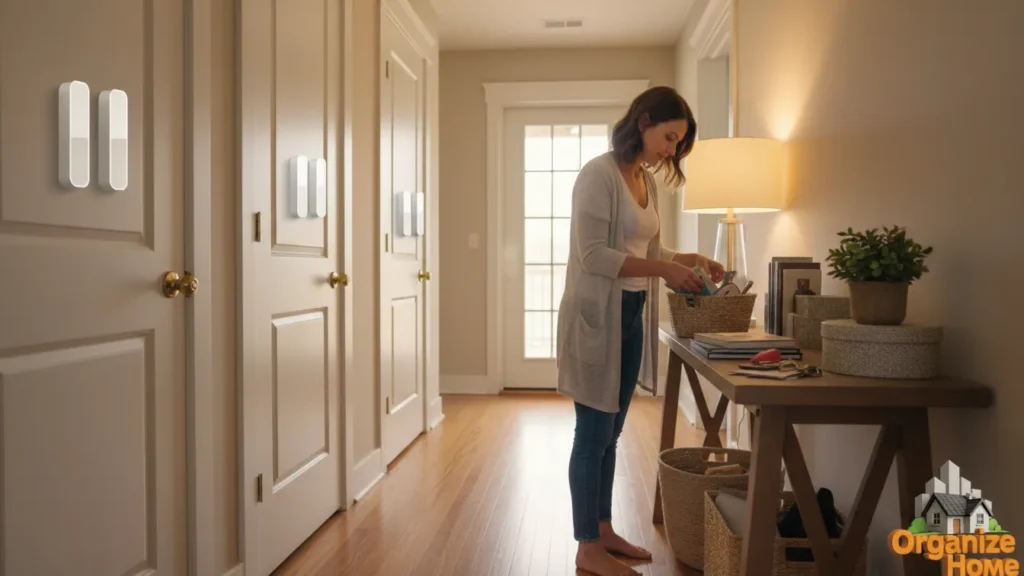
Decluttering a room is only half of the process. The final step that makes the effort feel complete is a simple reset. Resetting a room doesn’t mean reorganizing everything or creating a perfect layout—it means returning the space to a calm, functional baseline after decisions have been made.
A reset starts with returning only the items you’ve decided to keep back into the room. At this stage, resist the urge to optimize or redesign storage. The goal is not perfection; it’s stability. Items should go back in a way that feels intuitive and easy to maintain, even if it’s not the final setup.
Next, clear any temporary containers you used during decluttering. Donation bags, discard piles, and the “belongs elsewhere” box should be removed from the room as soon as possible. Leaving these behind creates visual noise and makes the room feel unfinished, even after good progress.
Surfaces are another important part of the reset. Clearing floors, counters, and major surfaces helps the room immediately feel calmer. Even if drawers and closets aren’t perfect yet, a clear surface signals completion and makes the space easier to use right away.
A good reset also includes a quick visual scan. Ask yourself: Does this room feel lighter and easier than before? If the answer is yes, the reset is working. If not, one small adjustment—like removing a few more items or simplifying a crowded area—is often enough.
It’s important to keep resets short. Five to ten minutes is usually plenty. Long resets defeat the purpose and increase the risk of burnout. Decluttering works best when the end of a session feels clean and contained, not exhausting.
Resetting a room after decluttering creates a sense of closure. It marks the transition from decision-making back to daily life. When each room ends with a reset, the process feels intentional, and moving on to the next room becomes far easier.
Moving to the Next Room Without Feeling Overwhelmed
Finishing one room often brings relief—but it can also trigger a new wave of overwhelm when you think about moving on to the next one. Many people lose momentum at this stage, not because they’re tired, but because the process suddenly feels big again. Knowing how to transition to the next room gently is what keeps room-by-room decluttering sustainable.
The most important thing to remember is that you don’t need to start the next room immediately. Completion deserves a pause. Taking a moment to notice the difference the decluttered room makes—how it feels, how it functions—reinforces the value of the work you’ve done. This reflection builds motivation naturally instead of forcing it.
When you are ready to move on, avoid framing it as “starting over.” You’re not beginning from scratch—you’re continuing a process that already works. The same rules apply: small scope, clear boundaries, realistic time limits. Reusing a familiar structure reduces mental resistance.
Choosing the next room should follow the same logic as the first. Look for a space that feels manageable and supportive, not the most overwhelming one. Momentum grows when progress feels achievable. There’s no rule that rooms must be decluttered in a specific order.
It also helps to lower expectations between rooms. The first room often takes the longest because you’re learning how to declutter in a way that works for you. Later rooms usually move faster—but only if you don’t pressure yourself to “catch up” or speed through.
Another effective strategy is planning just the first step of the next room. Decide what the smallest boundary will be—one drawer, one surface, one corner. You don’t need a full plan. Knowing where you’ll start is enough to reduce hesitation.
Finally, accept that energy fluctuates. Some rooms may be spaced days or weeks apart. That doesn’t mean progress has stopped. Decluttering room by room is not about speed—it’s about consistency over time.
Moving to the next room doesn’t require a surge of motivation. It requires the same gentle approach that worked before. When you treat each transition as a continuation—not an escalation—decluttering stays calm, manageable, and far less overwhelming.
Turning Room-by-Room Decluttering Into Lasting Progress
Decluttering one room at a time only becomes truly effective when it turns into lasting progress, not a one-off effort. The difference between a home that stays decluttered and one that slowly fills back up is not discipline—it’s how the process is carried forward after each room is finished.
Lasting progress starts with repetition, not intensity. When you complete a room using clear boundaries, short sessions, and realistic expectations, you create a repeatable pattern. Each room reinforces the same skills: decision-making, stopping at the right time, and resetting calmly. Over time, this pattern becomes familiar—and easier to return to.
Another key to long-term progress is allowing space between rooms. Decluttering doesn’t need to be continuous to be effective. Pauses are part of the process. They allowno* reduce burnout and give you time to experience the benefits of the work you’ve done. When you live in a decluttered room for a while, your standards naturally shift, making future decisions faster and clearer.
It’s also important to notice how decluttering one room changes your relationship with incoming items. After seeing how much easier a space is to manage with less, you become more intentional about what you bring into the next room. This awareness quietly prevents clutter from rebuilding.
Room-by-room decluttering also supports maintenance. Once multiple rooms have been decluttered, small resets become easier and more effective. Instead of needing major overhauls, you’re making light adjustments that keep spaces stable. This is how decluttering transitions from a project into a habit.
Another helpful practice is revisiting rooms lightly over time. You don’t need to redo the entire process. A quick review after a few months often reveals items that no longer fit. These follow-up decisions are usually faster and less emotional, which keeps progress moving forward without effort.
Finally, lasting progress comes from trusting that decluttering is not about finishing—it’s about maintaining balance. Rooms don’t need to stay perfect to stay manageable. When room-by-room decluttering becomes a flexible, repeatable rhythm, your home stays easier to live in, and clutter stops feeling like a constant problem.
By treating decluttering as an ongoing, room-based process rather than a one-time push, progress becomes stable, sustainable, and aligned with real life.