

How to Start Decluttering When You Feel Overwhelmed
Feeling overwhelmed is one of the most common reasons people delay decluttering—and it often stops the process before it even begins. The idea of facing accumulated items, unfinished decisions, and emotional attachments can make decluttering feel heavy and impossible. If this sounds familiar, it’s important to know that overwhelm is not a sign you’re bad at decluttering. It’s a sign that the approach needs to be gentler.
When overwhelm shows up, it usually means your brain is trying to protect you from taking on too much at once. Thinking about decluttering an entire home, a full room, or years of belongings triggers mental overload. The task feels so large that doing nothing feels safer than starting imperfectly.
The key to starting decluttering when you feel overwhelmed is changing what “starting” means. Starting does not mean committing to a big project. It does not mean making hard emotional decisions right away. It simply means taking one small action that creates movement instead of pressure.
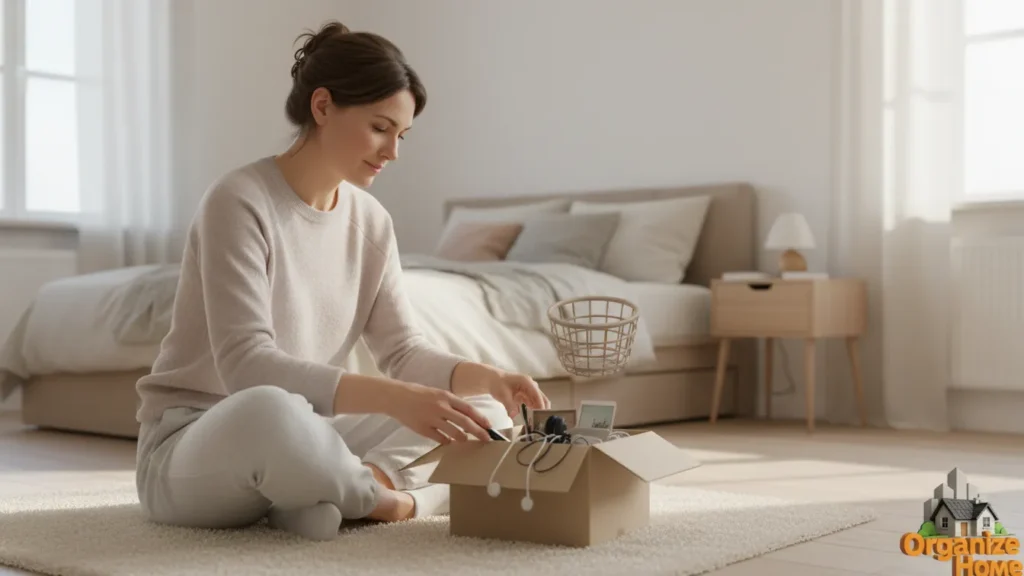
Instead of asking, “Where do I begin?” ask, “What is the smallest thing I could declutter right now?” This might be a single drawer, one shelf, or even just removing obvious trash from a surface. The size of the step matters less than the fact that it feels doable.
Another important shift is letting go of the idea that you need to feel ready before you begin. Clarity and confidence come after action, not before it. Waiting to feel calm, motivated, or organized enough usually leads to longer delays and more frustration. Starting while you still feel overwhelmed is often the fastest way out of that feeling.
It also helps to remove time pressure. Decluttering doesn’t need to be finished in one session. Giving yourself permission to stop at any point makes starting feel safer. When there’s no pressure to complete a large task, the brain relaxes enough to engage.
Many people also benefit from separating decluttering from visible results. The first step isn’t meant to transform your space. It’s meant to prove to yourself that decluttering can happen without emotional overload. One small success builds confidence, and confidence reduces overwhelm.
Starting decluttering when you feel overwhelmed is not about pushing through discomfort—it’s about lowering the bar until action feels possible. Once you take that first gentle step, momentum begins to replace paralysis. And from there, progress becomes much more achievable than it initially felt.

Why Overwhelm Is the Biggest Barrier to Decluttering
Overwhelm is the single biggest reason decluttering feels impossible for so many people. It’s not the physical work that stops progress—it’s the mental and emotional weight that shows up before anything even begins.
When clutter has built up over time, the brain tends to see it as one massive problem instead of many small ones. Rooms blur together, decisions stack up, and the mind jumps ahead to everything that might be involved. This creates a sense of urgency mixed with confusion, which is exactly what triggers paralysis.
Another reason overwhelm is so powerful is decision overload. Decluttering requires constant choices: keep, let go, move, decide later. When the brain anticipates making hundreds of decisions, it tries to avoid the situation altogether. Avoidance isn’t laziness—it’s a protective response to mental fatigue.
Overwhelm also grows when decluttering is tied to unrealistic expectations. Many people believe they should declutter quickly, perfectly, or all at once. This pressure turns decluttering into a high-stakes task instead of a supportive process. The higher the expectation, the harder it becomes to start.
Emotional weight adds another layer. Clutter often represents unfinished decisions, guilt, money spent, or past versions of life. Facing it all at once can feel emotionally unsafe, especially during already busy or stressful seasons. Overwhelm is the mind’s way of saying, “This is too much right now.”
The important thing to understand is that overwhelm doesn’t mean you’re incapable of decluttering. It means the scope is too large and the approach needs to change. Decluttering becomes possible when overwhelm is reduced—not by pushing harder, but by making the task smaller, clearer, and emotionally safer.
Once overwhelm is addressed, decluttering stops feeling like a mountain and starts feeling like a series of manageable steps. And that shift is what allows real progress to begin.
Why You Don’t Need a Full Plan to Begin Decluttering
One of the biggest reasons people stay stuck in decluttering overwhelm is the belief that they need a complete plan before they can begin. They think they must decide the order of rooms, the categories, the timeline, the rules, and the final outcome in advance. This belief creates pressure—and pressure is exactly what stops action.
Decluttering does not require a master plan. In fact, waiting for the “right” plan often delays progress indefinitely. When clutter has been building for a long time, it’s impossible to design a perfect strategy upfront because you don’t yet have clarity. That clarity only comes after you start.
A full plan assumes you already know what you’ll keep, what you’ll let go of, and how difficult each decision will be. But decluttering is a learning process. As you begin, you learn how you make decisions, what feels easy, what feels emotional, and how much time and energy you realistically have. Trying to plan all of that in advance is unrealistic—and unnecessary.
Another problem with overplanning is that it raises the stakes. When you believe you need a detailed plan, starting feels serious and irreversible. The brain reacts by avoiding the task altogether. Decluttering becomes something you have to “do right,” instead of something you can simply try.
What you actually need to begin is not a plan, but a starting point. One small, contained area. One short time block. One clear stopping point. These elements provide structure without pressure. They allow you to act without committing to anything beyond the next few minutes.
Decluttering works best when it’s flexible. As you move forward, you naturally adjust your approach based on what you discover. You may change the order of areas, revise your expectations, or slow down during emotional categories. This adaptability is a strength, not a flaw.
Starting without a full plan also builds confidence. Each small action teaches you that you can make decisions without everything being mapped out. Over time, this confidence replaces overwhelm, and the process becomes clearer and easier to navigate.
Decluttering doesn’t begin with a perfect strategy. It begins with permission—to start imperfectly, learn as you go, and take one manageable step at a time.

Starting With the Smallest Possible Area
When you feel overwhelmed by clutter, the most effective way to begin is by starting smaller than you think you should. Not a room. Not a category. Just the smallest possible area that feels safe and manageable. This approach isn’t about making dramatic progress—it’s about breaking the mental barrier that prevents you from starting at all.
Overwhelm thrives on vague scope. When your brain hears “declutter the house” or even “declutter this room,” it fills in the gaps with everything that could go wrong, take too long, or feel emotionally heavy. Choosing a very small area removes that ambiguity. The task becomes clear, contained, and finite.
A small area might be:
- One drawer
- One shelf
- One section of a countertop
- One bag, box, or bin
The exact location doesn’t matter as much as the boundary. A clear boundary tells your brain where the task starts and ends. This creates psychological safety, which makes action possible.
Starting small also reduces decision fatigue. Instead of making dozens of choices in one session, you’re making just a few. This allows you to practice decision-making without pressure. You begin to notice that many decisions are easier than expected—and that realization builds confidence quickly.
Another benefit of starting with a small area is completion. Finishing something, even something tiny, creates a sense of closure. That feeling is powerful. It signals progress and replaces the constant feeling of being behind. Completion—even on a small scale—helps calm the nervous system and reduces the urge to avoid the task next time.
It’s important to resist the urge to “keep going” just to prove productivity. Stopping when the small area is done reinforces trust. You show yourself that decluttering doesn’t have to take over your day. This makes it much easier to return to the process later.
Starting with the smallest possible area isn’t a shortcut—it’s a strategy. It lowers resistance, builds confidence, and creates momentum without overwhelm. And once momentum exists, continuing becomes a choice instead of a struggle.
How to Set Realistic Expectations Before You Start
One of the fastest ways to feel discouraged while decluttering is starting with unrealistic expectations. Many people expect visible transformation, emotional clarity, and a sense of relief almost immediately. When that doesn’t happen, they assume they’re doing something wrong—or that decluttering simply isn’t for them.
Before you begin, it helps to reset what success actually looks like. Decluttering is not meant to feel amazing right away. In fact, the early stages often feel uncomfortable, slow, or even disappointing. That doesn’t mean it isn’t working. It means you’re in the decision-making phase, which is naturally more demanding than the result.
A realistic expectation is understanding that progress may not look dramatic at first. Decluttering one small area might not change how your home looks overall—but it does change how the process feels. Each small decision builds clarity and confidence, even if the space still appears cluttered.
Another important expectation to set is pace. Decluttering takes longer than people think because it involves mental and emotional work, not just physical removal. Expecting to move slowly—especially at the beginning—reduces frustration and prevents burnout. Slow progress is still progress.
It’s also helpful to expect mixed emotions. Relief and doubt can exist at the same time. Feeling uncertain after letting go of items is normal and usually temporary. Those feelings don’t mean you made a bad decision—they mean you’re adjusting.
Finally, set expectations around energy. Decluttering uses mental energy, not just time. Some days you’ll have more capacity than others. Planning for low-energy days by keeping sessions short makes the process sustainable.
When expectations are realistic, decluttering stops feeling like a test you’re failing and starts feeling like a process you’re learning. That shift alone can make starting—and continuing—much easier.
👉 Decluttering One Room at a Time
Decluttering When You Have Very Little Time or Energy
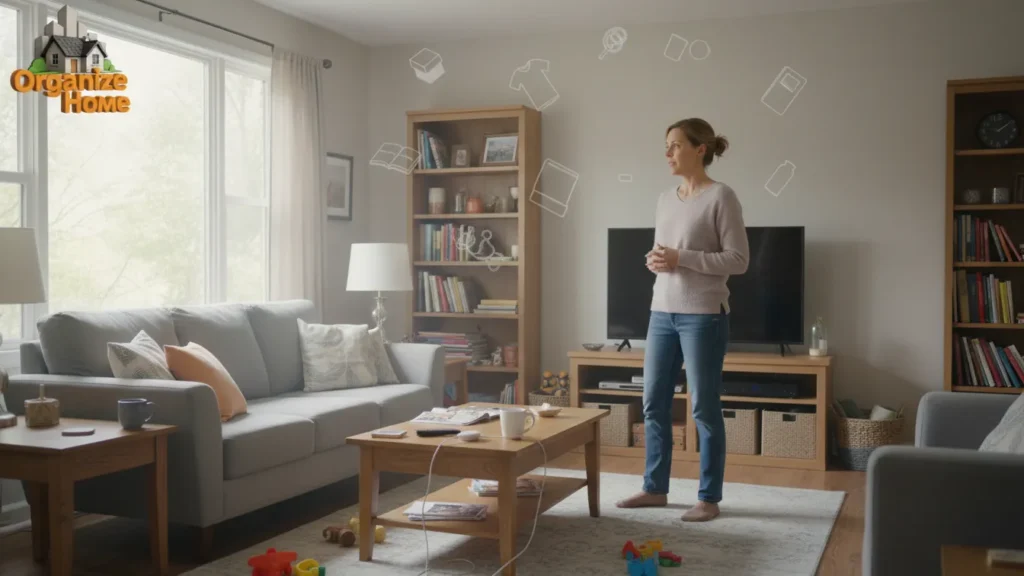
One of the biggest misconceptions about decluttering is that it requires large blocks of time and high energy. For many people, this belief alone is enough to stop the process entirely—especially during busy, exhausting seasons of life. The truth is that decluttering can still happen even when time and energy are limited, as long as the approach matches your capacity.
When energy is low, the goal of decluttering shifts. Instead of trying to make visible progress, the focus becomes maintaining movement without adding pressure. This means choosing actions that are so small they don’t compete with rest, work, or family responsibilities.
Short, low-effort sessions are key. Five minutes is often enough. Even two minutes can be enough. Decluttering doesn’t need to be efficient—it needs to be possible. One item, one surface, one decision is enough to count as progress when energy is scarce.
Another helpful strategy is lowering the cognitive load. On low-energy days, avoid categories that require emotional or complex decisions. Stick to obvious items: trash, expired products, duplicates, or things you already know you don’t use. These decisions require less mental effort and reduce friction.
It’s also important to separate decluttering from physical intensity. Decluttering doesn’t have to involve lifting, bending, or reorganizing. It can be as simple as choosing items to let go of and placing them in a donation bag to be handled later. Decision-making is the core of decluttering—the rest can wait.
When time is limited, context matters. Decluttering fits best into small gaps: waiting for something to finish, transitioning between tasks, or during quiet moments that already exist. Treating decluttering as something that must be scheduled often makes it harder to start.
Most importantly, decluttering during low-energy seasons should feel supportive, not demanding. Progress made gently is still progress. By adjusting the scope to match your capacity, you keep the process alive instead of abandoning it entirely.
Decluttering doesn’t require ideal conditions. It requires flexibility. And when you allow yourself to work within your limits, consistency becomes far more achievable—even on the hardest days.
Choosing Easy Wins to Build Confidence
When decluttering feels overwhelming, confidence is often the missing piece. Without confidence, every decision feels risky, and every item feels heavier than it should. That’s why choosing easy wins is one of the most effective ways to keep decluttering moving forward—especially in the early stages.
Easy wins are items that require little to no emotional energy to decide about. They’re things you already know you don’t need, use, or want. Starting with these items builds momentum without triggering doubt, guilt, or second-guessing.
Examples of easy wins include:
- Obvious trash or broken items
- Expired products
- Duplicates you don’t use
- Items that don’t fit your current life at all
- Things you forgot you even owned
These decisions feel lighter because they don’t challenge identity, memory, or attachment. You’re not asking yourself hard questions—you’re simply clearing what’s clearly unnecessary.
Easy wins matter because decluttering is a skill, not a personality trait. Every small decision strengthens that skill. Each time you let go without regret, your brain learns that decluttering is safe. This reduces fear and makes future decisions easier.
Another benefit of easy wins is visible progress. Even small removals can create noticeable space, which reinforces the effort. Seeing a drawer close smoothly or a shelf look calmer provides quick feedback that the process works.
It’s important to resist the urge to “prove seriousness” by tackling the hardest items first. Starting with emotional or complex categories often leads to exhaustion and avoidance. Confidence should be built before difficulty increases—not the other way around.
Easy wins also help shift your mindset. Instead of thinking, “This is too hard,” you start thinking, “I can do this.” That belief is what keeps decluttering going when motivation fades.
By intentionally choosing easy wins, you create a foundation of success. Decluttering stops feeling like a threat and starts feeling manageable. And once confidence is in place, the rest of the process becomes far less intimidating.
👉 Decluttering Without Feeling Guilty
What to Do When Decision Fatigue Kicks In
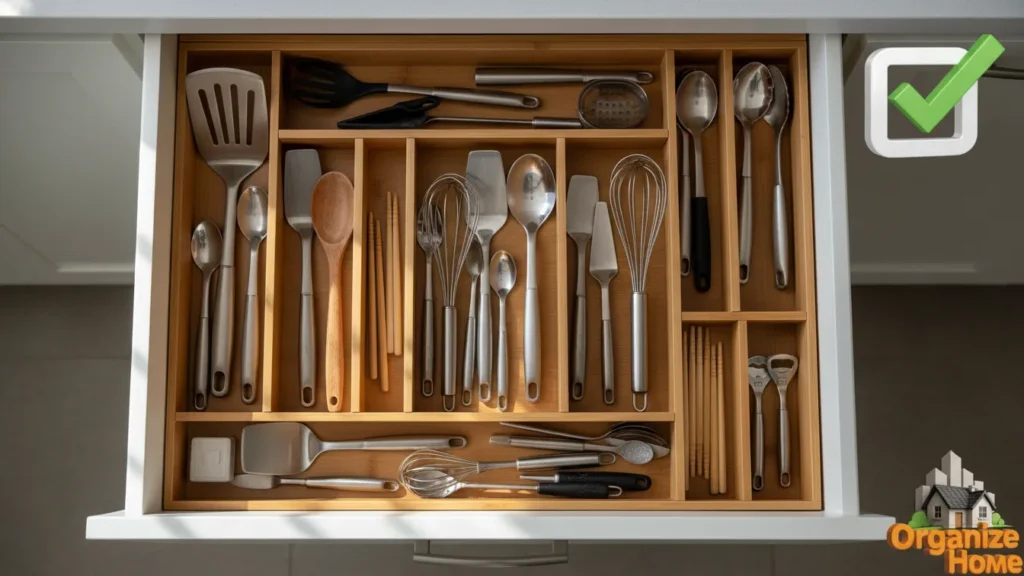
Decision fatigue is one of the most common reasons decluttering stalls—even when motivation is high. After making too many choices in a short period of time, the brain simply runs out of capacity. Decisions start feeling heavier, slower, and more frustrating, and it becomes tempting to quit altogether.
This doesn’t mean you’re bad at decluttering. It means you’ve reached a natural mental limit. Decluttering requires repeated judgment calls, and like any mental task, it needs boundaries to stay sustainable.
The first and most important thing to do when decision fatigue kicks in is to stop making decisions. Pushing through rarely leads to good outcomes. When the brain is tired, it defaults to keeping items just to avoid discomfort—or it starts second-guessing decisions that were already made confidently.
Instead of continuing, pause the decision-making part of the process. This might mean physically stepping away from the area, closing a drawer, or ending the session entirely. Stopping at the right moment protects the quality of your decisions and prevents regret later.
Another helpful strategy is switching to non-decision tasks. If you still want to stay engaged without taxing your brain, focus on simple actions like bagging donations, taking items to the car, or putting already-decided items away. These actions maintain momentum without requiring new choices.
It’s also useful to limit how many decisions you make in one session. Decluttering works better when sessions are short and contained. Setting a decision limit—such as decluttering one small area or working for a set amount of time—prevents mental overload before it happens.
Recognizing the signs of decision fatigue is a skill. When you notice irritability, indecision, or the urge to keep everything “just in case,” it’s a signal to stop—not a signal to push harder.
Decluttering doesn’t reward endurance. It rewards clarity. When you respect your mental limits, you make better decisions, move faster over time, and avoid burnout. Knowing when to pause is not a setback—it’s part of a sustainable decluttering process.
How to Avoid Getting Stuck in Emotional Items Too Early
One of the fastest ways to lose momentum while decluttering is starting with emotional items too early. These items—photos, gifts, keepsakes, and objects tied to memories—require more mental and emotional energy than most people expect. When faced too soon, they can slow progress and increase overwhelm.
Emotional items trigger reflection, nostalgia, guilt, and fear of regret. Each object invites a story, and stories take time and energy to process. When you haven’t yet built decision confidence, this emotional weight can make decluttering feel exhausting instead of empowering.
The key is sequencing, not avoidance. Emotional items don’t need to be ignored forever—they just shouldn’t come first. Decluttering works best when you warm up with neutral categories before moving into emotionally charged ones. This builds decision-making strength and emotional resilience.
Neutral items include:
- Items you forgot you owned
- Duplicates
- Broken or expired things
- Items clearly unrelated to your current life
These decisions are faster and less emotionally taxing. Each successful decision trains your brain to trust the process and your judgment. By the time you reach sentimental items, you’re calmer, clearer, and far less likely to freeze.
Another helpful strategy is creating a boundary for emotional items. Instead of sorting them immediately, gather them into one clearly defined space—such as a box or bin—and set them aside intentionally. This prevents emotional derailment while still acknowledging their importance.
It’s also important to release the idea that emotional items require immediate decisions. Some items become easier to let go of after other areas are decluttered. As space opens up and stress decreases, emotional clarity often follows.
Avoiding emotional items early isn’t avoidance—it’s strategy. Decluttering is a process, and timing matters. When you respect your emotional limits and build confidence first, you’re far more likely to handle sentimental items with calm, intention, and far less overwhelm.

Using Time Limits to Prevent Burnout
One of the most effective ways to prevent decluttering from becoming overwhelming is using clear, intentional time limits. Without limits, decluttering sessions tend to drag on until energy is depleted, decisions become sloppy, and motivation disappears. Time boundaries protect both your energy and your confidence.
When decluttering feels open-ended, the brain interprets it as a threat. There’s no clear finish line, so starting feels risky. Time limits solve this by creating a defined container for the task. You know exactly when you’ll stop, which makes it much easier to begin.
Short sessions are especially powerful. Ten or fifteen minutes is often ideal. This amount of time is long enough to make meaningful decisions but short enough to avoid decision fatigue. Knowing the session is brief reduces pressure and helps you stay focused instead of distracted or emotionally drained.
Another benefit of time limits is better decision quality. When you know time is limited, you’re more likely to make clear, intentional choices instead of overthinking every item. This doesn’t mean rushing—it means prioritizing clarity over perfection.
Time limits also prevent burnout by creating natural stopping points. Many people push past their mental limits because they feel they should keep going while they have things out. Unfortunately, this often leads to regret, frustration, or avoidance later. Stopping on purpose builds trust with yourself and keeps the process sustainable.
It’s important to stop when the timer ends—even if you feel like you could continue. Ending on a positive note leaves you with energy for the next session instead of exhaustion. This makes it far more likely that you’ll return to decluttering again.
Using time limits turns decluttering into a supportive habit instead of a draining project. When sessions are contained, predictable, and respectful of your energy, decluttering becomes something you can do consistently—without burnout or resentment.
How to Know You’ve Done Enough for One Session
One of the most common reasons decluttering becomes exhausting is not knowing when to stop. Without a clear endpoint, sessions drag on until energy is gone, decisions feel heavy, and the process starts to feel discouraging instead of helpful. Knowing when you’ve done enough is essential for keeping decluttering sustainable.
A decluttering session is complete when you’ve reached the boundary you set before starting. If you chose one drawer, one shelf, or a short time limit, stopping when that boundary is met is success—even if you feel like you could do more. Finishing what you planned builds trust with yourself and makes it easier to start again later.
Another sign you’ve done enough is mental fatigue. When decisions start to feel harder, slower, or more emotional, that’s your cue to stop. Pushing past this point often leads to keeping items you would normally let go of or feeling regret afterward. Ending the session protects the quality of your decisions.
It’s also important to recognize that visible progress is not the only measure of success. A session where you made thoughtful decisions—even if the space doesn’t look dramatically different—is still productive. Decluttering is about clarity, not just appearance.
Emotional signals matter too. If you start feeling irritated, impatient, or overwhelmed, it’s time to pause. Decluttering should feel contained and supportive, not draining. Stopping early is far better than stopping because you’re exhausted.
Another helpful guideline is leaving the space in a stable state. You don’t need everything perfectly organized, but items should be safely put back or clearly contained. Ending with order—rather than chaos—makes returning to the process feel easier next time.
Knowing when you’ve done enough turns decluttering into a repeatable habit instead of a one-time push. Each session ends on a positive note, which builds confidence and momentum. And that consistency is what leads to real, lasting progress over time.

Turning the First Step Into Ongoing Decluttering Progress
Taking the first step when you feel overwhelmed is a big accomplishment—but what really matters is turning that first step into ongoing, sustainable progress. Decluttering doesn’t move forward because of one productive moment; it moves forward because small actions are repeated over time.
The key to continuing is resisting the urge to “reset” the process every time. Many people feel like each decluttering session has to start fresh, with new motivation and a new plan. In reality, progress builds best when each session simply picks up where the last one left off—even if that means returning days or weeks later.
One helpful strategy is keeping the next step intentionally obvious. When you finish a session, leave a clear visual or mental cue for what comes next. This could be a labeled donation bag, a note about the next small area to declutter, or simply knowing which drawer or shelf you’ll address next. Reducing friction between sessions makes restarting much easier.
Another important element is consistency over intensity. Decluttering doesn’t need to happen daily to be effective. What matters is that it happens regularly enough to prevent overwhelm from rebuilding. Short, spaced-out sessions are far more sustainable than occasional marathon efforts followed by long breaks.
It’s also helpful to adjust expectations as you go. Early sessions often feel slow because you’re building confidence and clarity. Over time, decisions become faster, emotional resistance decreases, and progress feels lighter. Trusting this natural progression prevents discouragement in the early stages.
Finally, recognize that returning to decluttering—even after a pause—is success. There’s no failure in stopping. The only real setback is believing that a pause means you’ve failed. Decluttering is flexible by nature. You can always continue.
Turning the first step into ongoing progress means letting go of urgency and perfection. When decluttering becomes something you can return to without pressure, it stops feeling overwhelming—and starts becoming a natural part of how you care for your home.