
Decluttering & Letting Go: What It Really Means (And What It Doesn’t)
Decluttering and letting go are often misunderstood. Many people imagine dramatic before-and-after transformations, empty rooms, or getting rid of most of what they own. This misunderstanding is one of the main reasons decluttering feels overwhelming before it even begins. In reality, decluttering is not about extremes—it’s about alignment.
At its core, decluttering means intentionally deciding what deserves space in your home and your daily life. It’s not about creating a minimalist home unless that’s your personal goal. It’s about reducing excess so your home can function more easily and support your routines instead of fighting them.
Letting go is not the same as throwing everything away. It doesn’t mean you must get rid of items you love, use, or genuinely value. Instead, it means releasing what no longer serves your current life—items that create friction, stress, or unnecessary maintenance. Decluttering is a process of choice, not loss.
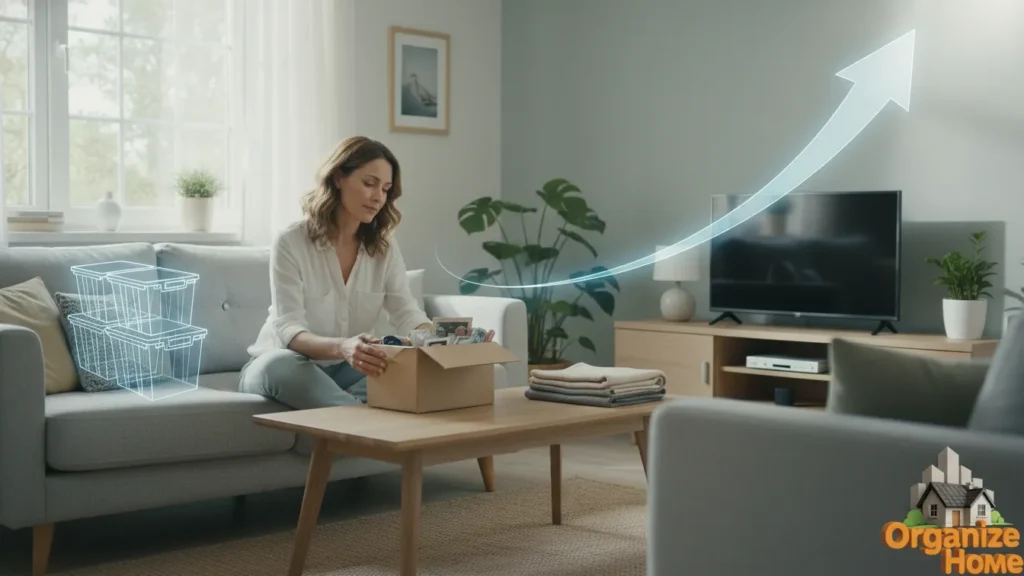
One of the biggest misconceptions is that decluttering should be fast. Many people feel pressure to declutter an entire home in a weekend or tackle large areas all at once. This approach often leads to burnout, decision fatigue, and regret. Sustainable decluttering happens gradually, in manageable steps, and respects your emotional and physical limits.
Another common myth is that decluttering is purely about stuff. While physical items are the focus, the real work happens mentally. Decluttering requires decisions, clarity, and honesty about how you actually live—not how you wish you lived. This is why decluttering often feels emotional. Objects carry memories, expectations, and “just in case” thinking that make letting go harder than expected.
It’s also important to understand what decluttering is not. It is not organizing. You can organize clutter, but that doesn’t reduce it. Decluttering comes first—it creates the space that organization systems need in order to work. Without decluttering, organization becomes temporary and fragile.
Decluttering is also not a one-time event. Homes evolve, seasons change, and life brings new items in. Letting go is an ongoing process, not a finish line. The goal isn’t a permanently perfect home—it’s a home that can adjust without becoming overwhelming again.
Perhaps most importantly, decluttering is personal. What feels like excess to one person may feel essential to another. There is no universal standard for how much is “right.” The right amount is what fits your space, your routines, and your energy.
When you understand what decluttering and letting go truly mean—and what they don’t—you remove a lot of pressure. Decluttering stops feeling like a drastic, emotional purge and starts feeling like a supportive process that helps your home work better for you. That shift in perspective is what makes the rest of the journey possible.
Why Decluttering Feels So Overwhelming for Most People
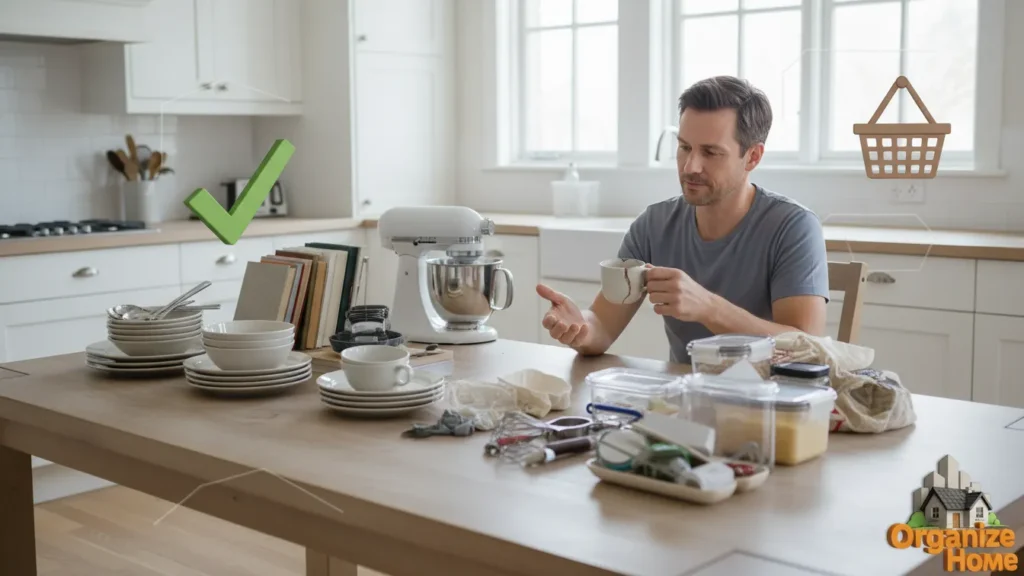
Decluttering often feels overwhelming not because it’s physically difficult, but because it demands constant decision-making. Every item requires a choice: keep it, donate it, store it, or let it go. When dozens—or hundreds—of these decisions pile up, mental fatigue sets in quickly, making the process feel heavier than expected.
Another reason decluttering feels so hard is emotional attachment. Objects are rarely just objects. They represent memories, past versions of ourselves, money spent, or intentions we haven’t fulfilled yet. Letting go can feel like letting go of identity, potential, or security—even when the item hasn’t been used in years.
Unclear goals also contribute to overwhelm. Many people start decluttering without knowing what “done” looks like. Without a clear definition of success, every decision feels risky. Should you keep something just in case? What if you regret it later? This uncertainty slows progress and increases anxiety.
Decluttering is also overwhelming when people try to do too much at once. Tackling large areas, entire rooms, or multiple categories in one session leads to decision fatigue fast. As energy drops, choices become harder, and frustration grows. This often results in unfinished piles and the feeling that decluttering “doesn’t work.”
Perfectionism plays a role as well. When people believe they must make the perfect decision for every item, decluttering becomes paralyzing. The fear of making a wrong choice keeps them stuck, even when the item is clearly unused or unnecessary.
Finally, decluttering feels overwhelming when it’s confused with urgency. There’s often an unspoken pressure to finish quickly, especially when clutter has been building for a long time. But decluttering isn’t an emergency—it’s a process. Rushing it only increases stress and regret.
Understanding why decluttering feels overwhelming is important because it shifts the problem away from personal failure. The overwhelm isn’t a sign you’re bad at decluttering—it’s a sign the approach needs to be gentler, smaller, and more intentional. Once that pressure is removed, decluttering becomes far more manageable.
The Emotional Side of Letting Go of Your Belongings
Decluttering is often described as a physical task, but for most people, the hardest part is emotional. Letting go of belongings can bring up feelings that have nothing to do with the item itself—and everything to do with memory, identity, and meaning.
Many objects act as emotional anchors. They remind us of past seasons of life, relationships, goals we once had, or versions of ourselves we’re not ready to release. Clothes from a different body or lifestyle, gifts from loved ones, items tied to important moments—all of these can carry emotional weight far beyond their practical use. When you face these items, you’re not just deciding what stays in your home; you’re confronting what stays in your story.
Another common emotional barrier is guilt. People feel guilty for getting rid of items that were expensive, gifted, or barely used. There’s often a sense that letting go means being wasteful or ungrateful. This guilt can keep items stuck in closets and drawers long after they’ve stopped serving a purpose.
Fear also plays a role. Fear of regret. Fear of needing something later. Fear of making the “wrong” decision. These fears are powerful because they’re rooted in uncertainty. The brain tends to overestimate future needs and underestimate how adaptable we actually are.
It’s important to understand that these emotions are normal. Feeling attached doesn’t mean you’re bad at decluttering—it means you’re human. Decluttering isn’t about shutting emotions down; it’s about acknowledging them without letting them control every decision.
One helpful shift is separating memory from object. Letting go of an item doesn’t erase the experience or the person connected to it. The memory lives with you, not in the object. Another is allowing yourself to declutter in layers. Emotional items often become easier to release after you’ve practiced on neutral ones.
When you respect the emotional side of letting go instead of fighting it, decluttering becomes gentler and more sustainable. You move at a pace that feels safe, make clearer decisions, and build trust in yourself. That emotional safety is what allows real progress to happen—without regret or overwhelm.
👉 How to Start Decluttering When You Feel Overwhelmed
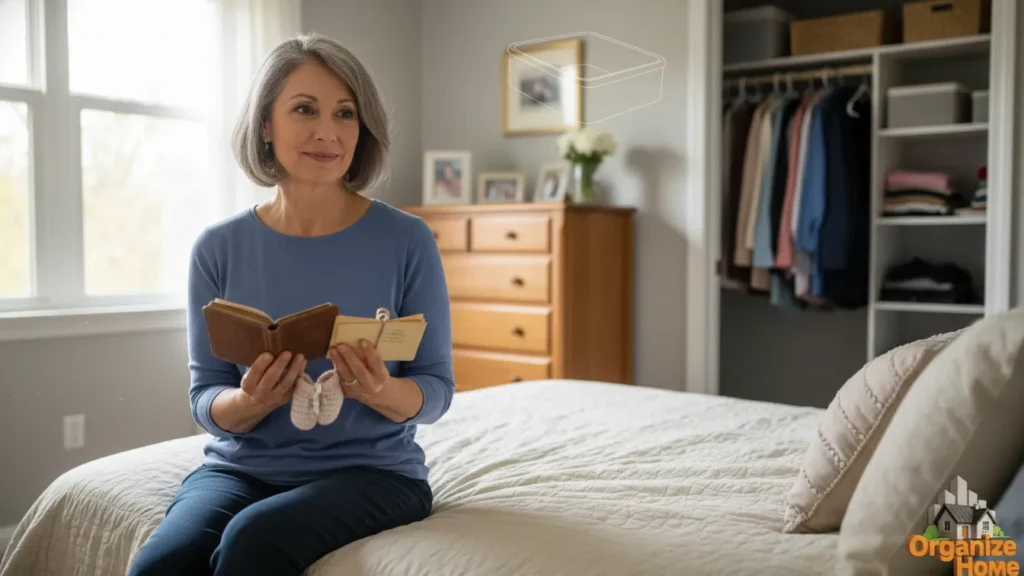
Why Decluttering Is About Decisions, Not Just Stuff
At first glance, decluttering looks like a problem of excess items. Too many clothes, too many papers, too many things in drawers and closets. But the real challenge of decluttering isn’t the stuff itself—it’s the decisions behind every item.
Every object you own represents a choice you once made or postponed. Decluttering brings all those postponed decisions back to the surface at once. That’s why it feels mentally exhausting. You’re not just sorting belongings; you’re constantly deciding what stays, what goes, and what matters right now.
This is also why organizing without decluttering rarely works. When items haven’t been decided on, they linger in a state of uncertainty. They get moved from place to place, stored “just in case,” or kept because deciding feels harder than keeping. The clutter remains because the decision was never made.
Many people think decluttering means asking, “Should I get rid of this?” A more helpful question is, “Does this earn space in my current life?” This shifts the focus from loss to intention. Instead of framing decisions around fear or guilt, you frame them around usefulness, relevance, and alignment with how you live today.
Another reason decisions feel so hard is that people try to make them permanent. Decluttering decisions don’t have to be forever. You are allowed to reassess later. When decisions are treated as flexible instead of final, they become much easier to make.
It’s also important to recognize decision fatigue. Making too many decisions in one session leads to poor choices or avoidance. That’s why smaller decluttering sessions are more effective. Fewer decisions made well are far better than many decisions made under pressure.
When you understand that decluttering is primarily a decision-making process, the approach changes. You stop focusing on how much you’re removing and start focusing on clarity. And clarity—not empty space—is what makes a home easier to manage over time.
Decluttering becomes lighter when decisions are intentional, limited, and kind to your energy. Once the decisions are made, the physical act of removing items is often the easiest part.
How Much Stuff Is “Too Much” for Your Home
One of the most common questions people have when decluttering is, “How do I know if I have too much stuff?” The answer isn’t a specific number of items or a certain aesthetic. “Too much” is defined by how well your home can support what you own—not by comparison to others.
A clear sign you have too much is friction. When drawers don’t close easily, shelves feel overcrowded, and items fall out when you try to put something away, your home is signaling overload. If putting things back requires rearranging or forcing space, the volume has exceeded what the storage can realistically handle.
Another indicator is constant overflow. When items regularly end up on floors, chairs, or counters because storage is full, it’s not a habit problem—it’s a capacity problem. The home doesn’t have enough breathing room to absorb daily life, so clutter spills into visible areas.
Too much stuff also shows up as maintenance stress. If staying organized requires frequent big resets, constant tidying, or repeated reorganizing of the same spaces, the issue is often excess. Homes that hold the right amount of belongings recover quickly from daily use. Homes with too much struggle to reset.
It’s important to understand that “too much” is personal. A family of five will naturally need more items than someone living alone. A hobbyist needs different storage than someone with fewer interests. The goal isn’t minimalism—it’s fit. Your belongings should fit your space, your routines, and your energy.
A helpful question to ask is: Can I comfortably put everything away without effort? If the answer is no, reducing volume will help more than reorganizing. Decluttering creates margin—extra space that allows systems to work and routines to feel lighter.
Having less isn’t about deprivation. It’s about creating enough space for what matters to function easily. When the amount of stuff matches what your home can support, daily life feels smoother—and organization stops feeling like a constant battle.
👉 Decluttering One Room at a Time
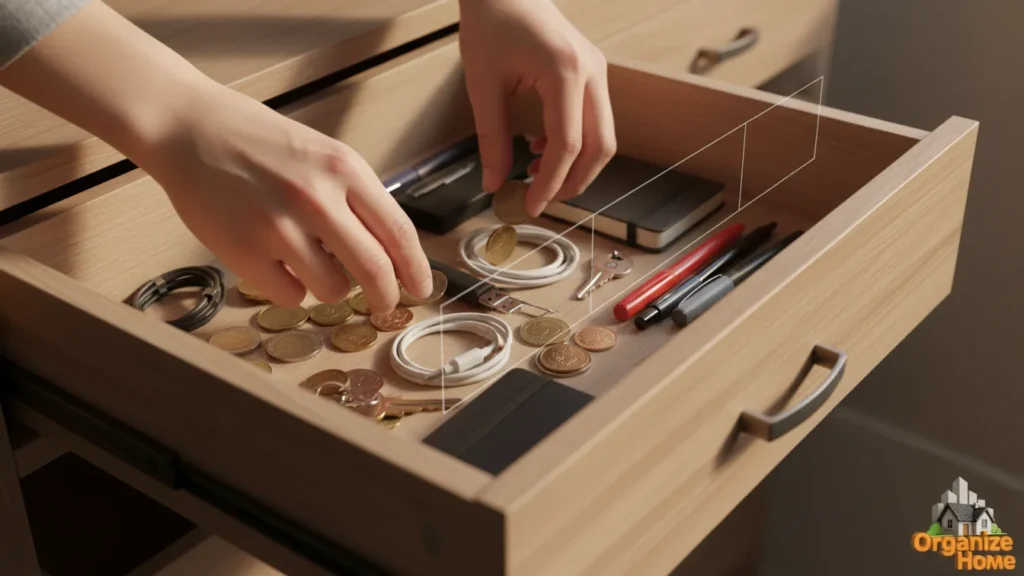
The Difference Between Organizing and Decluttering
One of the most common reasons homes stay cluttered is confusing organizing with decluttering. While the two are closely related, they solve very different problems—and doing them in the wrong order often leads to frustration.
Decluttering is about reducing volume. It focuses on deciding what stays and what goes. Organizing, on the other hand, is about arranging what remains so it’s easy to use and maintain. When decluttering hasn’t happened first, organization becomes a temporary fix instead of a lasting solution.
Many people try to organize clutter by rearranging items, buying containers, or creating detailed systems. At first, things look better. But because the underlying volume hasn’t changed, the space fills up again quickly. Drawers become crowded, bins overflow, and the same mess returns—sometimes even faster than before.
Decluttering creates space. Organization uses that space effectively. Without space, organization has nowhere to function. This is why organizing before decluttering often feels like running in circles: a lot of effort, very little lasting change.
Another key difference is decision-making. Decluttering requires decisions about relevance, usefulness, and alignment with your current life. Organizing does not. Organizing assumes the decision has already been made and focuses on placement and access. When you skip decluttering, those decisions remain unresolved, and clutter lingers.
It’s also important to note that decluttering doesn’t have to be extreme or emotional to be effective. Even small reductions in volume—done consistently—can dramatically improve how well organization systems work. You don’t need to declutter everything to see results; you just need to declutter enough.
Understanding the difference between organizing and decluttering removes a lot of confusion. Declutter first to create room. Organize second to support daily life. When these two steps are used in the right order, both become easier—and far more effective.
How to Start Decluttering Without Feeling Paralyzed
Feeling paralyzed is one of the most common reactions to decluttering—and it usually happens before anything actually starts. The moment you think about decluttering an entire home, multiple rooms, or years of accumulated belongings, the task feels so big that doing nothing seems easier than starting imperfectly.
This paralysis isn’t laziness. It’s a natural response to overwhelm. When the brain can’t see a clear, manageable starting point, it freezes. That’s why the key to starting decluttering isn’t motivation—it’s reducing the scope until action feels possible.
The most effective way to begin is by choosing a starting point that feels almost insignificant. Not a whole room. Not a full category. Just one small, contained area—like a single drawer, one shelf, or a small surface. The goal of this first step is not progress; it’s momentum.
Another important shift is letting go of the idea that you need a plan before you begin. Many people delay decluttering because they want the “right” method, the perfect order, or enough time to do it properly. In reality, clarity comes after action, not before. Starting small creates feedback, confidence, and direction.
It also helps to limit decisions. When starting out, avoid emotional or sentimental items. Choose neutral things—expired products, duplicates, or items you already know you don’t use. Easy decisions warm up your decision-making muscles and reduce fear around the process.
Time limits are another powerful tool. Instead of decluttering “until it’s done,” set a short, fixed window—10 or 15 minutes. Knowing there’s a clear end makes starting feel safer. When the timer ends, you stop, even if you want to continue. This builds trust with yourself instead of exhaustion.
Most importantly, redefine success. Starting decluttering successfully doesn’t mean creating visible transformation. It means beginning without shutting down. One small action completed is enough. That action proves that decluttering doesn’t have to be overwhelming to be effective.
When you start gently, paralysis loses its grip. Decluttering becomes something you can do, not something you avoid. And once you begin, even in the smallest way, progress becomes possible.
👉 Decluttering Without Making a Bigger Mess
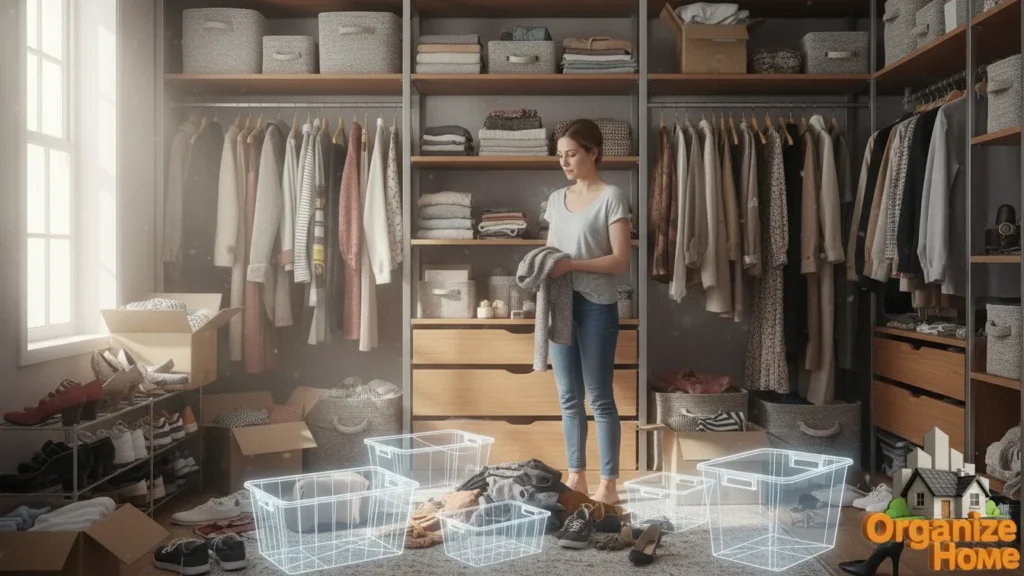
Decluttering in Small Steps Instead of Big Overhauls
One of the biggest reasons decluttering doesn’t stick is the belief that it has to be done in large, dramatic overhauls. Weekend marathons, entire rooms emptied at once, or all-or-nothing approaches may look productive, but they often lead to exhaustion, regret, and long recovery periods where nothing happens afterward.
Decluttering in small, repeatable steps is far more effective for long-term progress. Small steps reduce decision fatigue, lower emotional resistance, and make it easier to stop before you feel overwhelmed. Instead of asking for a huge burst of energy, this approach works with your normal daily capacity.
Small-step decluttering focuses on contained areas and short sessions. A single drawer, one shelf, or a specific category within a small space is enough. When the scope is limited, decisions feel lighter and clearer. You’re less likely to rush, second-guess yourself, or keep items simply to avoid discomfort.
Another benefit of small steps is consistency. Big overhauls usually happen rarely because they require ideal conditions. Small sessions can happen often—between tasks, during a quiet moment, or as part of a routine. This consistency creates steady progress without burnout.
Decluttering in small steps also builds confidence. Each completed session reinforces the idea that you can declutter without it being overwhelming. Over time, decision-making becomes easier, emotional resistance softens, and larger areas feel more manageable.
It’s important to let go of the idea that small progress isn’t enough. Decluttering doesn’t need to look impressive to be effective. Removing a few unnecessary items regularly adds up faster than occasional intense efforts followed by long breaks.
By choosing small steps over big overhauls, decluttering becomes a process you can return to again and again. It fits into real life, adapts to changing energy levels, and creates lasting change without unnecessary stress.
What to Keep: Items That Truly Earn Space in Your Home
One of the hardest parts of decluttering is deciding what deserves to stay. Many people approach this decision by asking, “Do I need this?” While useful, that question often leads to doubt and overthinking. A more helpful approach is asking whether an item truly earns space in your home and your daily life.
Items that earn space are used regularly, support your routines, or add clear value—either practical or emotional. They contribute positively to how your home functions instead of creating extra maintenance, stress, or guilt. When something consistently gets in the way, requires frequent moving, or hasn’t been used in a long time, it’s worth questioning its role.
Another important factor is accessibility. Even useful items don’t earn space if they’re stored in a way that makes daily life harder. If something is buried behind clutter, difficult to reach, or constantly shuffled around, its presence may be creating more friction than benefit.
It’s also helpful to separate current life from future life. Many homes are filled with items kept for a version of life that isn’t happening right now—clothes for a different lifestyle, supplies for hobbies that no longer fit, or items saved “just in case.” While some future-oriented items make sense, too many of them crowd out what actually supports your present routines.
Emotional value matters too—but it doesn’t have to mean keeping everything. An item earns space emotionally if it brings genuine joy or meaning now, not just nostalgia or obligation. When emotional items cause stress, guilt, or overwhelm, their value deserves to be reconsidered.
A helpful guideline is this: if keeping an item makes your home harder to manage, its cost may outweigh its value. Space is not unlimited. Every item you keep takes up physical space and mental energy.
Choosing what to keep isn’t about having less—it’s about having what fits. When your belongings earn their place, your home becomes easier to maintain, calmer to live in, and more aligned with your everyday life.
👉 Decluttering When You Don’t Have Storage Space
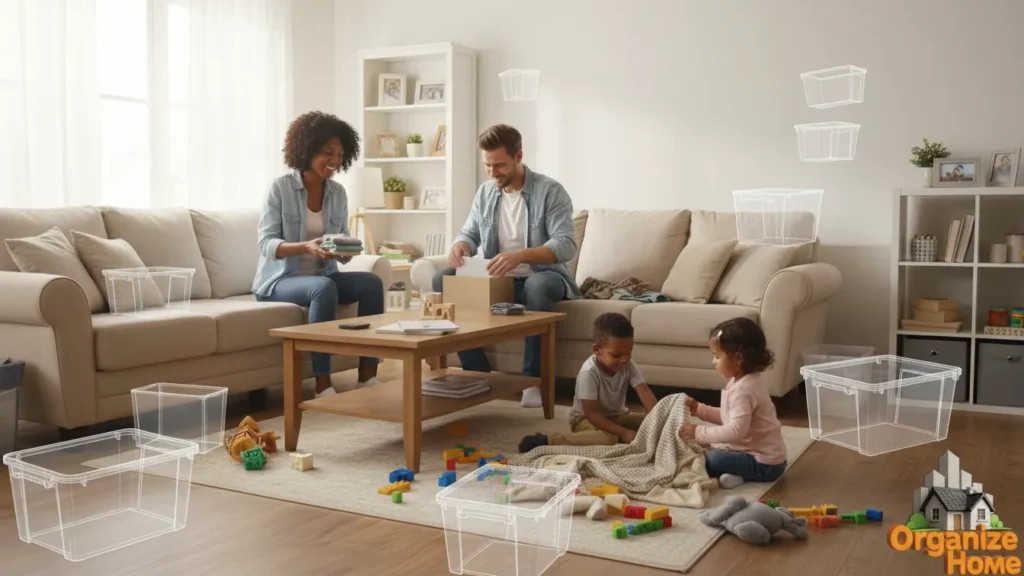
How to Let Go Without Regret or Guilt
One of the biggest fears people have when decluttering is regret. The worry sounds familiar: What if I need this later? What if I feel bad after letting it go? What if I’m making a mistake? These thoughts often keep people stuck, holding onto items long past their usefulness—not because they truly want them, but because letting go feels emotionally risky.
Regret and guilt usually come from how decisions are framed, not from the decisions themselves. When letting go feels final, rushed, or forced, the emotional resistance increases. Decluttering becomes stressful instead of supportive. The key is to make decisions that feel intentional, reversible when possible, and aligned with your current life.
One helpful approach is separating the value of the item from the value of the decision. Letting go doesn’t mean the item was a mistake or that you were wrong to own it. It simply means it has completed its role in your life. Many items served a purpose once—and honoring that purpose doesn’t require keeping them forever.
Another way to reduce regret is to declutter in layers. Instead of forcing yourself to let go of difficult items immediately, you can move them out of daily spaces first. Temporary storage, donation boxes with a waiting period, or clearly labeled “revisit later” areas allow you to build confidence before making final decisions.
Guilt is often tied to money, gifts, or expectations. People feel bad about letting go of things they paid for, received from loved ones, or thought they should use. But keeping an item out of guilt doesn’t recover money, change the past, or honor a relationship—it only adds stress to the present. The cost has already been paid. Decluttering is about choosing what supports you now.
It’s also important to remember that regret is usually rare and manageable. In most cases, items can be replaced if truly needed. And more often than not, people feel relief—not regret—after letting go. The space, ease, and clarity gained outweigh the loss of the object itself.
Letting go without regret or guilt means giving yourself permission to decide with kindness instead of pressure. When decluttering respects your emotions and your pace, it becomes a process you can trust—one that creates relief, not second-guessing.
Common Decluttering Mistakes That Slow You Down
Even when people are motivated to declutter, progress often feels slow—and frustrating. In most cases, this isn’t because decluttering is inherently hard, but because a few common mistakes quietly get in the way and drain momentum.
One of the biggest mistakes is trying to declutter and organize at the same time. When people start rearranging, buying containers, or perfecting layouts before decisions are made, decluttering stalls. The focus shifts from reducing volume to managing it, which keeps clutter in place and creates the illusion of progress without real change.
Another frequent mistake is starting with the most emotional items. Tackling sentimental belongings too early can trigger hesitation, guilt, and regret, making the entire process feel heavy. Decluttering works best when decision confidence is built gradually—starting with neutral items and saving emotional categories for later.
Many people also slow themselves down by aiming for perfection. They want to make the best possible decision for every item, researching, reconsidering, and overthinking. This level of scrutiny isn’t sustainable. Decluttering requires good enough decisions made consistently, not perfect ones made slowly.
Overestimating how much can be done in one session is another common trap. Planning long decluttering sessions leads to burnout and avoidance. When expectations are too high, stopping early feels like failure—even if meaningful progress was made. This discouragement often delays the next session.
Another mistake is decluttering without boundaries. Without a clear start and stop point, sessions feel endless and draining. Decluttering works better when it’s contained—one drawer, one shelf, one category—so the brain can experience completion and success.
Finally, many people slow themselves down by constantly revisiting past decisions. Pulling items back out, second-guessing choices, or reopening “maybe” piles erodes confidence. While flexibility is important, endless reconsideration keeps decluttering stuck in limbo.
Avoiding these mistakes doesn’t require more effort—it requires a clearer approach. When decluttering is simple, contained, and forgiving, progress becomes steady. And steady progress is what actually moves a home forward, one decision at a time.
👉 Decluttering Without Feeling Guilty
Why Decluttering Doesn’t Mean Getting Rid of Everything
One of the biggest myths around decluttering is the idea that it requires getting rid of most of what you own. This belief creates fear before the process even begins and stops many people from decluttering at all. In reality, decluttering is not about having less—it’s about having what fits your life and your space.
Decluttering doesn’t ask you to strip your home down to the bare minimum. It asks you to remove what no longer serves a purpose, supports your routines, or aligns with how you live right now. Many items can stay—and should stay—if they are useful, meaningful, and manageable within your home.
This misconception often comes from associating decluttering with minimalism. While minimalism is a valid lifestyle choice for some, it is not the goal of decluttering. Decluttering is neutral. It adapts to different family sizes, lifestyles, hobbies, and preferences. A decluttered home can still be full, warm, and personal.
Another reason this myth persists is that people confuse discomfort with necessity. Letting go of some things can feel uncomfortable, which leads to the assumption that everything is at risk. In reality, decluttering is selective. You’re choosing what stays—not blindly removing items.
It’s also important to recognize that keeping everything has a cost. Every item you keep requires space, maintenance, and mental attention. Decluttering is about balancing that cost against the value the item brings. When the balance is off, life feels heavier than it needs to.
Decluttering becomes much more approachable when you remove the pressure to be extreme. You don’t need to declutter perfectly. You don’t need to reach a certain number of items. You only need to reduce enough so your home functions more easily.
When decluttering is framed as refinement instead of reduction, fear eases. The process becomes supportive instead of threatening. And once that fear is gone, it becomes much easier to make calm, confident decisions—without the feeling that you’re losing everything you own.
How to Handle Sentimental Items Without Keeping Them All
Sentimental items are often the hardest part of decluttering—not because there are so many of them, but because of what they represent. Photos, gifts, letters, inherited items, and objects tied to meaningful moments can feel emotionally heavy. Letting go of them can feel like letting go of the memory itself, even when the item is no longer serving your daily life.
The first thing to understand is that memory does not live in the object. The object may trigger the memory, but the experience, relationship, or moment exists independently of it. Keeping everything “just in case” you forget often leads to boxes of items that are never seen, enjoyed, or honored—ironically distancing you from the very memories you want to preserve.
A helpful approach is to shift from keeping everything to curating intentionally. Instead of asking whether you can get rid of something, ask whether this item is the best representative of that memory. Often, multiple items point to the same story. Choosing one or two meaningful pieces allows you to honor the memory without holding onto excess.
Another effective strategy is separating sentimental items from everyday decluttering. Mixing emotional decisions with practical ones increases fatigue and slows progress. By decluttering neutral items first, you build confidence and clarity—making sentimental decisions feel less overwhelming later.
You can also change how you keep sentimental items. Some people take photos of objects before letting them go. Others create small memory boxes or limit sentimental storage to one clearly defined container. These boundaries create permission to keep what matters most while releasing the rest.
Most importantly, give yourself time. Sentimental decluttering doesn’t need to be fast. It needs to feel safe. When you approach it with respect instead of pressure, letting go becomes an act of care—not loss.
Handling sentimental items thoughtfully allows your memories to stay meaningful without filling your home with guilt, obligation, or unused space.
Decluttering When You Share Your Home With Others
Decluttering becomes more complex when you share your home with other people. Different habits, priorities, and emotional attachments can make the process feel slower and more sensitive. One of the biggest mistakes in shared homes is approaching decluttering as a solo decision-making process that affects everyone equally.
The first thing to accept is that you can only fully declutter what you own. Trying to decide for others—partners, children, or family members—often leads to resistance, conflict, or stalled progress. Decluttering works best when it starts with your own belongings and shared spaces you’re responsible for.
Communication is essential, but it doesn’t need to be heavy or emotional. Instead of framing decluttering as “getting rid of things,” it helps to focus on shared goals: more space, less stress, easier routines. When people understand the why, they’re more likely to participate willingly.
Shared spaces are another important consideration. Kitchens, living rooms, and entryways function best when there are clear agreements about what belongs there and what doesn’t. Decluttering these areas should focus on function, not personal preference. Items that don’t support how the space is used daily are often good candidates for removal or relocation.
When decluttering with children, simplicity matters. Kids are more likely to let go when choices are limited and clear. Offering controlled options—such as choosing a set number of items to keep—creates a sense of control instead of loss. The goal isn’t to force decisions, but to guide them gently.
It’s also important to move at the pace of the household, not just your own. Decluttering in shared homes often takes longer, and that’s okay. Progress doesn’t need to be fast to be effective.
Decluttering together doesn’t require everyone to agree on everything. It requires respect, boundaries, and patience. When these are in place, shared homes can declutter successfully—without tension or constant negotiation.
How Decluttering Supports Daily Organization Long Term
Decluttering isn’t just about removing excess—it’s one of the strongest foundations for long-term daily organization. Without decluttering, organization systems tend to feel fragile and short-lived. With decluttering in place, those same systems become easier to use, easier to maintain, and far more resilient over time.
When you reduce the amount of stuff in your home, you reduce the number of decisions required each day. Fewer items mean fewer things to put away, fewer surfaces to manage, and fewer chances for clutter to pile up. This directly supports daily organization habits by lowering the effort needed to keep things under control.
Decluttering also creates physical breathing room. Storage areas that aren’t packed to the limit are more forgiving. Items fit easily, drawers close smoothly, and shelves don’t collapse into chaos after one busy day. This margin is what allows organization to recover quickly instead of breaking down.
Another long-term benefit is clarity. Once you’ve decided what stays, organization becomes straightforward. You’re no longer constantly rearranging, second-guessing, or moving items around because their purpose is unclear. Daily organization shifts from decision-making to simple follow-through.
Decluttering also improves consistency. When systems are light and manageable, they’re used more often. People are more likely to return items to their homes when it doesn’t feel like a struggle. Over time, this consistency reinforces habits and reduces the need for major resets.
It’s important to note that decluttering doesn’t eliminate mess—it changes how mess behaves. Homes that have been decluttered still experience daily use and occasional disorder, but they don’t spiral as easily. Organization becomes maintenance instead of rescue.
In the long run, decluttering supports daily organization by making it realistic. It aligns the home with real life instead of ideal scenarios. When the volume matches the space and the systems match daily routines, organization stops being something you constantly restart—and becomes something that simply continues.

When Decluttering Is “Good Enough” (And When to Stop)
One of the most important—but rarely discussed—parts of decluttering is knowing when to stop. Without a clear sense of what “enough” looks like, decluttering can turn into an endless cycle of second-guessing, revisiting decisions, and never feeling satisfied with the result.
Decluttering is good enough when your home functions more easily than it did before. Drawers open without resistance. Items have clear homes. Daily routines feel lighter. You can put things away without rearranging half a shelf first. These are practical signals that decluttering has done its job.
Another sign decluttering is sufficient is emotional relief. When you stop feeling constant pressure to fix your home, decluttering has reached a healthy point. You’re no longer scanning rooms for problems or feeling guilty about unfinished areas. The space feels manageable—even if it’s not perfect.
Many people make the mistake of continuing to declutter past this point, driven by comparison or the idea that more is always better. But excessive decluttering can create its own stress. Constantly questioning belongings, re-evaluating decisions, or trying to reach an abstract ideal can lead to fatigue and dissatisfaction.
Decluttering should support daily life, not dominate it. When the process starts consuming more mental energy than the clutter ever did, it’s a sign to pause. The goal isn’t to eliminate every unused item—it’s to create a home that works comfortably.
It’s also important to recognize that decluttering happens in phases. What feels “good enough” today may change later as life shifts. Stopping now doesn’t mean you’ll never declutter again. It simply means you’ve reached a stable point for this season.
Knowing when to stop is a form of success. It means you trust your decisions and your home. Decluttering doesn’t need to be endless to be effective—it just needs to meet your needs right now.
How to Maintain a Decluttered Home Without Constant Effort
Maintaining a decluttered home doesn’t require ongoing big decluttering sessions. In fact, the goal of decluttering is to reach a point where maintenance feels light and almost automatic, not like a recurring project you have to restart over and over again.
The biggest factor in long-term maintenance is volume control. Once your home holds an amount of belongings it can realistically support, clutter stops building up as quickly. Daily life still creates mess, but it stays within manageable limits. This alone reduces the need for frequent decluttering.
Another key element is having clear homes for everyday items. When it’s obvious where things belong—and when putting them away is easy—items naturally return to their place more often. Maintenance becomes part of normal routines instead of a separate task.
Simple daily habits also play an important role. Short resets, even just a few minutes long, prevent small messes from turning into overwhelming clutter. These habits don’t need to be perfect or consistent every single day. They just need to happen often enough to keep things from piling up.
It’s also important to manage incoming items. Maintaining a decluttered home isn’t only about what you remove—it’s about being intentional with what comes in. Pausing before bringing new items home, letting something go when something new arrives, or regularly reviewing rarely used categories helps prevent gradual buildup.
Another overlooked factor is letting go of the idea that your home needs to stay “finished.” A decluttered home is not static. It adjusts as life changes. Maintenance works best when you allow small, ongoing adjustments instead of waiting until things feel out of control again.
When maintenance is simple, flexible, and built into daily life, decluttering stops feeling like work. The home stays easier to manage—not because you’re constantly fixing it, but because it’s no longer overloaded.
Letting Go as an Ongoing Process, Not a One-Time Project
One of the most helpful mindset shifts in decluttering is understanding that letting go is not a one-time event. It’s an ongoing process that naturally repeats as life changes. When decluttering is treated as something you must “finish,” it creates pressure, unrealistic expectations, and frustration when clutter eventually returns.
Homes are dynamic. New items come in, routines evolve, interests change, and seasons of life shift. What made sense to keep five years ago may no longer fit today—and that doesn’t mean the original decision was wrong. It simply means your life has moved forward.
Letting go as an ongoing process removes the urgency to make perfect decisions. You don’t need to get everything right the first time. Decluttering can happen in layers. Items that feel difficult to release now may feel easier later, once your priorities become clearer or your confidence grows.
This approach also reduces emotional stress. When you know you’ll have future opportunities to reassess, each decision feels lighter. You’re no longer asking, “Am I making a permanent mistake?” You’re asking, “Does this still fit my life right now?” That question is far easier to answer honestly.
Another benefit of seeing decluttering as ongoing is that it keeps clutter from building up again. Small, periodic reviews prevent excess from accumulating silently over time. Instead of waiting until your home feels overwhelming, you make gentle adjustments along the way.
Ongoing decluttering also supports self-trust. Each time you let go and experience relief instead of regret, your confidence grows. Over time, decisions become faster, clearer, and less emotional. Letting go stops feeling scary and starts feeling normal.
Decluttering isn’t about reaching a final state—it’s about maintaining balance. When letting go is part of your rhythm instead of a big project, your home stays flexible, manageable, and aligned with your life as it is now.